The education sector in India is becoming more competitive every year. Schools, universities, coaching institutes, and education consultants receive inquiries from multiple channels such as websites, social media, WhatsApp, and education portals. Managing these leads efficiently has become a major challenge.
As inquiry volumes continue increasing, managing student communication manually is becoming difficult for many organizations. Delayed follow-ups, scattered data, missed counseling calls, duplicate inquiries, and inconsistent communication often reduce enrollment conversions and operational efficiency.
This growing complexity has increased the demand for structured Lead Management CRM systems and intelligent lead management software across the Indian education sector. Many institutions now use CRM platforms to manage inquiries from one place. These systems help counselors respond faster, automate routine tasks, and improve the admission process.
According to recent education technology trends in India, institutions implementing CRM-driven lead management processes often improve inquiry response speed and admission conversion rates because students increasingly expect fast, personalized, and digitally connected communication experiences.
Why Lead Management Has Become a Major Challenge for Education Consultants
Education consulting businesses operate in a communication-heavy environment where every inquiry represents a potential admission opportunity. During peak admission seasons, consultants often manage thousands of leads simultaneously across multiple channels.
Most organizations generate leads through:
- Google Ads campaigns
- Social media marketing
- Organic website traffic
- WhatsApp inquiries
- Referral programs
- Education portals
- Seminars and webinars
- Offline counseling events
Without a centralized lead management crm, tracking student interactions and follow-ups becomes extremely difficult.
Many organizations still depend on spreadsheets or disconnected tools that cannot support modern admission workflows efficiently. This often creates communication gaps, operational confusion, and reduced conversion visibility.
What Are Common Lead Management Challenges?
One of the most common questions education businesses ask is: “What are common lead management challenges?”
Educational consultants across India frequently struggle with operational inefficiencies while managing large inquiry pipelines.
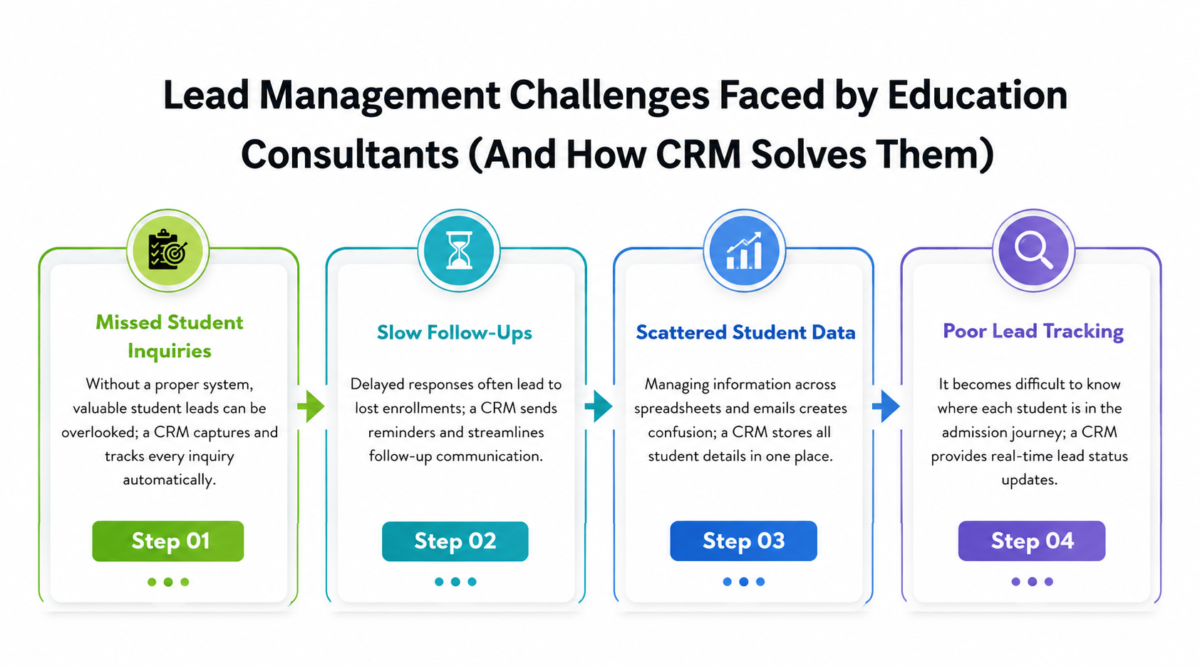
Delayed Lead Response Time
Imagine a student submitting inquiries to three overseas education consultants. If one consultant responds within five minutes while another takes two days, the student is far more likely to continue the conversation with the faster responder.
Scattered Student Data
Many organizations manage student information across spreadsheets, emails, WhatsApp chats, and separate communication platforms. This creates fragmented records and makes it difficult for counselors to track student history, previous interactions, and application progress accurately.
Poor Follow-Up Management
Consistent follow-up remains one of the biggest challenges in lead generation in India for education businesses. Counselors handling large inquiry volumes often miss reminders, callbacks, or long-term nurturing opportunities. Without automation systems, valuable inquiries frequently become inactive due to communication delays.
Duplicate Leads and Data Errors
Educational organizations generating inquiries from multiple platforms often face duplicate entries and inconsistent data collection. This affects reporting quality, counselor coordination, and operational decision-making.
Lack of Reporting Visibility
Management teams often struggle to monitor:
- Counselor productivity
- Conversion rates
- Lead source performance
- Follow-up quality
- Marketing ROI
Without structured reporting dashboards, optimizing admission strategies becomes difficult.
What Is the Difference Between Lead Management and CRM?
Another common question businesses ask is: “What is the difference between lead management and CRM?”
Lead management specifically focuses on capturing, organizing, tracking, nurturing, and converting inquiries into enrollments or customers. CRM, or Customer Relationship Management, is a broader operational framework designed to manage complete customer interactions, communication workflows, reporting systems, automation processes, and long-term engagement.
In simple terms:
- Lead management handles inquiry tracking and conversion workflows
- CRM manages broader relationship and operational processes
A modern lead management crm combines both functionalities by supporting inquiry management while also maintaining long-term communication and student engagement history.
For educational organizations, CRM systems often become centralized platforms connecting admissions, counseling, communication, marketing, reporting, and workflow automation.
Why Education Consultants in India Are Adopting Lead Management CRM Systems
Educational organizations across India are increasingly investing in lead management software because student expectations and competition levels continue growing rapidly.
Students today expect:
- Instant responses
- Personalized counseling
- Real-time communication
- Fast document coordination
- Multi-channel engagement
Managing these expectations manually becomes difficult as inquiry volumes increase.
Modern lead management software india solutions help organizations automate repetitive tasks while improving communication consistency and operational efficiency. This allows counselors to focus more on student guidance and enrollment support rather than manual administrative coordination.
How Does CRM Software Help in Lead Management?
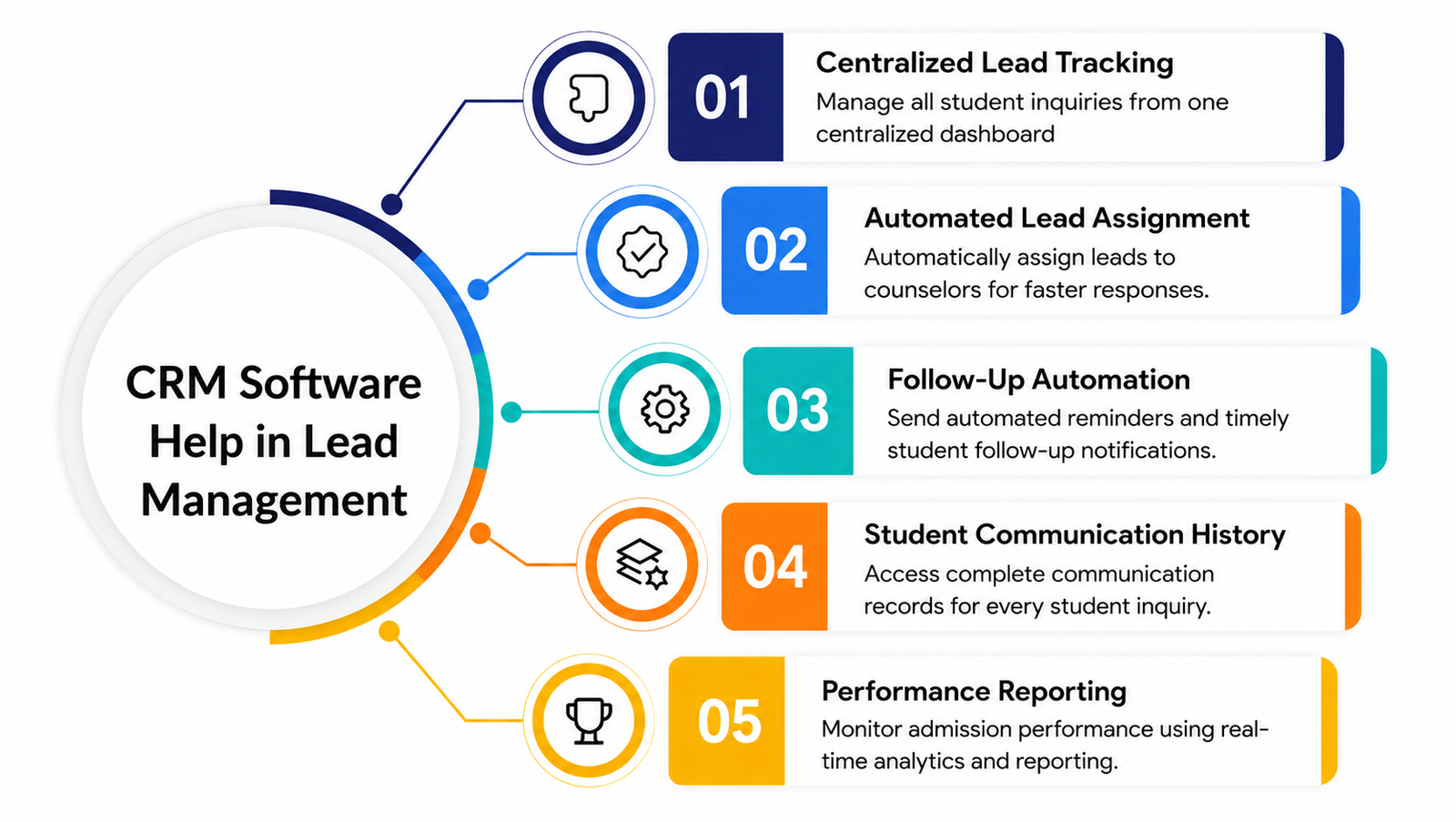
One of the most important operational questions businesses ask is: “How does CRM software help in lead management?”
Modern CRM systems streamline the complete inquiry lifecycle from lead generation to final enrollment.
Centralized Lead Tracking
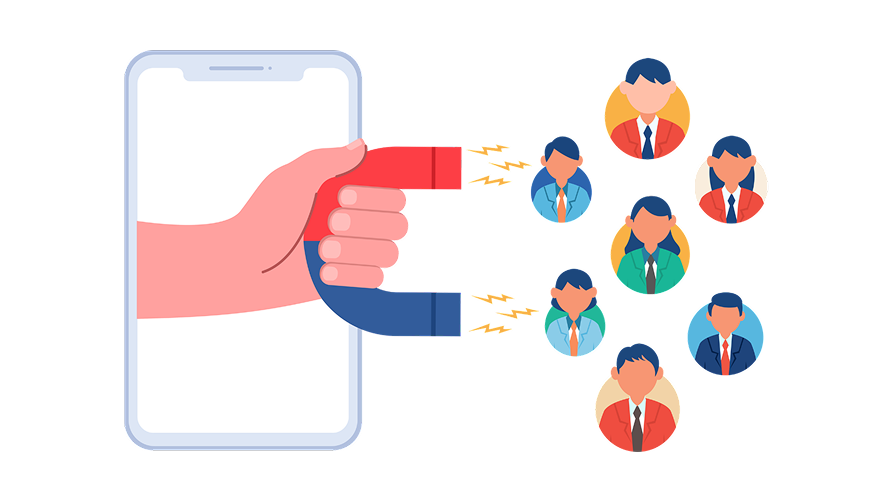
CRM platforms collect inquiries from websites, social media campaigns, advertisements, WhatsApp, webinars, and offline campaigns into one centralized dashboard.
This improves visibility and reduces communication gaps across teams.
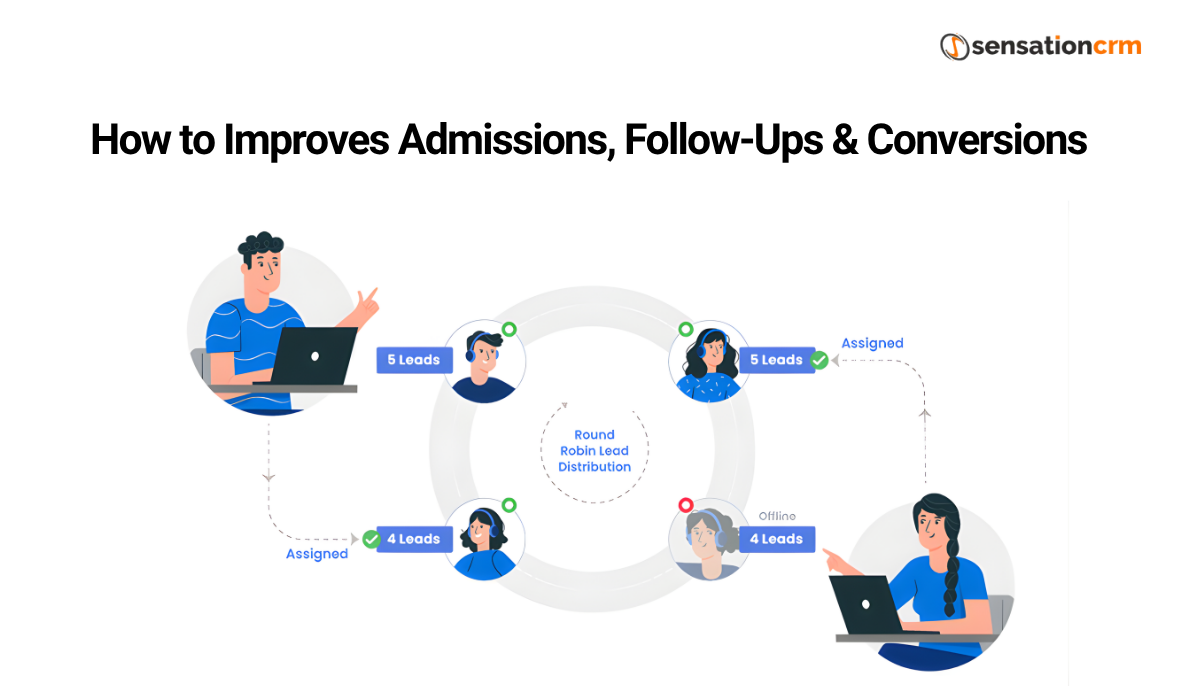
Automated Lead Assignment
Lead management software automatically assigns inquiries to counselors based on:
- Course interest
- Branch preference
- Location
- Availability
- Inquiry priority
This improves response speed and operational coordination.
Follow-Up Automation
Automated reminders, email workflows, WhatsApp notifications, and counseling schedules help consultants maintain consistent communication with students.
Automation significantly reduces missed follow-ups and inactive leads.
Student Communication History
CRM systems maintain complete interaction records including:
- Calls
- Emails
- WhatsApp conversations
- Counseling notes
- Application updates
This helps counselors personalize conversations more effectively.
Performance Reporting
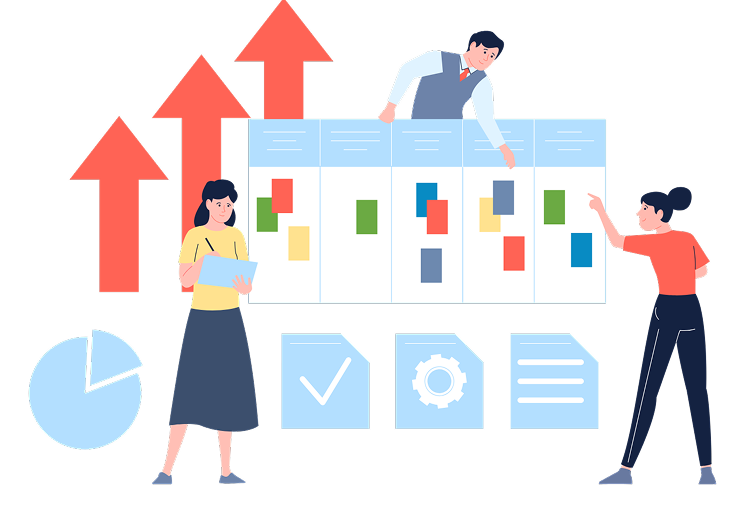
CRM dashboards provide insights into:
- Lead source performance
- Counselor productivity
- Conversion ratios
- Follow-up trends
- Marketing campaign performance
These reports help management teams improve operational planning and lead generation performance.
What Is the Lead Management Process in CRM?
Businesses frequently ask: “What is the lead management process in CRM?”
The lead management process usually follows several structured stages designed to improve inquiry handling and conversion tracking.
Lead Capture: The CRM collects inquiries from websites, ads, social media, WhatsApp, education portals, webinars, and offline campaigns.
Lead Qualification: The system categorizes students based on course interest, intent level, location, budget, and enrollment probability.
Lead Assignment: Qualified inquiries are assigned to appropriate counselors automatically or manually.
Follow-Up and Lead Nurturing: Counselors communicate with students through calls, emails, counseling sessions, webinars, and WhatsApp while tracking interactions inside the CRM.
Enrollment and Application Tracking: CRM systems monitor application progress, documentation, payment updates, and admission workflows.
Conversion Analysis: Management teams analyze inquiry performance, conversion trends, counselor productivity, and operational bottlenecks using reporting dashboards.
Why Lead Generation Services in India Need CRM Integration
Many educational organizations invest heavily in lead generation services in India but still struggle with low conversions because inquiry management workflows remain unorganized.
Lead generation alone is not enough. Institutions also require structured systems for:
- Lead nurturing
- Communication management
- Follow-up automation
- Conversion tracking
- Inquiry prioritization
Without CRM integration, many generated leads eventually become inactive or untracked.
This is why lead generation and CRM systems increasingly operate together as connected operational strategies.
AI and Automation Are Changing Lead Management in India
AI-powered CRM systems are transforming how educational organizations manage inquiries and counseling operations.
Modern sales lead management software increasingly includes:
- AI-based lead scoring
- Automated WhatsApp communication
- Predictive conversion analytics
- Smart follow-up reminders
- Behavioral inquiry analysis
- Automated reporting systems
These features help organizations improve response quality while reducing repetitive administrative workload. AI-driven lead prioritization also helps counselors focus more effectively on high-intent inquiries.
Why Indian Education Consultants Prefer Custom CRM Solutions
Many organizations prefer customized CRM platforms instead of generic software because educational workflows differ significantly between institutions.
For example:
- Overseas consultants manage visa workflows
- Coaching institutes prioritize lead nurturing
- Universities manage multi-department admissions
- Edtech companies focus heavily on digital engagement
Custom CRM solutions allow businesses to build workflows aligned with operational requirements instead of adapting processes to rigid software limitations.
Comparison Between Manual Lead Tracking and CRM-Based Lead Management
| Feature | Manual Lead Tracking | Lead Management CRM |
|---|---|---|
| Inquiry Organization | Scattered | Centralized |
| Follow-Up Management | Manual | Automated |
| Reporting Visibility | Limited | Real-time dashboards |
| Lead Assignment | Unorganized | Automated workflows |
| Communication Tracking | Difficult | Complete history |
| Conversion Monitoring | Inconsistent | Structured analytics |
| Scalability | Limited | Highly scalable |
Future of Lead Management in the Indian Education Sector
The Indian education industry is becoming increasingly digital, communication-driven, and competitive. Educational organizations are expected to continue investing heavily in CRM platforms, automation systems, AI-powered engagement tools, and centralized inquiry management infrastructure.
Future trends are likely to include:
- AI-powered counseling automation
- WhatsApp-first communication systems
- Predictive enrollment analytics
- Voice-assisted CRM platforms
- Automated student engagement workflows
- Multi-campus CRM management
As student expectations continue evolving, educational organizations will increasingly depend on intelligent lead management systems to improve operational efficiency and admission performance.
Organizations exploring scalable inquiry management solutions can also learn more about professional Lead Management CRM Solutions designed specifically for education-focused counseling workflows, admission automation, and student engagement management.