
Categories
Lead Management Software

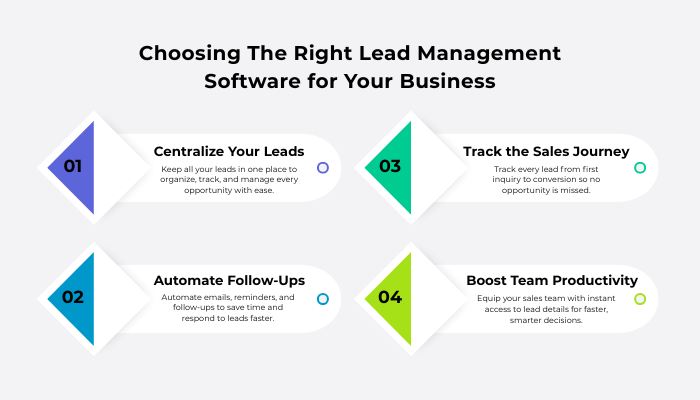
Choosing the Right Lead Management Software for Your Business

Winning new customers starts long before a deal closes. It begins the moment a prospect fills out a form, replies to an email, or clicks an ad and what your business does in the minutes and days that follow often decides whether that interest turns into revenue. That’s why businesses rely on the best CRM software to manage leads efficiently. When leads pile up faster than your team can respond, opportunities quietly disappear.

Education CRM vs ERP: Understanding the Core Difference

Although CRM and ERP systems often work together, their primary objectives are different.

Lead management software exists to prevent exactly that. It brings every prospect into one organized system, so your team can respond quickly, follow up consistently, and move each lead toward a sale. The challenge is choosing the right platform in a market full of look alike options. This guide explains what to prioritize, answers the questions buyers search for most, and shows how Sensation CRM helps you convert more of the leads you already have.

Logo

Power Your Admissions with Sensation CRM

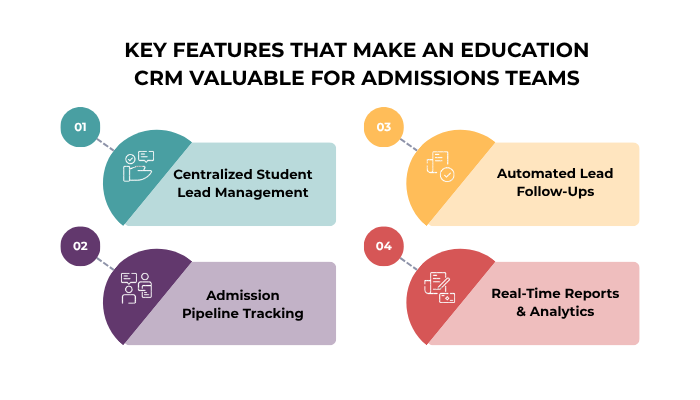
Centralized Lead Management

Automated Follow-ups

Real-time Reports & Analytics

Secure & Reliable

Why Lead Management Software Is Worth It

It helps to know why so many businesses now depend on Lead Management CRM software before you weigh your choices. The move to structured lead management is driven by outcomes, not trends.The numbers make the case:

  • More than 62% of organizations have put centralized systems in place to track, qualify, and convert leads, so a structured approach is now the norm rather than a differentiator. Cloud-based platforms represent roughly 72% of lead management deployments, and wiring lead capture straight into a CRM reduces lead leakage by about 40% compared with disconnected, standalone tools.

  • Businesses that adopt these platforms routinely report quicker response times and higher conversion rates once automation kicks in.
  • Close to six in ten businesses use CRM software specifically to generate and nurture leads, a sign of how central lead management has become to the entire CRM value proposition.

The category is growing fast, too. The global CRM lead management market is projected to rise from about US$4.7 billion in 2026 to more than US$14 billion by 2033, powered by AI-driven scoring, automation, and cloud adoption. The takeaway is clear: businesses that manage leads well grow faster and Sensation CRM is built to give you that head start.

What Is Lead Management Software?

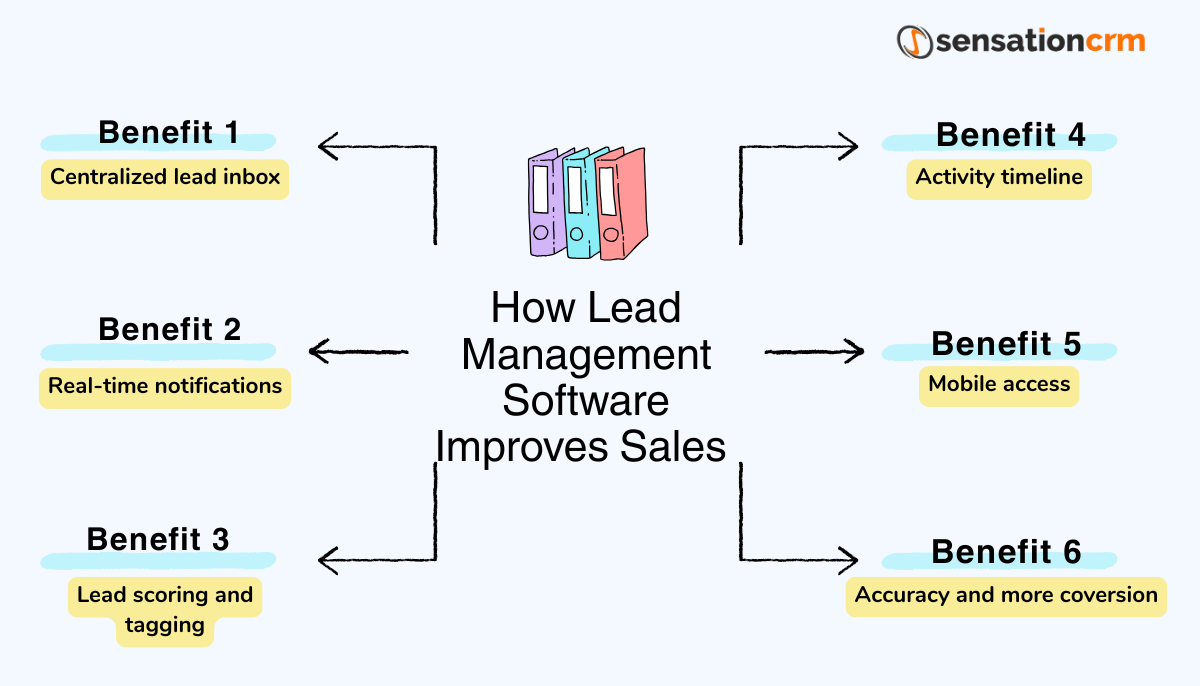
Lead management software captures prospects from every source you use your website, social media, paid campaigns, email, or a phone call and carries them through a structured pipeline until they convert. Along the way it scores, organizes, assigns, and nurtures each lead so none get overlooked.

The practical payoff is a single source of truth. Instead of juggling spreadsheets and relying on memory, your whole team can see who each lead is, where they sit in the journey, and what should happen next. When this functionality is part of a complete customer platform, it’s known as CRM lead management or a Lead Management CRM pipeline handling and full relationship management working together, which is exactly what Sensation CRM provides.A capable lead management system generally covers:

  • Automatic lead capture: across all your channels
  • Intelligent lead scoring: that ranks prospects by buying intent
  • Instant lead routing: so the right rep receives the right lead
  • Automated nurturing: with well-timed emails and reminders
  • Actionable reporting: that shows what’s actually driving conversions

What Is the Best Lead Management Software?

The honest answer is that no single tool is “best” for everyone. What works brilliantly for a small startup might overwhelm a large enterprise, and the reverse is just as true. What really counts is fit how closely a platform aligns with your team size, budget, sales process, and growth plans. The best software is the one your team will genuinely use, day in and day out, to close more deals.

Sensation CRM is designed around that principle. Instead of drowning you in features you’ll never touch, it focuses on the work that grows revenue: capturing every lead, scoring and routing them intelligently, automating follow-up so nothing slips, and keeping your pipeline fully visible. It’s capable enough to support a scaling team while staying simple enough to launch quickly the exact balance most businesses have in mind when they ask for the “best.”The framework below will help you measure any option against your own needs.

How to Choose the Right CRM Software for Your Business

Picking a Lead Management CRM is fundamentally about matching the software to your situation. Work through these seven checkpoints before you decide.

  • Define your primary goal. Do you want more captured leads, faster responses, a shorter sales cycle, or better reporting? Your top objective determines which features truly matter.
  • Fit it to your sales process. The tool should follow the way your team already sells your stages, handoffs, and follow-up rhythm not push you into a rigid template.
  • Verify integrations. Your CRM must connect cleanly with the tools you rely on: email, marketing platforms, your website, and channels like WhatsApp that matter in many markets. Integration problems are a top reason adoptions fail, so check compatibility early.
  • Prioritize automation and AI. Roughly 67% of modern lead management tools now include predictive scoring, workflow automation, and personalized outreach, and these capabilities are quickly becoming standard. AI-powered scoring helps your team focus on the prospects most likely to buy.
  • Consider ease of use. A powerful platform delivers nothing if no one adopts it. Look closely at setup time, the learning curve, and the quality of onboarding and support  fast time to value matters most for lean teams.
  • Think about scale and pricing. Picture where you’ll be in twelve months, not just today. Compare per user versus flat rate pricing, and confirm the platform can grow with you without forcing a difficult migration down the line.
  • Require strong data security. Lead data is sensitive. Choose a provider that’s open about encryption, compliance, and how it protects the information you store.Put these seven questions to any shortlist and your choices usually narrow in a hurry. Sensation CRM is built to meet all of them flexible enough to match your process, fast to deploy, and secure by design.

If you’re comparing CRM options or refining your sales process, our blogs offer additional insights and practical guidance to support your research.

What Are the 7 C’s of CRM?

Lead Management CRM

The 7 C’s of CRM are a straightforward framework for building customer relationships that endure. They also work well as a checklist when you’re comparing software or refining your strategy:

  • Customer: Begin every decision with the customer and build your process around their needs.
  • Communication: Keep a steady, two way dialogue across every channel the customer uses.
  • Consistency: Provide the same dependable experience at each touchpoint, from first contact through after-sale support.
  • Customization: Use data to personalize offers, messages, and timing for each individual.
  • Convenience: Strip away friction so it’s easy to engage, buy, and get help.
  • Customer Data: Treat clean, centralized, up-to-date data as the bedrock of every interaction.
  • Culture: Foster a customer-first mindset across the entire organization, not only the sales team.

Sensation CRM puts these principles into everyday practice centralizing your data, automating communication, and giving every team member the same consistent view of each lead and customer.

Which CRM Is Most Used in India?

India’s CRM market has its own distinct shape. Large enterprises often turn to heavyweight global suites, but the country’s fastest growing segment start ups and small to medium businesses prefers CRMs that are affordable, easy to customize, quick to set up, and ready for local channels like WhatsApp. Platforms that grasp these needs have built deep loyalty.That’s precisely the space Sensation CRM was made for. For Indian businesses that want real lead management capability without enterprise level cost or complexity, Sensation CRM offers an approachable Lead Management CRM with the automation, WhatsApp friendly workflows, and fast onboarding that local teams actually need. The takeaway: the “right” CRM in India depends on your size and selling style and for growing teams that value affordability and speed, Sensation CRM is a natural fit.

Making Your Decision

Choosing lead management software isn’t about assembling the longest feature list it’s about finding the platform your team will actually use to win more business. Start with your goals, align the tool to your sales process, insist on clean integrations and solid security, and choose a solution that scales as your business grows.Done well, a Lead Management System is far more than a contact database. It shortens your sales cycle, sharpens your follow-up, and turns an unpredictable pipeline into a dependable growth engine. Sensation CRM is built to do exactly that helping you capture more leads, respond faster, and convert with confidence. Contact us today to see how Sensation CRM can help your business streamline lead management and drive more sales.


Logo

One CRM Complete Admission Management

From inquiry capture to enrollment, manage everything
in one place and never miss a potential student.

Frequently Asked Questions

What’s the difference between a CRM and lead management software

Lead management software focuses on capturing, scoring, and nurturing prospects until they convert, while a CRM covers the full customer lifecycle, including everything after the sale. Sensation CRM combines both, which is why the term CRM lead management is so common.

Do small businesses really need lead management software?

Yes. Even a small team loses revenue when leads fall through the cracks. Affordable, cloud-based tools like Sensation CRM help smaller businesses respond faster and convert more without adding headcount.

How does lead scoring work?

Lead scoring ranks prospects by how likely they are to buy, using signals such as behavior, engagement, and how well they match your ideal profile. Modern AI-powered scoring does this automatically, so your team can prioritize the hottest leads first.

How long does it take to set up a Lead Management CRM?

It varies widely – some sales-focused tools go live in hours, while complex enterprise systems can take weeks or months. Sensation CRM is built for fast onboarding, so your team can start converting sooner.

Is cloud-based lead management software secure?

Reputable providers use encryption, access controls, and compliance standards to protect your data. Sensation CRM is built with security in mind, keeping your sensitive lead information safe.

Ready to turn more leads into customers?

Sensation CRM gives your team the structure, automation, and insight to convert with confidence.  See what the right Lead Management CRM can do for your growth. Start with Sensation CRM today.

Categories
Lead management

Lead Management Challenges Faced by Education Consultants (And How CRM Solves Them)

The education sector in India is becoming more competitive every year. Schools, universities, coaching institutes, and education consultants receive inquiries from multiple channels such as websites, social media, WhatsApp, and education portals. Managing these leads efficiently has become a major challenge.

As inquiry volumes continue increasing, managing student communication manually is becoming difficult for many organizations. Delayed follow-ups, scattered data, missed counseling calls, duplicate inquiries, and inconsistent communication often reduce enrollment conversions and operational efficiency.

This growing complexity has increased the demand for structured Lead Management CRM systems and intelligent lead management software across the Indian education sector. Many institutions now use CRM platforms to manage inquiries from one place. These systems help counselors respond faster, automate routine tasks, and improve the admission process.

According to recent education technology trends in India, institutions implementing CRM-driven lead management processes often improve inquiry response speed and admission conversion rates because students increasingly expect fast, personalized, and digitally connected communication experiences.

Why Lead Management Has Become a Major Challenge for Education Consultants

Education consulting businesses operate in a communication-heavy environment where every inquiry represents a potential admission opportunity. During peak admission seasons, consultants often manage thousands of leads simultaneously across multiple channels.

Most organizations generate leads through:

  • Google Ads campaigns
  • Social media marketing
  • Organic website traffic
  • WhatsApp inquiries
  • Referral programs
  • Education portals
  • Seminars and webinars
  • Offline counseling events

Without a centralized lead management crm, tracking student interactions and follow-ups becomes extremely difficult.

Many organizations still depend on spreadsheets or disconnected tools that cannot support modern admission workflows efficiently. This often creates communication gaps, operational confusion, and reduced conversion visibility.


Logo

One CRM Complete
Lead Management

From inquiry capture to enrollment, manage everything
in one place and never miss a potential student.

What Are Common Lead Management Challenges?

One of the most common questions education businesses ask is: “What are common lead management challenges?

Educational consultants across India frequently struggle with operational inefficiencies while managing large inquiry pipelines.

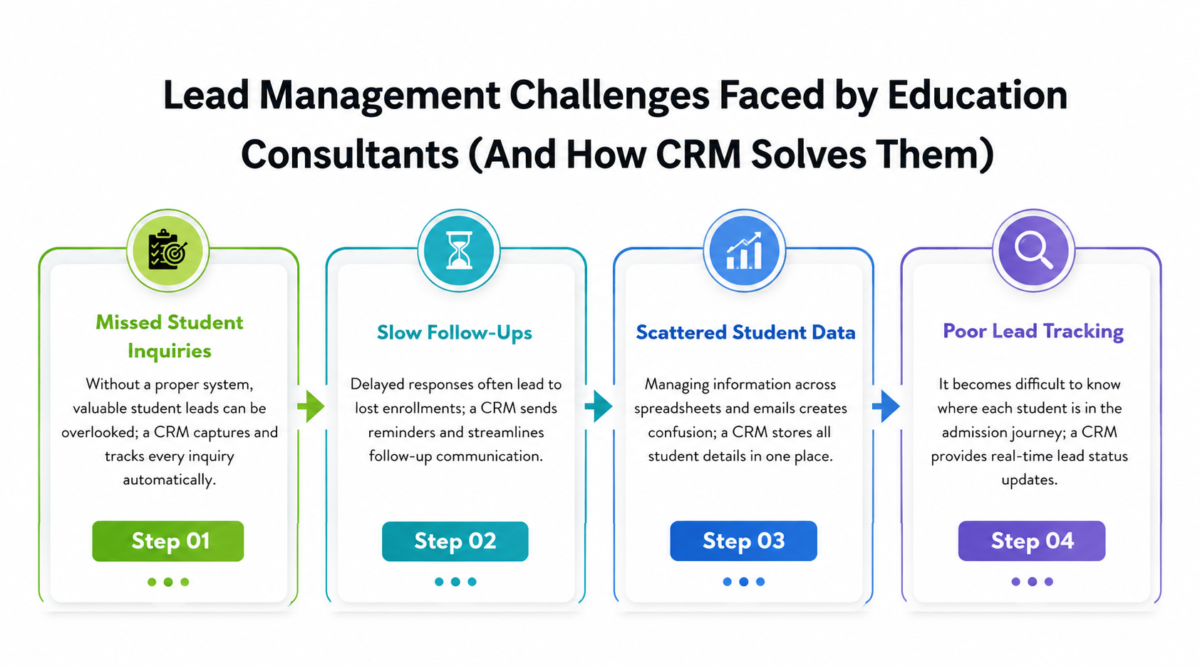
Delayed Lead Response Time

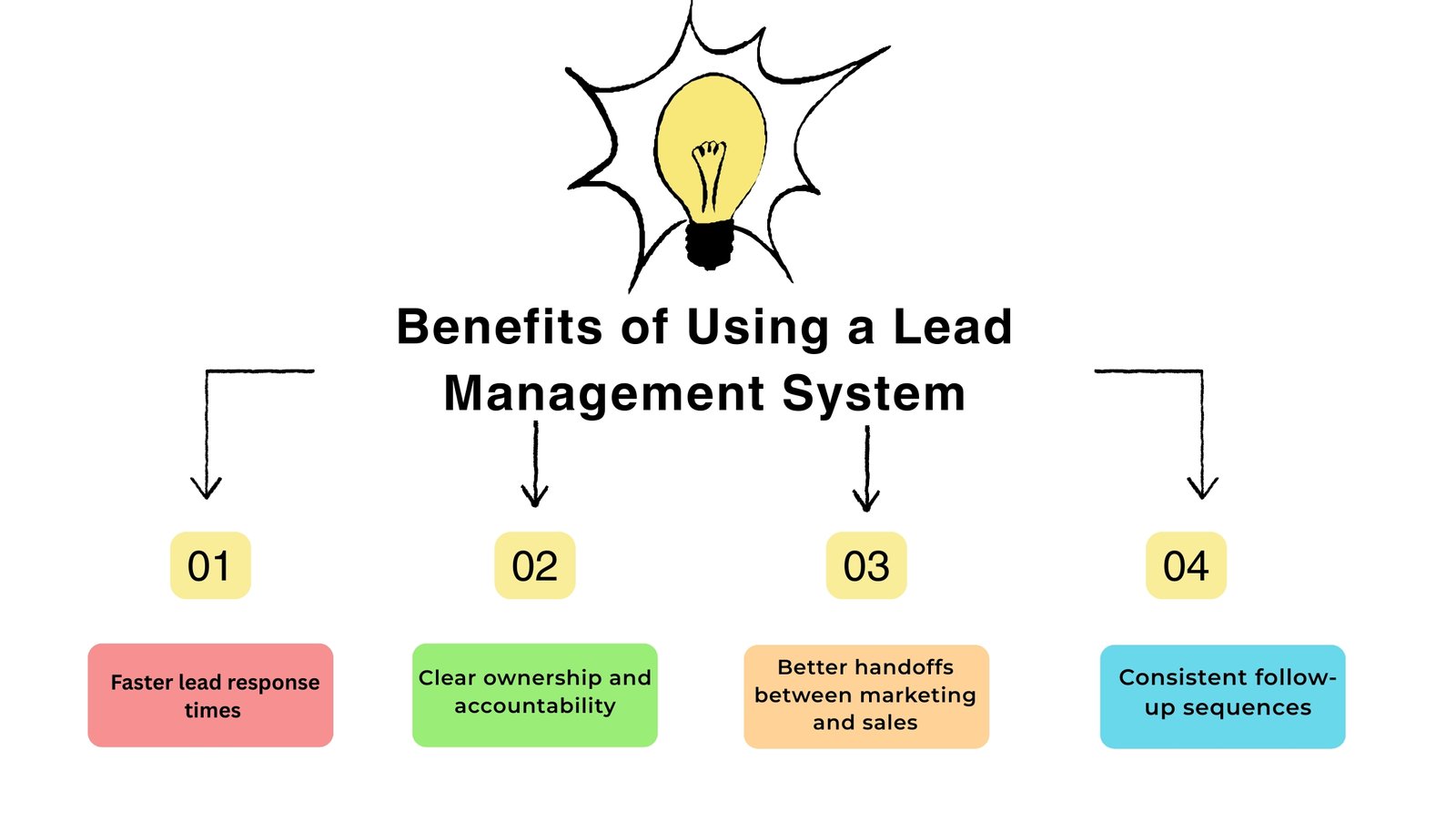
Imagine a student submitting inquiries to three overseas education consultants. If one consultant responds within five minutes while another takes two days, the student is far more likely to continue the conversation with the faster responder.

Scattered Student Data

Many organizations manage student information across spreadsheets, emails, WhatsApp chats, and separate communication platforms. This creates fragmented records and makes it difficult for counselors to track student history, previous interactions, and application progress accurately.

Poor Follow-Up Management

Consistent follow-up remains one of the biggest challenges in lead generation in India for education businesses. Counselors handling large inquiry volumes often miss reminders, callbacks, or long-term nurturing opportunities. Without automation systems, valuable inquiries frequently become inactive due to communication delays.

Duplicate Leads and Data Errors

Educational organizations generating inquiries from multiple platforms often face duplicate entries and inconsistent data collection. This affects reporting quality, counselor coordination, and operational decision-making.

Lack of Reporting Visibility

Management teams often struggle to monitor:

  • Counselor productivity
  • Conversion rates
  • Lead source performance
  • Follow-up quality
  • Marketing ROI

Without structured reporting dashboards, optimizing admission strategies becomes difficult.

What Is the Difference Between Lead Management and CRM?

Another common question businesses ask is: “What is the difference between lead management and CRM?”

Lead management specifically focuses on capturing, organizing, tracking, nurturing, and converting inquiries into enrollments or customers. CRM, or Customer Relationship Management, is a broader operational framework designed to manage complete customer interactions, communication workflows, reporting systems, automation processes, and long-term engagement.

In simple terms:

  • Lead management handles inquiry tracking and conversion workflows
  • CRM manages broader relationship and operational processes

A modern lead management crm combines both functionalities by supporting inquiry management while also maintaining long-term communication and student engagement history.

For educational organizations, CRM systems often become centralized platforms connecting admissions, counseling, communication, marketing, reporting, and workflow automation.

Why Education Consultants in India Are Adopting Lead Management CRM Systems

Educational organizations across India are increasingly investing in lead management software because student expectations and competition levels continue growing rapidly.

Students today expect:

  • Instant responses
  • Personalized counseling
  • Real-time communication
  • Fast document coordination
  • Multi-channel engagement

Managing these expectations manually becomes difficult as inquiry volumes increase.

Modern lead management software india solutions help organizations automate repetitive tasks while improving communication consistency and operational efficiency. This allows counselors to focus more on student guidance and enrollment support rather than manual administrative coordination.

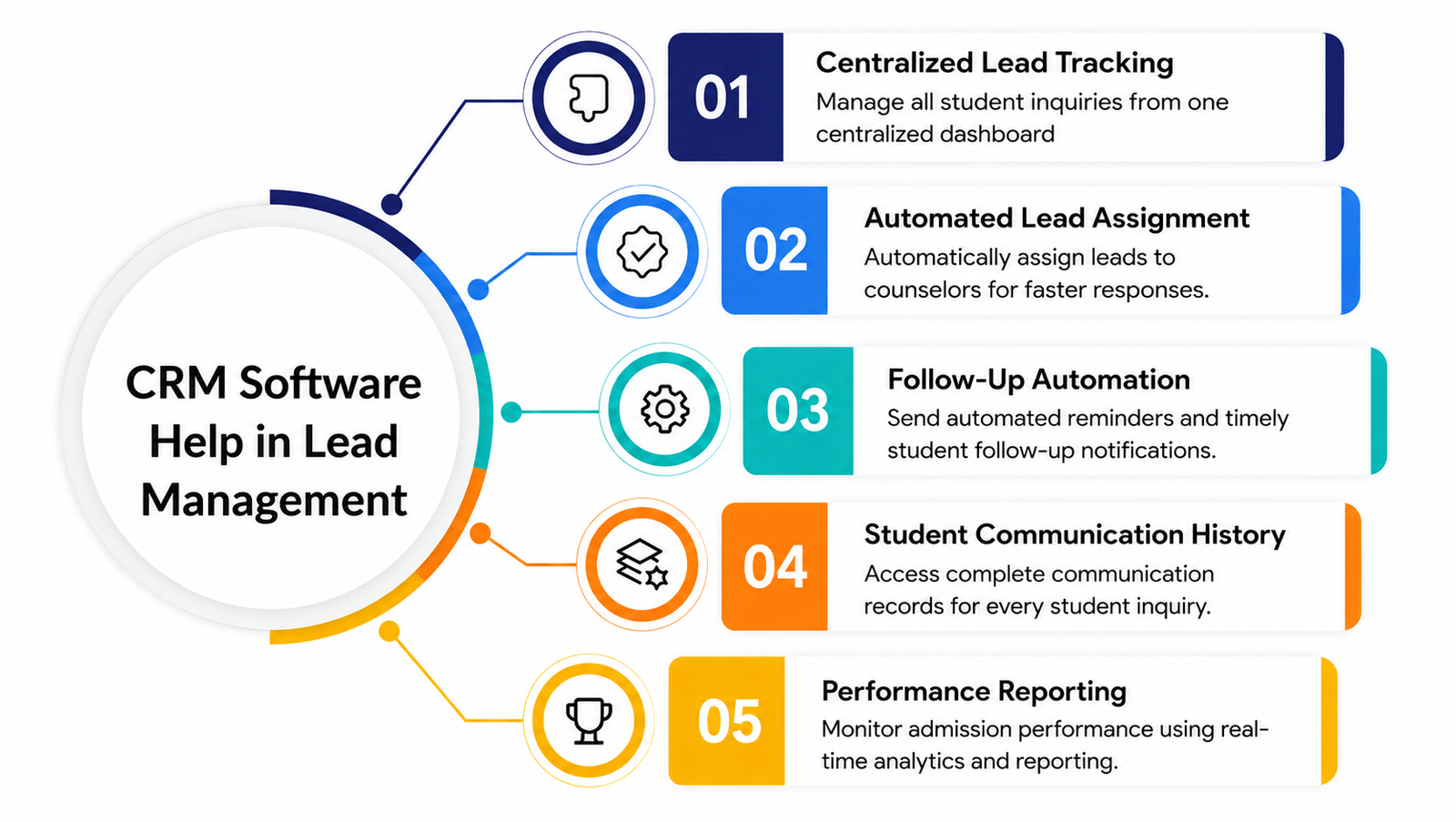
How Does CRM Software Help in Lead Management?

CRM Software Help in Lead Management

One of the most important operational questions businesses ask is: “How does CRM software help in lead management?”

Modern CRM systems streamline the complete inquiry lifecycle from lead generation to final enrollment.

Centralized Lead Tracking

CRM platforms collect inquiries from websites, social media campaigns, advertisements, WhatsApp, webinars, and offline campaigns into one centralized dashboard.

This improves visibility and reduces communication gaps across teams.

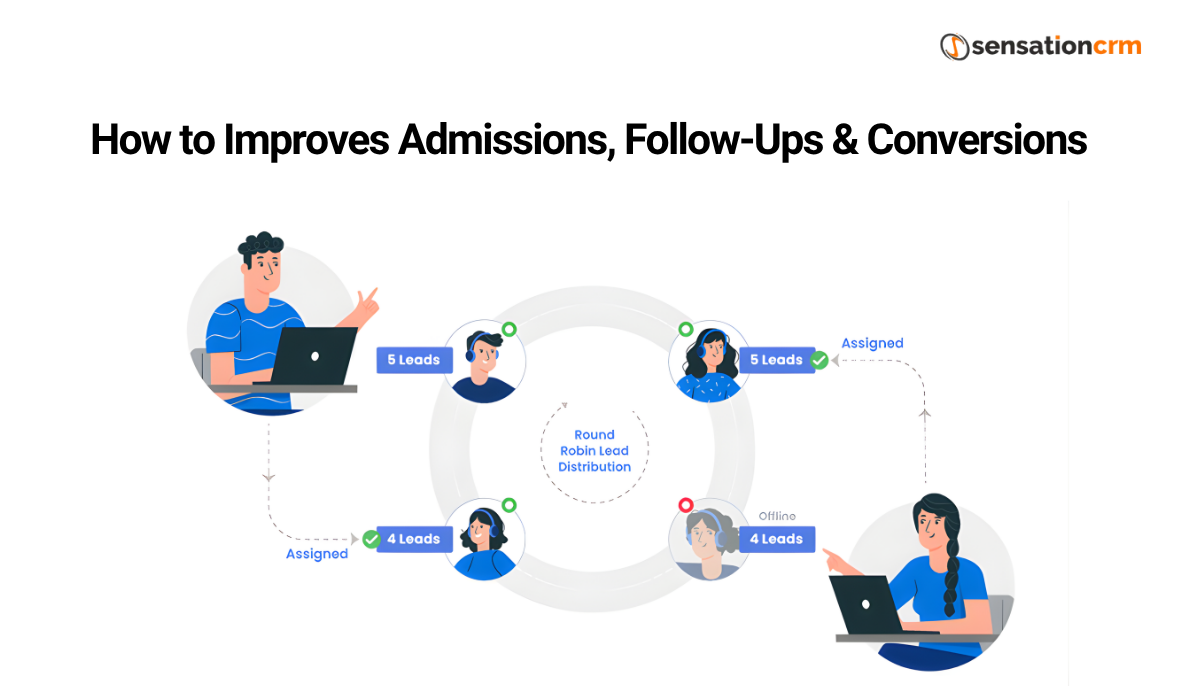
Automated Lead Assignment

Lead management software automatically assigns inquiries to counselors based on:

  • Course interest
  • Branch preference
  • Location
  • Availability
  • Inquiry priority

This improves response speed and operational coordination.

Follow-Up Automation

Automated reminders, email workflows, WhatsApp notifications, and counseling schedules help consultants maintain consistent communication with students.

Automation significantly reduces missed follow-ups and inactive leads.

Student Communication History

CRM systems maintain complete interaction records including:

  • Calls
  • Emails
  • WhatsApp conversations
  • Counseling notes
  • Application updates

This helps counselors personalize conversations more effectively.

Performance Reporting

CRM dashboards provide insights into:

  • Lead source performance
  • Counselor productivity
  • Conversion ratios
  • Follow-up trends
  • Marketing campaign performance

These reports help management teams improve operational planning and lead generation performance.

What Is the Lead Management Process in CRM?

Businesses frequently ask: “What is the lead management process in CRM?

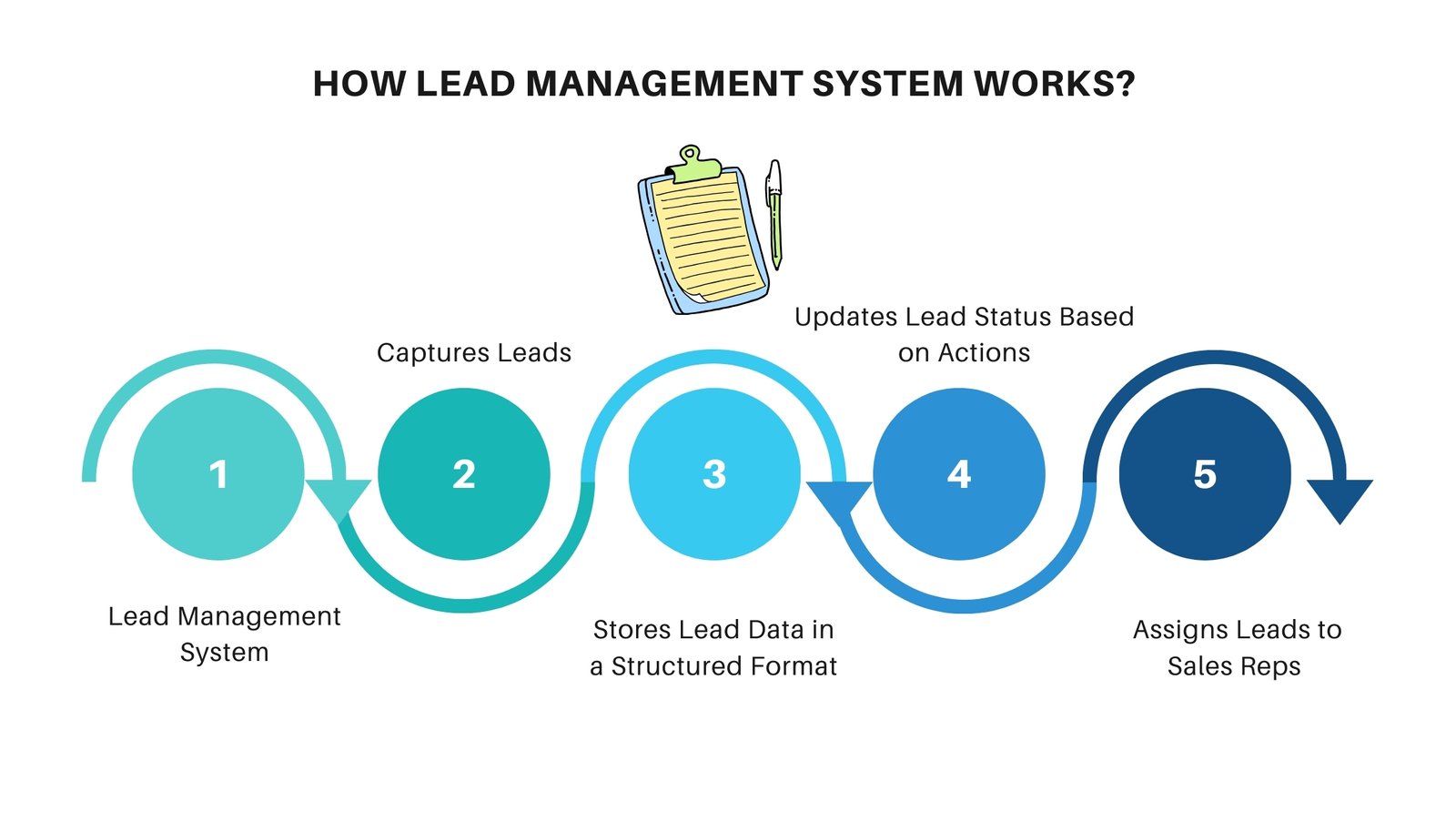
The lead management process usually follows several structured stages designed to improve inquiry handling and conversion tracking.

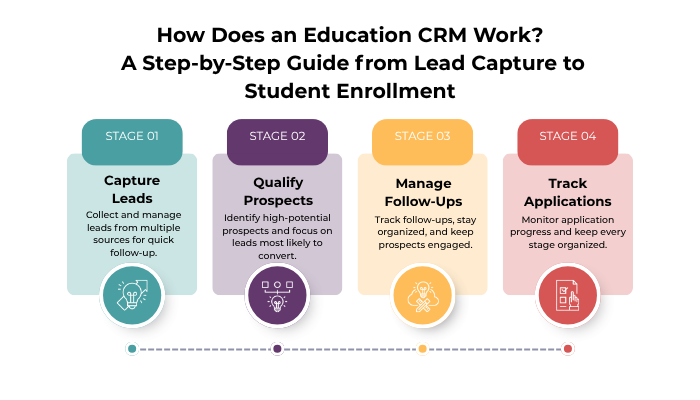
Lead Capture: The CRM collects inquiries from websites, ads, social media, WhatsApp, education portals, webinars, and offline campaigns.

Lead Qualification: The system categorizes students based on course interest, intent level, location, budget, and enrollment probability.

Lead Assignment: Qualified inquiries are assigned to appropriate counselors automatically or manually.

Follow-Up and Lead Nurturing: Counselors communicate with students through calls, emails, counseling sessions, webinars, and WhatsApp while tracking interactions inside the CRM.

Enrollment and Application Tracking: CRM systems monitor application progress, documentation, payment updates, and admission workflows.

Conversion Analysis: Management teams analyze inquiry performance, conversion trends, counselor productivity, and operational bottlenecks using reporting dashboards.

Logo

One CRM Complete Lead Management

Capture Inquiries

From all sources in one place

Automate Follow-ups

Timely reminders & communication

Monitor Performance

Track counselors & team activity

Increase Enrollments

Convert more inquiries into admissions

Why Lead Generation Services in India Need CRM Integration

Many educational organizations invest heavily in lead generation services in India but still struggle with low conversions because inquiry management workflows remain unorganized.

Lead generation alone is not enough. Institutions also require structured systems for:

  • Lead nurturing
  • Communication management
  • Follow-up automation
  • Conversion tracking
  • Inquiry prioritization

Without CRM integration, many generated leads eventually become inactive or untracked.

This is why lead generation and CRM systems increasingly operate together as connected operational strategies.

AI and Automation Are Changing Lead Management in India

AI-powered CRM systems are transforming how educational organizations manage inquiries and counseling operations.

Modern sales lead management software increasingly includes:

  • AI-based lead scoring
  • Automated WhatsApp communication
  • Predictive conversion analytics
  • Smart follow-up reminders
  • Behavioral inquiry analysis
  • Automated reporting systems

These features help organizations improve response quality while reducing repetitive administrative workload. AI-driven lead prioritization also helps counselors focus more effectively on high-intent inquiries.

Why Indian Education Consultants Prefer Custom CRM Solutions

Many organizations prefer customized CRM platforms instead of generic software because educational workflows differ significantly between institutions.

For example:

  • Overseas consultants manage visa workflows
  • Coaching institutes prioritize lead nurturing
  • Universities manage multi-department admissions
  • Edtech companies focus heavily on digital engagement

Custom CRM solutions  allow businesses to build workflows aligned with operational requirements instead of adapting processes to rigid software limitations.

Comparison Between Manual Lead Tracking and CRM-Based Lead Management

FeatureManual Lead TrackingLead Management CRM
Inquiry OrganizationScatteredCentralized
Follow-Up ManagementManualAutomated
Reporting VisibilityLimitedReal-time dashboards
Lead AssignmentUnorganizedAutomated workflows
Communication TrackingDifficultComplete history
Conversion MonitoringInconsistentStructured analytics
ScalabilityLimitedHighly scalable

Future of Lead Management in the Indian Education Sector

The Indian education industry is becoming increasingly digital, communication-driven, and competitive. Educational organizations are expected to continue investing heavily in CRM platforms, automation systems, AI-powered engagement tools, and centralized inquiry management infrastructure.

Future trends are likely to include:

  • AI-powered counseling automation
  • WhatsApp-first communication systems
  • Predictive enrollment analytics
  • Voice-assisted CRM platforms
  • Automated student engagement workflows
  • Multi-campus CRM management

As student expectations continue evolving, educational organizations will increasingly depend on intelligent lead management systems to improve operational efficiency and admission performance.

Organizations exploring scalable inquiry management solutions can also learn more about professional Lead Management CRM Solutions designed specifically for education-focused counseling workflows, admission automation, and student engagement management.

Frequently Asked Questions

What are common lead management challenges?

Common challenges include delayed responses, poor follow-up tracking, scattered student data, duplicate leads, communication gaps, and lack of reporting visibility.

What is the difference between lead management and Sensation CRM?

Lead management focuses on inquiry tracking and conversions, while Sensation CRM manages broader customer relationships, communication workflows, automation, and operational processes.

How can a CRM improve lead management for education consultants?

Sensation CRM software centralizes inquiries, automates follow-ups, tracks communication history, improves counselor coordination, and provides real-time analytics dashboards.

What is the lead management process in CRM?

The process typically includes lead capture, qualification, assignment, follow-up, nurturing, enrollment tracking, and conversion analysis.

Why do education consultants need lead management software?

Lead management software helps consultants organize inquiries, improve response speed, automate communication, track conversions, and manage counseling workflows efficiently.

Categories
Admissions

CRM for Educational Institutions: How It Improves Admissions, Follow-Ups & Conversions

Educational institutions today handle far more than teaching and examinations. Admissions teams manage thousands of inquiries, counsellors track student conversations across weeks or months, and administrators balance data from websites, walk-ins, calls, emails, and campaigns. When this information lives in spreadsheets, notebooks, or individual inboxes, decisions slow down and opportunities are missed.

A CRM for educational institutions brings structure to this complexity through effective CRM lead management. It centralizes student data, organizes follow-ups, and helps teams move prospects smoothly from inquiry to enrollment. This article explains how a CRM works in an education context, how it improves admissions and conversions, and what institutions should realistically expect from it.

What a CRM Means for Educational Institutions

A Customer Relationship Management system, in education, is less about “customers” and more about relationships. These relationships start long before enrollment and often continue after graduation.

A CRM for educational institutions typically manages:

    • Communication history (calls, emails, messages)

    • Follow-up schedules and reminders

    • Counselor assignments and performance

    • Conversion tracking from inquiry to admissionStudent inquiries from all sources

Instead of reacting to scattered information, teams work from one shared system.

The Admissions Reality Without a CRM

Before understanding the benefits, it helps to look at common problems institutions face without a CRM.

Fragmented Data: Leads come from websites, social media, education portals, phone calls, walk-ins, and referrals. When each source is tracked separately, there is no complete view of a student’s journey.

Missed Follow-Ups: Counsellors rely on memory, notes, or personal calendars. Busy days lead to forgotten calls, delayed responses, and lost interest from students.

No Clear Admission Pipeline: Without defined stages, it is difficult to know:

    • How many active prospects exist

    • Where students drop off

    • Which counsellors are overloaded

Limited Accountability: When outcomes are poor, it is hard to tell whether the issue is lead quality, follow-up discipline, or process gaps.

How CRM Improves the Admissions Process

CRM Admission Process

Centralized Inquiry Management

A CRM captures every inquiry automatically or manually into one system. Each student record includes contact details, course interest, source, and interaction history.

This eliminates duplication and confusion. Anyone on the team can see what has already been discussed and what needs to happen next.

Structured Admission Stages

CRMs allow institutions to define admission stages such as:

    • New Inquiry

    • Contacted

    • Counselling Done

    • Application Submitted

    • Fee Discussion

    • Enrolled

This structure creates clarity. Teams know exactly where each student stands and what actions are pending.

Faster Response Times

Quick responses matter in admissions. A CRM enables:

    • Instant lead assignment

    • Automated alerts for new inquiries

    • Templates for common responses

Students receive timely information, which builds trust and keeps engagement high.

Follow-Ups That Actually Happen

Follow-up discipline is one of the strongest predictors of conversion. A CRM solution supports this in practical ways by keeping communication organized and timely.

Automated Reminders

Counsellors receive reminders for scheduled calls, emails, or messages. Follow-ups no longer depend on memory.

Complete Interaction History

Every call note, email, and message is logged. If a student reconnects after weeks, the context is instantly available.

Priority Management

CRMs help teams focus on students who are:

    • Actively engaging

    • Near decision points

    • At risk of dropping off

This prioritization improves efficiency without increasing workload.

Improving Conversion Rates

Conversion is rarely about pressure. It is about timing, relevance, and consistency.

Personalized Communication

With data on course interest, budget range, and previous questions, counsellors can tailor conversations instead of repeating generic information.

Visibility Into Drop-Off Points

CRMs show where students disengage. Institutions can identify whether issues arise during counselling, documentation, or fee discussions.

Better Use of Lead Sources

By tracking conversions by source, lead management helps teams learn which channels produce serious applicants and which need adjustment.

Data-Driven Decision Making

A CRM replaces guesswork with visibility.

Institutions can track:

    • Inquiry-to-enrollment ratios

    • Average response times

    • Counselor performance

    • Campaign effectiveness

These insights support realistic planning for intake targets, staffing, and marketing spend.

Role-Based Access and Collaboration

Road Based Collaboration

Admissions involve multiple roles: front-desk staff, counsellors, managers, and marketing teams.

CRMs allow:

    • Role-based access to sensitive data

    • Clear ownership of leads

    • Smooth handovers between teams

This reduces internal friction and duplication of effort.

CRM for Different Types of Educational Institutions

Schools: Schools use CRMs mainly for inquiry handling, parent communication, and admission cycle management.

Colleges and Universities: Higher education institutions benefit from CRMs that handle large volumes, multiple courses, entrance tests, and long decision cycles.

Coaching Centers and Training Institutes: For these institutions, speed and follow-up intensity are critical. CRMs help track batch availability, demo classes, and conversions Solving Admission & Enrollment Challenges effectively.

Comparison Table: Admissions With and Without CRM

Aspect Without CRM With CRM
Inquiry Tracking Manual, scattered Centralized and automatic
Follow-Ups Inconsistent System-driven reminders
Visibility Limited Real-time pipeline view
Accountability Unclear Measurable performance
Conversion Insight Guess-based Data-backed

Common Misconceptions About CRM in Education

“CRM is only for large institutions.” Small and mid-sized institutions often see faster benefits because processes are simpler.

“It replaces human counselling.” CRM supports counsellors; it does not replace judgment or empathy.

“It is difficult to adopt.” Modern CRMs are designed for non-technical users.

Implementation Considerations

A CRM succeeds when aligned with actual workflows.

Key points to consider:

    • Clearly define admission stages

    • Train counsellors on daily usage

    • Start with essential features

    • Review data weekly, not yearly

Adoption matters more than complexity.

CRM is a Must for Educational Institutions

A CRM for educational institutions is not about aggressive selling. It is about clarity. It helps teams stay organized, respond on time, and understand what works and what does not. Admissions become predictable instead of reactive.

For institutions looking for a CRM designed specifically around education workflows, Sensation CRMs offers solutions built to handle inquiries, admissions, follow-ups, and conversions in a structured and practical way. Their approach focuses on usability, visibility, and real admission outcomes rather than unnecessary features.

When implemented with intention, a CRM becomes part of how an institution listens, responds, and grows.

Frequently Asked Questions

What is the main benefit of a CRM in education?

The main benefit is structured follow-ups and data tracking that help admissions teams respond promptly and convert more inquiries into enrollments.

CRMs create reminders, schedule follow-ups, and track communication history so no inquiry gets lost or delayed.

Yes. By improving communication, transparency, and responsiveness, CRMs increase the likelihood that prospects complete the enrollment process.

Yes, every interaction emails, calls, messages, notes is logged, giving a complete view of the prospect’s journey

Reports help institutions see where prospects drop off, which staff are performing best, and which programs need more focus.

No. CRM supports teams by organizing work and automating reminders, but human engagement remains central to admissions success.