Categories
Education CRM

Top Features Every Education CRM Must Have in 2026 

Education is changing quietly. Admissions teams aren’t suddenly doing new jobs, but they are handling more volume, more channels, and higher expectations than before. By 2026, using spreadsheets, inboxes, and disconnected tools simply won’t hold up anymore. 

That’s where education CRM software fits in not as a fancy add-on, but as core infrastructure. 

The problem is, many institutions still use CRMs that were never built for education. They’re adapted sales tools, patched together with custom fields and workarounds. It works for a while, then breaks under pressure. 

This article explains, in clear terms, the features an education CRM must have by 2026 to actually support schools, colleges, universities, and coaching institutes without creating more work.  

Just what matters to Education the most. 

Why Education CRMs Are No Longer Optional 

Student decision cycles are longer now. Parents ask more questions. Students compare options deeply. Communication happens across calls, WhatsApp, email, forms, and social platforms sometimes all at once making effective lead management more critical than ever.

Without a central system, admissions teams rely on memory, personal notes, and shared sheets. That’s risky. Leads get missed. Follow-ups happen late. Management has no real visibility. 

Modern education CRM software is meant to solve that but only if it’s designed around how education actually works. 

By 2026, a CRM that lacks the basics below won’t just feel outdated. It’ll actively slow teams down. 

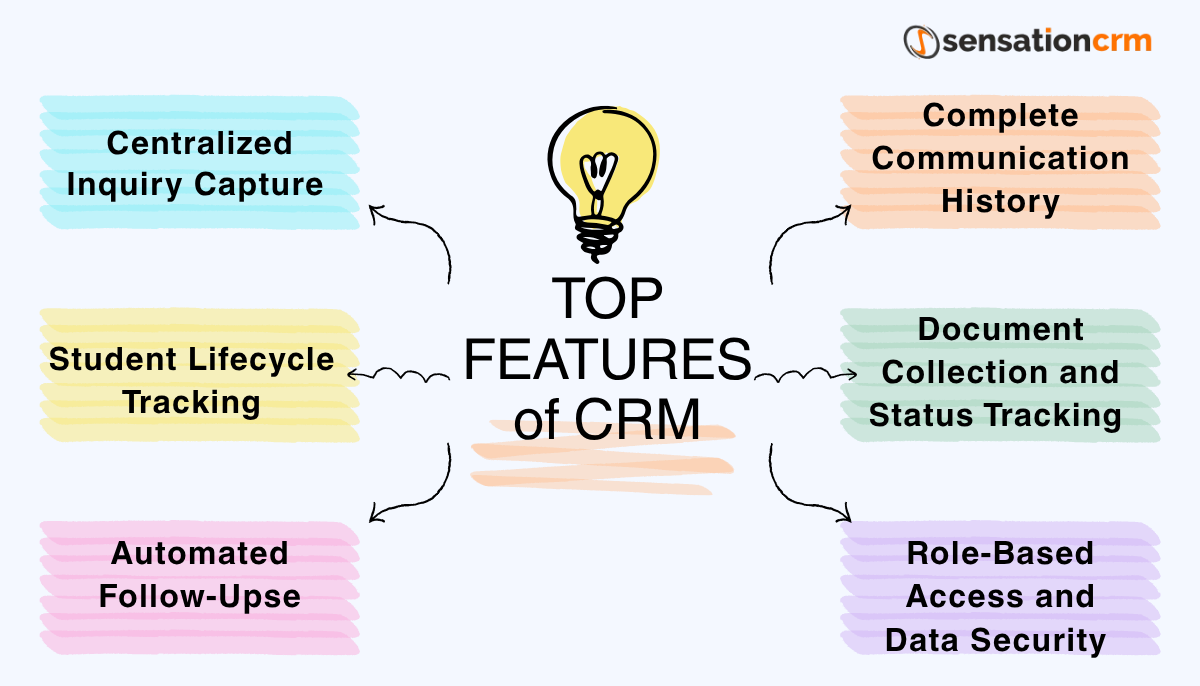
Centralized Inquiry Capture (From Everywhere) 
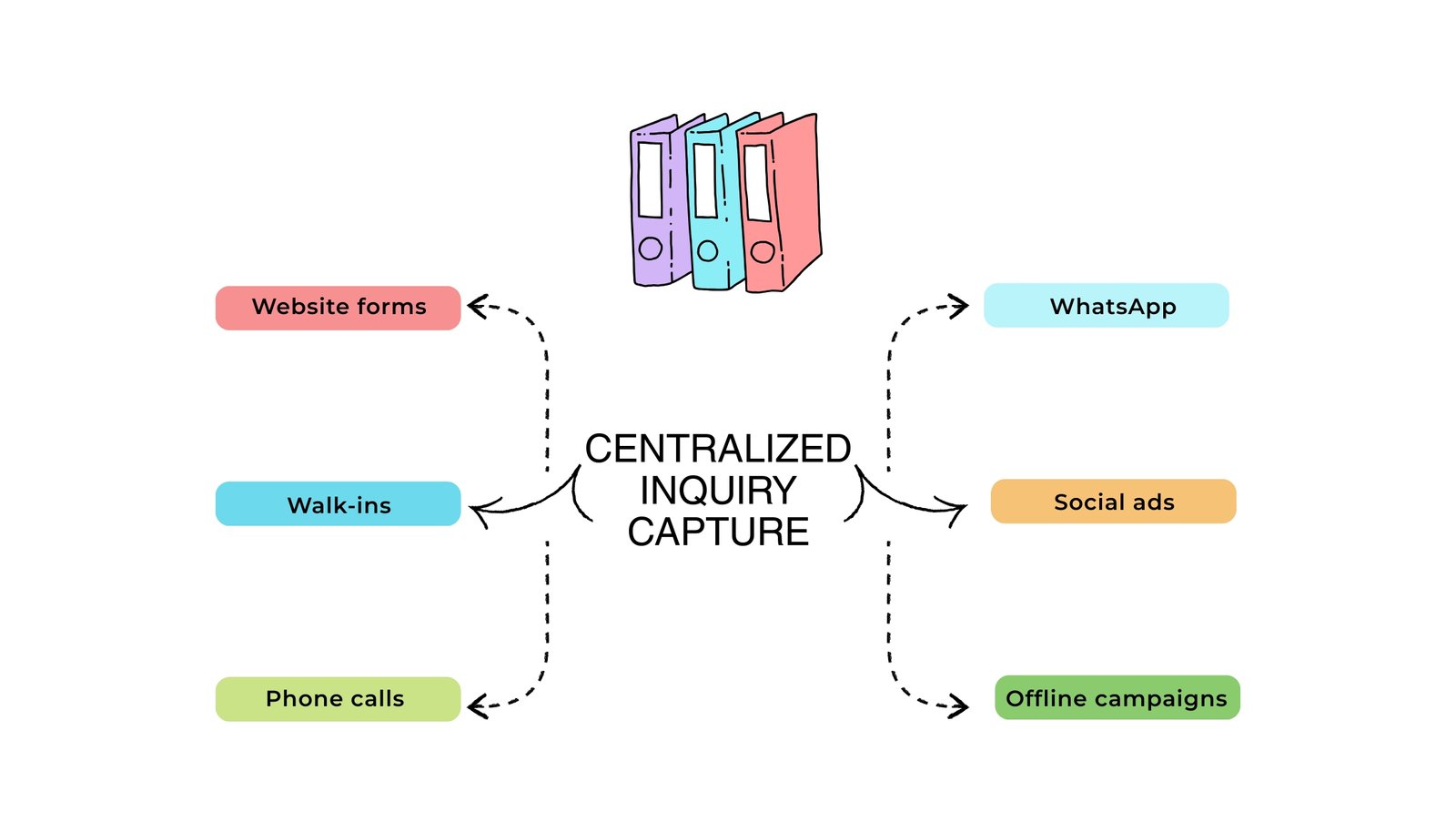
Centralized Inquiry Capture

This sounds obvious, but many systems still fail here. An education CRM must capture inquiries from: 

  • Website forms 

  • Walk-ins 

  • Phone calls 

  • WhatsApp 

  • Social ads 

  • Offline campaigns 

All of them should land in one place, in real time, with proper source tracking. 

No duplicate records. No manual imports. No guessing where a lead came from. 

If an institution can’t clearly see how students are finding them, decisions become guesswork. That’s not sustainable anymore. 

Student Lifecycle Tracking, Not Just Lead Stages 

Education doesn’t run on simple “lead → deal → closed” logic. 

A proper education CRM tracks the full student journey: 

  • Inquiry received 

  • Counselling started 

  • Documents pending 

  • Eligibility confirmed 

  • Fee discussion 

  • Enrollment completed 

  • Post-enrollment engagement

Each stage needs clarity. Each status needs meaning. CRMs built for education don’t force teams into sales language. They reflect academic reality.

Automated Follow-Ups That Still Feel Human 

Follow-ups fail because people are busy, not careless. 

A CRM for Educational Institutions in 2026 must strengthen Follow-Ups & Conversions by:

  • Set automatic reminders 

  • Trigger follow-up tasks 

  • Support email and message scheduling 

  • Prevent leads from going cold silently 

But automation should support staff, not replace them. 

Templates should be editable. Messaging should stay personal. The system should guide, not nag. 

Counsellor Assignment Logic That Actually Makes Sense 

Manual lead assignment doesn’t scale. 

Education CRMs need built-in logic to assign inquiries based on: 

  • Program or course interest 

  • Counsellor workload 

  • Availability 

  • Location or language preference 

This avoids uneven distribution and burnout. More importantly, it creates accountability. Everyone knows which counsellor owns which inquiry. No confusion, no overlap. 

Complete Communication History in One View 

Students don’t repeat their story neatly. They expect continuity. 

A strong education CRM shows: 

  • Call logs 

  • Email threads 

  • Messages 

  • Notes added by counsellors 

  • Status updates 

All in one timeline. If a counsellor leaves or a student speaks to someone new, context remains. That matters more than people realize. 

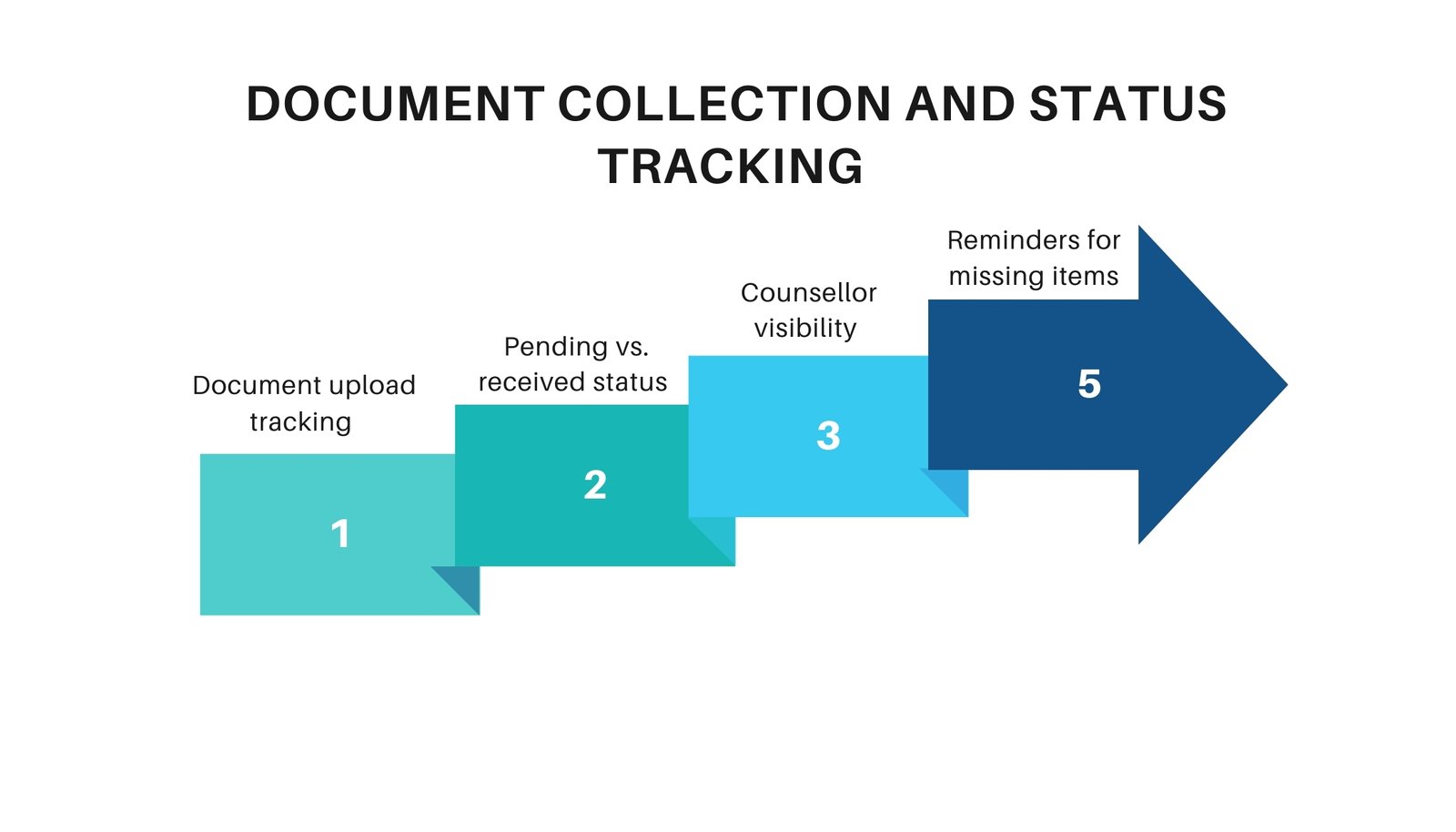
Document Collection and Status Tracking 
Document Collection and Status Tracking

Admissions involve paperwork. There’s no avoiding it.  

Education CRM software must support: 

  • Document upload tracking 

  • Pending vs. received status 

  • Counsellor visibility 

  • Reminders for missing items

Without this, teams rely on memory and follow-ups become messy. A CRM shouldn’t store files blindly. It should show what’s missing, clearly. 

Program-Wise and Campus-Wise Visibility 

Institutions don’t operate as one big funnel. 

They have: 

  • Multiple programs 

  • Multiple campuses 

  • Different intake cycles 

An education CRM must break data down cleanly: 

  • Program demand 

  • Conversion rates per course 

  • Counsellor performance by department 

  • Enrollment trends over time 

This helps leadership plan realistically, not react emotionally. 

Built-In Reporting That Non-Technical Teams Can Read 

Reports shouldn’t require training sessions. 

By 2026, CRM reports should: 

  • Be easy to understand 

  • Show trends clearly 

  • Update in real time 

  • Export cleanly when needed

Admissions heads need to know: 

  • What’s working 

  • What’s stuck 

  • Where leads drop off 

Strong reporting and analytics replace assumptions with facts.
They turn raw CRM data into clear insights, highlight trends over time, and make decision-making faster and more confident.

Simple as that.

Role-Based Access and Data Security 

Education handles sensitive data. 

A CRM must control: 

  • Who can see what 

  • Who can edit records 

  • Who can export data 

Role-based access protects institutions and builds trust with parents and students. 

Security isn’t optional anymore. It’s expected. 

Integration with Daily Tools 

CRMs shouldn’t feel like extra work. 

Education CRM software in 2026 must integrate with: 

  • Email platforms 

  • Telephony systems 

  • WhatsApp 

  • Payment gateways 

  • Learning systems (where relevant) 

If teams constantly switch tabs, adoption drops. 

The best systems feel invisible. They sit quietly behind daily work. 

Mobile Accessibility for On-the-Move Teams 

Counsellors don’t always sit at desks. 

A modern education CRM needs: 

  • Mobile access 

  • Clean UI on smaller screens 

  • Quick updates without lag 

Especially for walk-ins, events, or field counsellors, mobile access matters more than people admit. 

Customization without Heavy Development 

Every institution works slightly differently. 

CRMs should allow: 

  • Custom fields 

  • Workflow tweaks 

  • Status changes 

  • Form edits 

Without weeks of development or extra cost. 

Rigid systems break trust fast. 

Scalability without Losing Control 

Growth shouldn’t create chaos. 

Education CRM software must scale with: 

  • More inquiries 

  • More counsellors 

  • More programs 

While keeping structure intact. 

If growth leads to confusion, the system has failed. 

Why Education-Specific CRM Matters More Than Ever 

Generic CRMs can be customized, yes. But customization isn’t the same as design. 

Education CRMs are built around: 

  • Longer decision cycles 

  • Multiple stakeholders 

  • Emotional choices 

  • Compliance needs 

That difference shows in daily use. 

By 2026, institutions using generic tools will feel the strain clearly. 

Where Sensation CRM Fits In 

Sensation CRM is designed specifically for education workflows not adapted from sales software. 

It focuses on: 

  • Clear admissions pipelines 

  • Counselor accountability 

  • Communication continuity 

  • Practical reporting 

Institutions using Sensation CRM don’t have to fight the system to make it work. It fits naturally into admissions operations and scales without adding noise. 

That clarity is why education teams stick with it. Contact Us to see how Sensation CRM can support your admissions team.

Education doesn’t need more tools

It needs better systems 

An education CRM in 2026 should: 

  • Reduce manual work 

  • Improve follow-ups 

  • Give leadership visibility 

  • Support counselors instead of slowing them down 

The features listed above aren’t “advanced.” They’re essential. 

Institutions that choose CRM software thoughtfully now will feel calmer, clearer, and more in control as volumes grow. 
FAQs: Education CRM Software

 
What is education CRM software? 

It’s a system designed to manage student inquiries, admissions, communication, and enrollment workflows in one place. 

A CRM centralizes student interactions, tracks admissions stages, automates follow-ups, and provides visibility into conversion trends to improve enrollment performance.

Yes, and they often benefit faster because manual work reduces immediately. 

Usually a few weeks, depending on data and process complexity. 

No. It supports counselors by organizing work and reducing manual effort. 

Because it’s built specifically for education institutions and aligns with real admissions processes, not sales models. 

Categories
Education CRM Software

Education CRM Software vs Generic CRM: Key Differences Explained

Built for The Student Lifecycle

Education CRM software is designed around the full student journey, starting from the first inquiry and continuing through counseling, enrollment, and even post-admission communication. This lifecycle is longer and more layered than a typical sales journey. A student may take weeks or months to decide, ask repeated questions, or pause the process entirely before coming back. Education CRM systems account for this naturally, while generic CRMs are built for short sales cycles and quick closures, which doesn’t align well with how education decisions are actually made.

Admissions Workflow Support

Admissions workflows involve more than just “open” and “closed” stages. There are document checks, eligibility confirmations, fee discussions, seat availability concerns, and academic approvals. Education CRM software includes these workflows by default, so teams can move students through each stage without confusion. Generic CRMs usually require heavy customization to replicate this, and even then, the process often feels forced or incomplete.

Parent Student Communication Handling

In education, communication is rarely one-to-one. Parents, guardians, and sometimes sponsors are involved in the decision-making process. Education CRM software allows institutions to manage multiple contacts linked to a single student profile. This ensures that updates reach the right people at the right time. Generic CRMs usually treat each contact as an individual buyer, which can result in fragmented communication and missing context.

Counselor Management Structure

Education CRM software is built to support counselors rather than sales representatives. It tracks counselor assignments, follow-ups, workloads, and response times in a way that reflects academic counseling rather than sales pressure. This helps institutions ensure fair distribution of inquiries and consistent follow-ups. Generic CRMs focus on deal ownership and sales quotas, which don’t translate well to counseling environments.

Counselor Management Structure

Academic Reporting and Insights

Education-focused reporting looks very different from sales reporting. Institutions need to understand which programs attract the most interest, where students drop off in the admission process, how long decisions take, and which counselors need support. An education CRM software CRM solution provides these insights in a usable, institution-ready format. Generic CRMs mainly report on revenue forecasts and pipeline velocity, which offer limited value in academic decision-making.

Compliance and Data Sensitivity

Educational institutions handle sensitive student information that must be protected carefully. Education CRM software is designed with this responsibility in mind, offering role-based access, audit trails, and controlled data visibility. This ensures that staff members only see the information relevant to their role. Generic CRMs can be secured, but compliance is not their primary design focus, making them riskier if not managed carefully.

Reduced Customization Dependency

One common issue with generic CRMs is the need for extensive customization to fit education workflows. Over time, this creates dependency on technical teams and increases maintenance costs. Education CRM software already understands academic structures, making it a Guide for Schools, Colleges & Coaching Institutes that need stability rather than constant configuration.

Higher User Adoption Rates

Admissions teams are more likely to use a system that feels intuitive and aligned with their daily tasks. Education CRM software mirrors how counselors already work, which leads to higher adoption and better data quality through effective user management. Generic CRMs often feel foreign to academic staff, lacking proper user management controls and causing teams to fall back on spreadsheets or personal notes, which defeats the purpose of having a CRM at all.

Scalability Without Operational Chao

As institutions grow, they face higher inquiry volumes, more programs, and larger counseling teams. Education CRM software scales without disrupting existing workflows, maintaining structure even as complexity increases. Generic CRMs can scale technically, but without proper academic logic, they often create confusion as the institution grows.

Cost vs Long-Term Value

Long-term CRM benefits

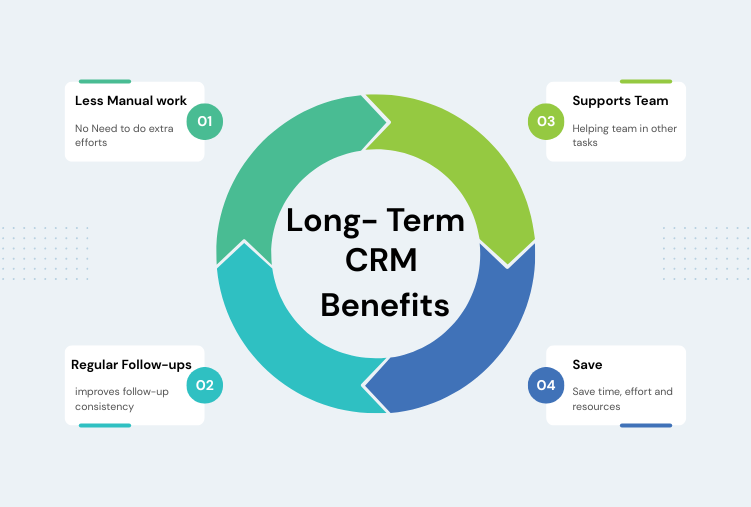
While generic CRMs may appear cheaper initially, the long-term costs of customization, training, and inefficiency often outweigh the savings. Education CRM software delivers better value over time because it reduces manual work, improves follow-up consistency, and supports admissions teams more effectively. Institutions end up saving time, effort, and resources in the long run.

Why This Difference Matters in Practice

Choosing between a generic CRM and education CRM software isn’t just a technical decision. It directly affects how smoothly admissions teams operate, how effectively lead management is handled, how students experience the institution, and how leadership makes decisions. A system built for education reduces friction and supports sustainable growth.

Final Thought

Education institutions don’t need to force their processes into a sales-oriented system. They need tools that respect how education actually works.

Sensation CRM is designed specifically for academic environments, supporting admissions workflows, counselor operations, and institutional reporting without unnecessary complexity. For schools, colleges, and coaching institutes that value clarity, accountability, and long-term scalability, using an education-focused CRM makes everyday work simpler and more effective.

FAQs

What is the difference between education CRM software and generic CRM?

Education CRM software is tailored around student lifecycles and admissions processes, while generic CRMs focus on sales pipelines and deal closures. 

They can be adapted, but they usually require heavy customization and may not fit natural education workflows.

Education CRMs include inquiry management, counselor assignments, admissions stage tracking, parent-student relationship mapping, and academic reporting.

Education-focused reporting highlights admissions funnels, follow-ups, conversions, and counselor performance rather than sales revenue.

Not necessarily. While education CRMs can be priced similarly, they save money long-term by reducing customization and increasing adoption.

Yes. By tracking interactions and follow-ups consistently, CRMs help institutions engage students more effectively throughout the admissions process.

See Sensation CRM in Action

Let our team walk you through your customized admissions workflow and show how automation saves hours every week.