Categories
Lead Management Software

Choosing the Right Lead Management Software for Your Business

Winning new customers starts long before a deal closes. It begins the moment a prospect fills out a form, replies to an email, or clicks an ad and what your business does in the minutes and days that follow often decides whether that interest turns into revenue. That’s why businesses rely on the best CRM software to manage leads efficiently. When leads pile up faster than your team can respond, opportunities quietly disappear.

Education CRM vs ERP: Understanding the Core Difference

Although CRM and ERP systems often work together, their primary objectives are different.

Lead management software exists to prevent exactly that. It brings every prospect into one organized system, so your team can respond quickly, follow up consistently, and move each lead toward a sale. The challenge is choosing the right platform in a market full of look alike options. This guide explains what to prioritize, answers the questions buyers search for most, and shows how Sensation CRM helps you convert more of the leads you already have.

Logo

Power Your Admissions with Sensation CRM

Centralized Lead Management

Automated Follow-ups

Real-time Reports & Analytics

Secure & Reliable

Why Lead Management Software Is Worth It

It helps to know why so many businesses now depend on Lead Management CRM software before you weigh your choices. The move to structured lead management is driven by outcomes, not trends.The numbers make the case:

  • More than 62% of organizations have put centralized systems in place to track, qualify, and convert leads, so a structured approach is now the norm rather than a differentiator. Cloud-based platforms represent roughly 72% of lead management deployments, and wiring lead capture straight into a CRM reduces lead leakage by about 40% compared with disconnected, standalone tools.

  • Businesses that adopt these platforms routinely report quicker response times and higher conversion rates once automation kicks in.
  • Close to six in ten businesses use CRM software specifically to generate and nurture leads, a sign of how central lead management has become to the entire CRM value proposition.

The category is growing fast, too. The global CRM lead management market is projected to rise from about US$4.7 billion in 2026 to more than US$14 billion by 2033, powered by AI-driven scoring, automation, and cloud adoption. The takeaway is clear: businesses that manage leads well grow faster and Sensation CRM is built to give you that head start.

What Is Lead Management Software?

Lead management software captures prospects from every source you use your website, social media, paid campaigns, email, or a phone call and carries them through a structured pipeline until they convert. Along the way it scores, organizes, assigns, and nurtures each lead so none get overlooked.

The practical payoff is a single source of truth. Instead of juggling spreadsheets and relying on memory, your whole team can see who each lead is, where they sit in the journey, and what should happen next. When this functionality is part of a complete customer platform, it’s known as CRM lead management or a Lead Management CRM pipeline handling and full relationship management working together, which is exactly what Sensation CRM provides.A capable lead management system generally covers:

  • Automatic lead capture: across all your channels
  • Intelligent lead scoring: that ranks prospects by buying intent
  • Instant lead routing: so the right rep receives the right lead
  • Automated nurturing: with well-timed emails and reminders
  • Actionable reporting: that shows what’s actually driving conversions

What Is the Best Lead Management Software?

The honest answer is that no single tool is “best” for everyone. What works brilliantly for a small startup might overwhelm a large enterprise, and the reverse is just as true. What really counts is fit how closely a platform aligns with your team size, budget, sales process, and growth plans. The best software is the one your team will genuinely use, day in and day out, to close more deals.

Sensation CRM is designed around that principle. Instead of drowning you in features you’ll never touch, it focuses on the work that grows revenue: capturing every lead, scoring and routing them intelligently, automating follow-up so nothing slips, and keeping your pipeline fully visible. It’s capable enough to support a scaling team while staying simple enough to launch quickly the exact balance most businesses have in mind when they ask for the “best.”The framework below will help you measure any option against your own needs.

How to Choose the Right CRM Software for Your Business

Picking a Lead Management CRM is fundamentally about matching the software to your situation. Work through these seven checkpoints before you decide.

  • Define your primary goal. Do you want more captured leads, faster responses, a shorter sales cycle, or better reporting? Your top objective determines which features truly matter.
  • Fit it to your sales process. The tool should follow the way your team already sells your stages, handoffs, and follow-up rhythm not push you into a rigid template.
  • Verify integrations. Your CRM must connect cleanly with the tools you rely on: email, marketing platforms, your website, and channels like WhatsApp that matter in many markets. Integration problems are a top reason adoptions fail, so check compatibility early.
  • Prioritize automation and AI. Roughly 67% of modern lead management tools now include predictive scoring, workflow automation, and personalized outreach, and these capabilities are quickly becoming standard. AI-powered scoring helps your team focus on the prospects most likely to buy.
  • Consider ease of use. A powerful platform delivers nothing if no one adopts it. Look closely at setup time, the learning curve, and the quality of onboarding and support  fast time to value matters most for lean teams.
  • Think about scale and pricing. Picture where you’ll be in twelve months, not just today. Compare per user versus flat rate pricing, and confirm the platform can grow with you without forcing a difficult migration down the line.
  • Require strong data security. Lead data is sensitive. Choose a provider that’s open about encryption, compliance, and how it protects the information you store.Put these seven questions to any shortlist and your choices usually narrow in a hurry. Sensation CRM is built to meet all of them flexible enough to match your process, fast to deploy, and secure by design.

If you’re comparing CRM options or refining your sales process, our blogs offer additional insights and practical guidance to support your research.

What Are the 7 C’s of CRM?

Lead Management CRM

The 7 C’s of CRM are a straightforward framework for building customer relationships that endure. They also work well as a checklist when you’re comparing software or refining your strategy:

  • Customer: Begin every decision with the customer and build your process around their needs.
  • Communication: Keep a steady, two way dialogue across every channel the customer uses.
  • Consistency: Provide the same dependable experience at each touchpoint, from first contact through after-sale support.
  • Customization: Use data to personalize offers, messages, and timing for each individual.
  • Convenience: Strip away friction so it’s easy to engage, buy, and get help.
  • Customer Data: Treat clean, centralized, up-to-date data as the bedrock of every interaction.
  • Culture: Foster a customer-first mindset across the entire organization, not only the sales team.

Sensation CRM puts these principles into everyday practice centralizing your data, automating communication, and giving every team member the same consistent view of each lead and customer.

Which CRM Is Most Used in India?

India’s CRM market has its own distinct shape. Large enterprises often turn to heavyweight global suites, but the country’s fastest growing segment start ups and small to medium businesses prefers CRMs that are affordable, easy to customize, quick to set up, and ready for local channels like WhatsApp. Platforms that grasp these needs have built deep loyalty.That’s precisely the space Sensation CRM was made for. For Indian businesses that want real lead management capability without enterprise level cost or complexity, Sensation CRM offers an approachable Lead Management CRM with the automation, WhatsApp friendly workflows, and fast onboarding that local teams actually need. The takeaway: the “right” CRM in India depends on your size and selling style and for growing teams that value affordability and speed, Sensation CRM is a natural fit.

Making Your Decision

Choosing lead management software isn’t about assembling the longest feature list it’s about finding the platform your team will actually use to win more business. Start with your goals, align the tool to your sales process, insist on clean integrations and solid security, and choose a solution that scales as your business grows.Done well, a Lead Management System is far more than a contact database. It shortens your sales cycle, sharpens your follow-up, and turns an unpredictable pipeline into a dependable growth engine. Sensation CRM is built to do exactly that helping you capture more leads, respond faster, and convert with confidence. Contact us today to see how Sensation CRM can help your business streamline lead management and drive more sales.


Logo

One CRM Complete Admission Management

From inquiry capture to enrollment, manage everything
in one place and never miss a potential student.

Frequently Asked Questions

What’s the difference between a CRM and lead management software

Lead management software focuses on capturing, scoring, and nurturing prospects until they convert, while a CRM covers the full customer lifecycle, including everything after the sale. Sensation CRM combines both, which is why the term CRM lead management is so common.

Do small businesses really need lead management software?

Yes. Even a small team loses revenue when leads fall through the cracks. Affordable, cloud-based tools like Sensation CRM help smaller businesses respond faster and convert more without adding headcount.

How does lead scoring work?

Lead scoring ranks prospects by how likely they are to buy, using signals such as behavior, engagement, and how well they match your ideal profile. Modern AI-powered scoring does this automatically, so your team can prioritize the hottest leads first.

How long does it take to set up a Lead Management CRM?

It varies widely – some sales-focused tools go live in hours, while complex enterprise systems can take weeks or months. Sensation CRM is built for fast onboarding, so your team can start converting sooner.

Is cloud-based lead management software secure?

Reputable providers use encryption, access controls, and compliance standards to protect your data. Sensation CRM is built with security in mind, keeping your sensitive lead information safe.

Ready to turn more leads into customers?

Sensation CRM gives your team the structure, automation, and insight to convert with confidence.  See what the right Lead Management CRM can do for your growth. Start with Sensation CRM today.

Categories
Education CRM Education CRM Software

Education CRM vs ERP: What’s the Difference and What Do Educational Institutions Really Need?

Educational institutions today manage far more than admissions and academic records. Schools, colleges, universities, coaching centres, and education consultancies must handle student inquiries, admissions, communication, fee collection, academic operations, marketing campaigns, reporting, and stakeholder engagement simultaneously.

As institutions become increasingly digital, two software categories often dominate technology discussions: Education CRM and ERP systems. While both platforms help streamline operations, they serve very different purposes.

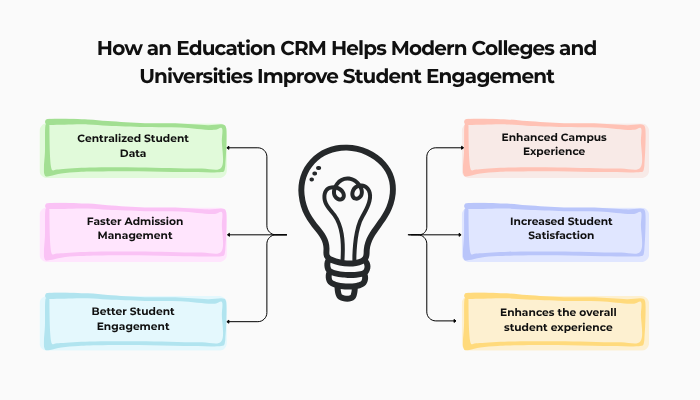
Many institutions searching for the right technology solution often ask whether they need a CRM, an ERP, or both. Understanding the differences between these systems is essential for making informed decisions that support student recruitment, operational efficiency, and long-term institutional growth. Implementing the right education CRM software can help institutions streamline admissions, improve student engagement, and enhance enrollment outcomes.

Why Educational Institutions Need Digital Management Systems

The modern student journey begins long before enrollment. Prospective students interact with websites, social media platforms, education portals, WhatsApp, email campaigns, webinars, and counselors before making admission decisions.

At the same time, institutions must manage academics, finance, examinations, attendance, faculty operations, student records, and administrative processes.

Managing these functions manually often leads to:

  • Lost student inquiries
  • Delayed follow-ups
  • Disconnected data
  • Inefficient communication
  • Limited visibility into admissions performance
  • Operational bottlenecks

This is where technologies like education CRM software and ERP systems help institutions centralize processes and improve efficiency.

What Is CRM for Education?CRM for Education

This is one of the most common questions educational institutions ask.

A Customer Relationship Management (CRM) system designed for education focuses primarily on student recruitment, admissions, communication, lead management, and relationship building.

An education CRM helps institutions manage prospective student interactions from the first inquiry through enrollment and beyond.

Unlike traditional business CRMs, a CRM for education industry is specifically designed to support admission workflows, student engagement, counselor management, marketing campaigns, and enrollment tracking. Understanding CRM for education features & checklist helps institutions select the right solution to streamline admissions and improve enrollment outcomes.

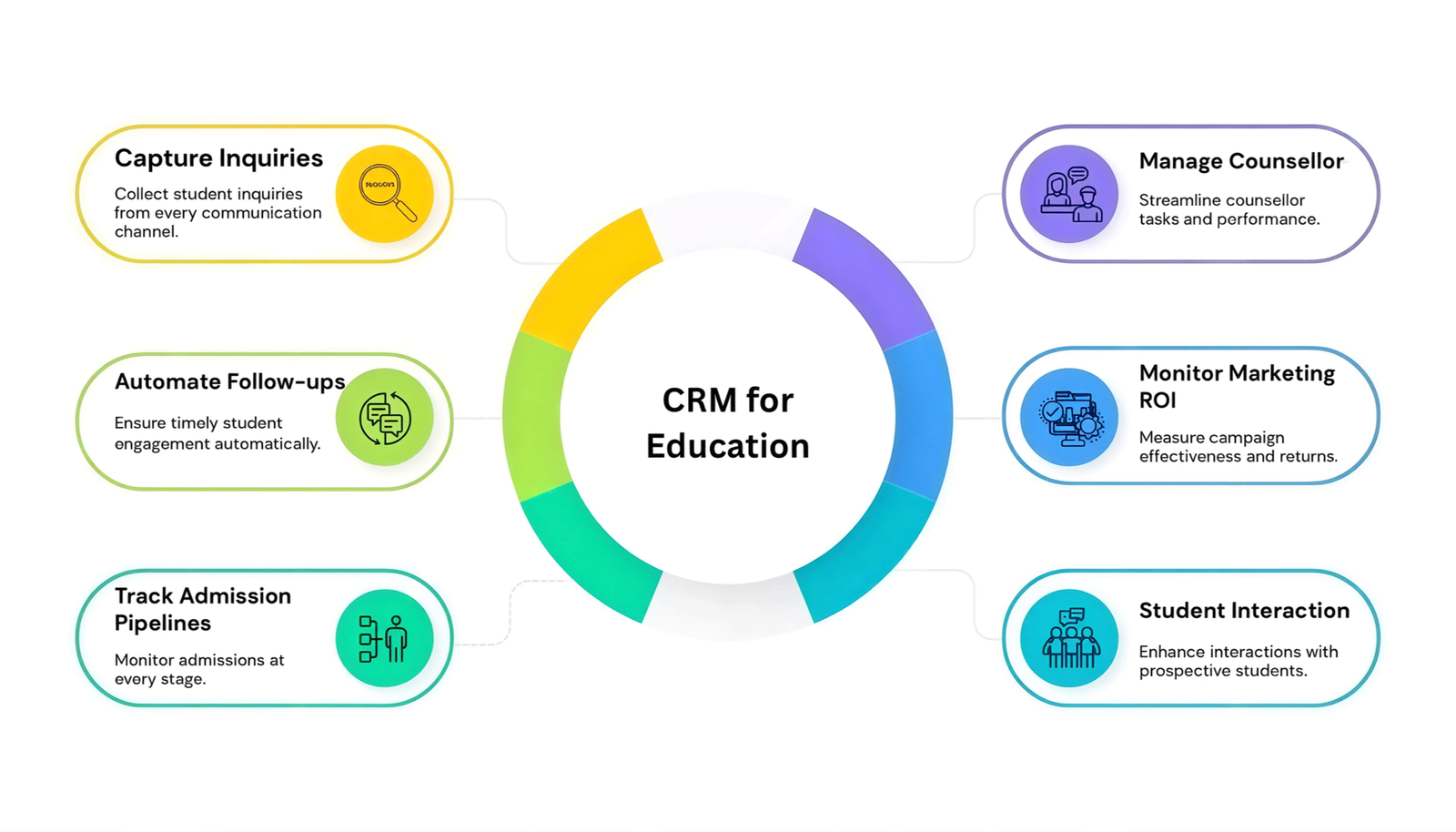
Educational institutions use CRM software to:

  • Capture inquiries from multiple channels
  • Automate follow-ups
  • Track admission pipelines
  • Manage counsellor activities
  • Monitor marketing ROI
  • Improve student communication
  • Increase enrollment conversions

A CRM focuses on helping institutions attract, engage, nurture, and convert prospective students more effectively.

What Is an ERP System in Education?

An Enterprise Resource Planning (ERP) system focuses on managing internal institutional operations. While CRM manages prospective student relationships, ERP manages the administrative and academic processes that occur after enrollment.

Educational ERP systems typically centralize:

  • Student records
  • Attendance management
  • Examination systems
  • Fee management
  • Human resources
  • Payroll
  • Timetable scheduling
  • Academic reporting
  • Library management
  • Faculty administration

ERP platforms are designed to improve operational efficiency by integrating multiple internal departments into a unified system.

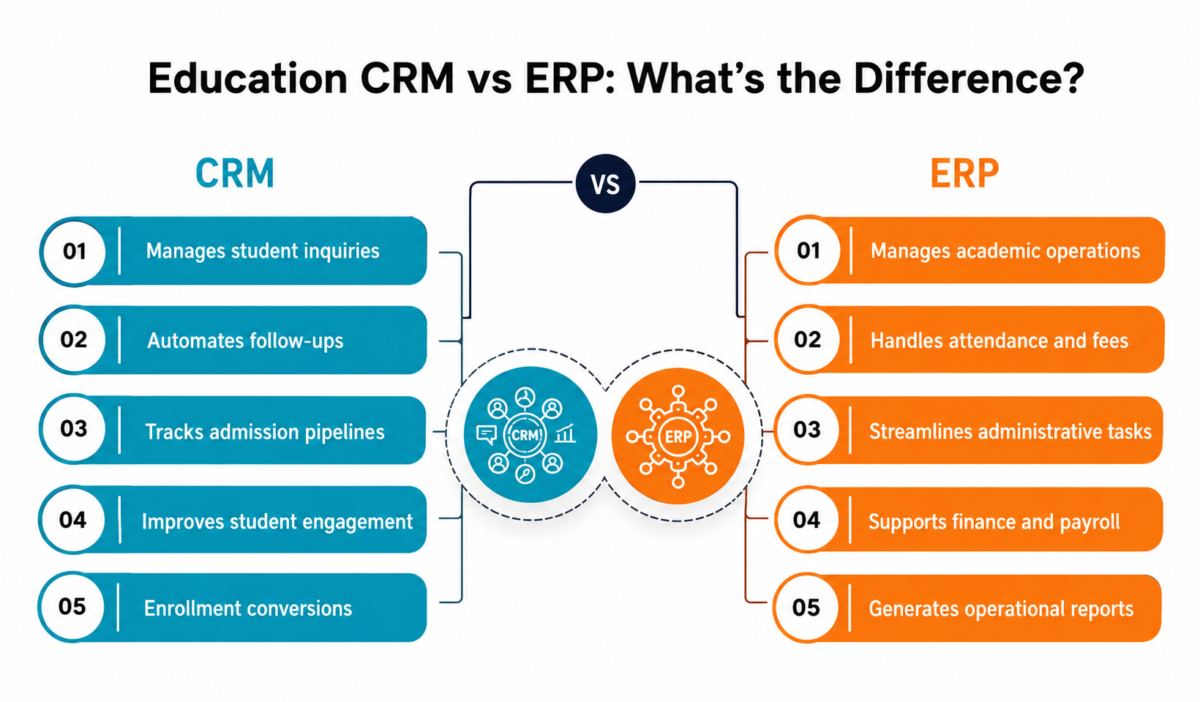
Education CRM vs ERP: Understanding the Core Difference

Although CRM and ERP systems often work together, their primary objectives are different.

FeatureEducation CRMEducation ERP
Primary FocusStudent acquisition and admissionsAcademic and administrative management
User GroupAdmission teams, marketing teams, counselorsFaculty, administration, finance, HR
Inquiry ManagementYesLimited
Lead TrackingYesNo
Marketing AutomationYesNo
Student CommunicationExtensiveBasic
Academic OperationsLimitedYes
Attendance ManagementNoYes
Examination ManagementNoYes
Fee ManagementLimitedYes
Enrollment AnalyticsYesLimited
Internal AdministrationNoYes

The simplest way to understand the difference is:

CRM helps institutions acquire students. ERP helps institutions manage students after enrollment.

Which Is Better CRM or ERP?

Another frequently searched question is:

The answer depends entirely on the institution’s goals.

If your primary challenge involves generating inquiries, improving admissions, increasing enrollment conversions, and managing communication, a CRM is often the higher priority.

If your institution struggles with academic administration, student records, examinations, fee collection, and internal operations, an ERP may be more critical.

However, for most growing educational institutions, the question is not CRM versus ERP.

The real question is how both systems can work together to support the complete student lifecycle.

A CRM manages the pre-admission journey, while an ERP manages the post-admission experience.

Can ERP Replace CRM?

Many institutions assume that because ERP systems contain student information, they can eliminate the need for a CRM.

In most cases, no.

ERP systems focus mainly on academic and operational management, whereas student acquisition, engagement and lead nurturing are better managed through an education CRM.

While some ERP platforms include basic communication features, they often lack advanced capabilities such as:

  • Lead capture automation
  • Admission funnel tracking
  • Marketing campaign management
  • Lead scoring
  • Counselor activity monitoring
  • Enrollment conversion reporting
  • Multi-channel communication workflows

These functions are central to modern admissions management and are typically handled more effectively through dedicated CRM platforms.

Does an ERP Include a CRM?

Some ERP providers offer basic CRM functionality within their platforms. However, these modules are usually limited compared to specialized education CRM solutions.

A built-in CRM module may allow institutions to record inquiries and manage basic communication, but advanced features such as automation, marketing attribution, AI-driven lead scoring, and enrollment analytics are often missing.

As competition for student recruitment increases, many institutions choose specialized CRM platforms to gain greater visibility into admissions performance and marketing effectiveness.

What Are the Five ERP Modules?ERP Modules

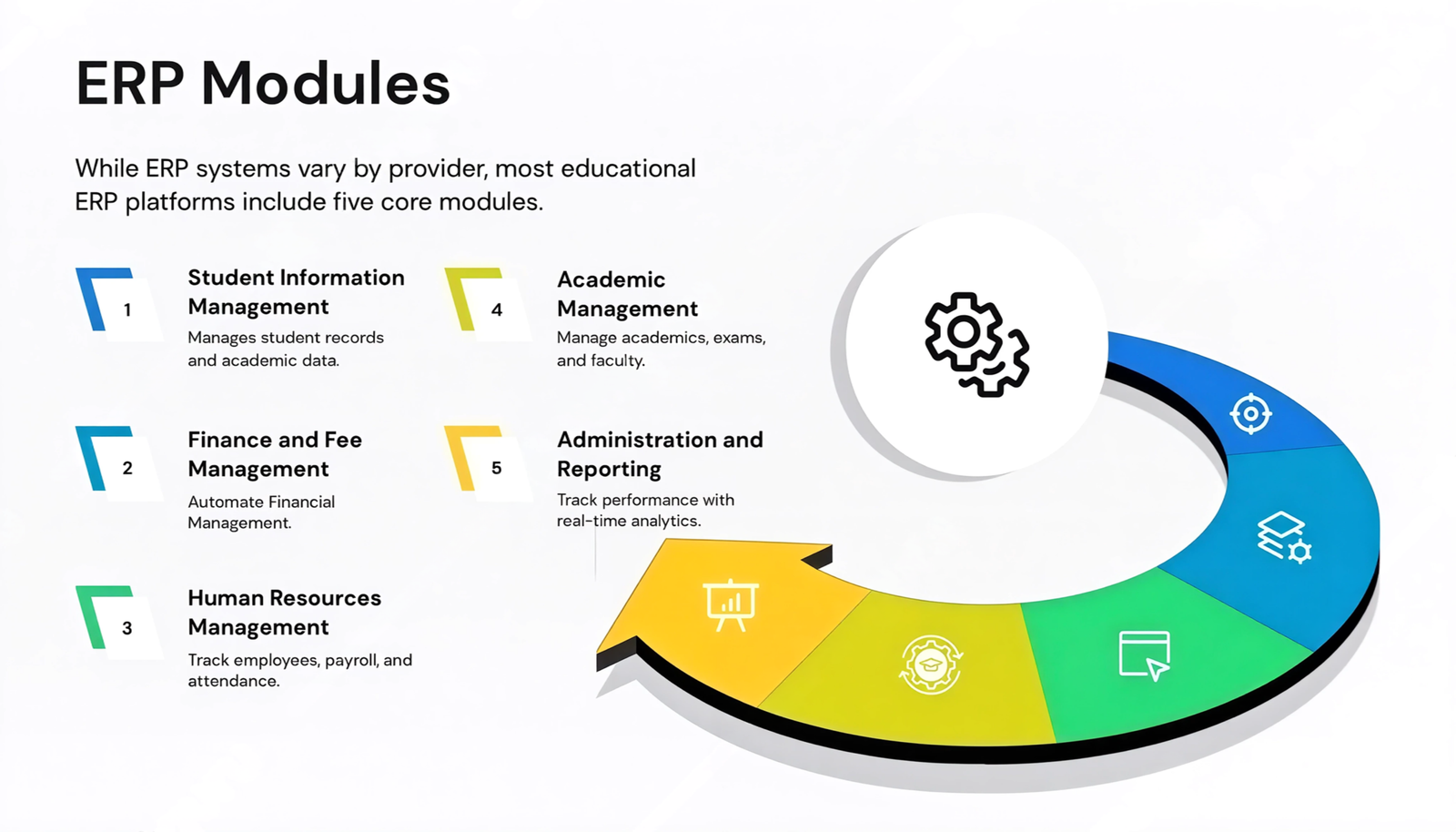
While ERP systems vary by provider, most educational ERP platforms include five core modules:

Student Information Management: This module manages student profiles, enrollment records, academic history, and institutional data.

Finance and Fee Management: Finance modules support fee collection, accounting, invoicing, budgeting, and financial reporting.

Human Resources Management: HR functionality manages employee records, recruitment, payroll, attendance, and performance tracking.

Academic Management: Academic modules support timetables, examinations, grading systems, curriculum planning, and faculty operations.

Administration and Reporting: Administrative modules provide reporting dashboards, operational analytics, compliance monitoring, and institutional performance insights.

Together, these modules create a centralized operational ecosystem for educational institutions.

Why Education CRM Is Becoming More Important in 2026

Student recruitment has become increasingly competitive across schools, colleges, universities, and education businesses. Prospective students expect personalized communication, immediate responses, and seamless digital experiences throughout the admission process.

Research consistently shows that institutions responding quickly to inquiries achieve significantly higher conversion rates than those relying on delayed manual follow-up processes.

As a result, educational institutions are investing heavily in CRM technologies that support admission automation, lead management, marketing attribution, AI-powered engagement, and student communication workflows.

The growing importance of digital-first recruitment strategies is making CRM software one of the most valuable technology investments for modern educational organizations.

How Sensation CRM Helps Educational Institutions

For institutions seeking a specialized solution for admissions and student engagement, Sensation CRM provides a purpose-built platform designed specifically for the education sector.

Unlike generic CRM platforms originally developed for corporate sales teams, Sensation CRM focuses on education-specific workflows and enrollment management processes.

The platform helps institutions:

  • Capture inquiries from multiple sources
  • Automate admission follow-ups
  • Manage counselor activities
  • Track student communication
  • Measure marketing campaign performance
  • Monitor enrollment conversion rates
  • Improve lead response times
  • Generate admission reports and analytics

By centralizing admissions and student engagement activities, Sensation CRM enables institutions to create more efficient recruitment processes while improving student experiences.


Logo

One CRM Complete
Admission Management

From inquiry capture to enrollment, manage everything

in one place and never miss a potential student.

Do Educational Institutions Need Both CRM and ERP?

For many institutions, the most effective approach is not choosing between CRM and ERP but implementing both technologies strategically.

CRM platforms support student recruitment, admissions, communication, and engagement before enrollment. ERP systems support academics, finance, administration, and operational management after enrollment.

Together, they provide a complete technology ecosystem that supports the entire student lifecycle from first inquiry to graduation.

Institutions that successfully integrate CRM and ERP systems often achieve stronger enrollment outcomes, improved operational efficiency, and better student experiences.

Why Indian Colleges and Universities Are Investing in Education CRM Software

The education sector in India has become significantly more competitive over the past few years. Private universities, engineering colleges, management institutes, online learning platforms, coaching centers, and international education consultants are all competing for student attention across digital channels.

With the implementation of the National Education Policy (NEP) and the rapid growth of digital admissions, institutions can no longer depend solely on traditional recruitment methods. Students expect quick responses, personalized communication, online counseling sessions, and seamless application experiences.

As a result, educational institutions across India are increasingly adopting education CRM software to streamline admissions, improve student engagement, and gain better visibility into recruitment performance. Institutions that leverage CRM platforms are often able to respond faster to inquiries, nurture leads more effectively, and improve enrollment outcomes. Book a free demo today to see how an education CRM can transform your admission and enrollment processes.

How AI Is Transforming Education CRM Software in 2026

Artificial Intelligence is rapidly changing how colleges and universities manage admissions and student engagement. Modern CRM platforms are no longer limited to storing contact information and tracking inquiries. They now provide intelligent automation capabilities that help admission teams work more efficiently.

AI-powered education CRM software can automatically score leads based on student behavior, identify high-intent applicants, personalize communication workflows, and recommend the next best action for counselors.

Educational institutions are increasingly using AI to:

  • Predict enrollment probability
  • Automate counselor assignment
  • Trigger personalized follow-up campaigns
  • Identify inactive prospects
  • Analyze recruitment channel performance
  • Improve response times
  • Generate admission reports automatically

According to industry research from Gartner, organizations implementing AI-powered CRM systems can significantly improve operational efficiency and customer engagement through automation and predictive analytics.

For colleges and universities managing thousands of inquiries annually, AI-driven CRM platforms provide a measurable competitive advantage.

Education Technology Market Growth

The global education technology market continues to expand rapidly as institutions increase investments in digital transformation initiatives. Industry reports estimate that the EdTech sector will surpass hundreds of billions of dollars in market value over the next decade, driven by growing demand for online learning, student engagement technologies, automation platforms, and data-driven admissions systems.

At the same time, CRM adoption within higher education continues rising as institutions seek better ways to manage recruitment, improve enrollment outcomes, and personalize student communication at scale.

Which One to Choose – CRM or ERP?

The debate between CRM and ERP is not about choosing one over the other. Both systems address different aspects of institutional success.

An education CRM helps attract, nurture, and convert prospective students, while an ERP manages the operational and academic processes that support enrolled students. Contact us today to learn how the right solution can help your institution improve efficiency and drive sustainable growth.

For institutions focused on improving admissions, lead management, communication, and enrollment performance, CRM often delivers the fastest measurable impact. Meanwhile, ERP systems remain essential for academic administration and internal operations.

Organizations looking to improve student recruitment and admission efficiency can explore Sensation CRM, a specialized solution designed to help educational institutions streamline admissions, manage inquiries, automate communication, and improve enrollment outcomes.


Logo

One CRM Complete Admission Management


Capture Inquiries

From all sources in one place


Automate Follow-ups

Timely reminders & communication


Monitor Performance

Track counselors & team activity


Increase Enrollments

Convert more inquiries into admissions

Frequently Asked Questions 

Q: What is CRM for education?

An education CRM is a student relationship management platform that helps schools, colleges, universities, and education businesses manage inquiries, admissions, communication, lead nurturing, and enrollment processes.

Q: Which is better CRM or ERP?

Neither is universally better. CRM focuses on admissions and student acquisition, while ERP focuses on academic and administrative operations. Most institutions benefit from using both systems together.

Q: Can ERP replace CRM?

Generally, no. ERP systems manage operational processes, while CRM platforms provide specialized tools for admissions, communication, lead management, and enrollment tracking.

Q: Does an ERP include a CRM?

Some ERP systems include basic CRM modules, but they often lack advanced admissions automation, marketing analytics, lead management, and communication capabilities offered by dedicated CRM solutions.

Q: What are the five ERP modules?

The five common ERP modules include Student Information Management, Finance Management, Human Resources, Academic Management, and Administration & Reporting.

Q: Why do educational institutions need CRM software?

CRM software helps institutions improve inquiry management, automate follow-ups, increase enrollment conversions, track marketing ROI, and enhance student engagement.

Q: How does Sensation CRM help colleges and universities?

Sensation CRM helps educational institutions centralize admissions, automate communication, track inquiries, measure marketing performance, improve counselor productivity, and increase enrollment success.

Categories
Education CRM

Top Features Every Education CRM Must Have in 2026 

Education is changing quietly. Admissions teams aren’t suddenly doing new jobs, but they are handling more volume, more channels, and higher expectations than before. By 2026, using spreadsheets, inboxes, and disconnected tools simply won’t hold up anymore. 

That’s where education CRM software fits in not as a fancy add-on, but as core infrastructure. 

The problem is, many institutions still use CRMs that were never built for education. They’re adapted sales tools, patched together with custom fields and workarounds. It works for a while, then breaks under pressure. 

This article explains, in clear terms, the features an education CRM must have by 2026 to actually support schools, colleges, universities, and coaching institutes without creating more work.

Just what matters to Education the most. 

Why Education CRMs Are No Longer Optional 

Student decision cycles are longer now. Parents ask more questions. Students compare options deeply. Communication happens across calls, WhatsApp, email, forms, and social platforms sometimes all at once making effective lead management more critical than ever.

Without a central system, admissions teams rely on memory, personal notes, and shared sheets. That’s risky. Leads get missed. Follow-ups happen late. Management has no real visibility. 

Modern education CRM software is meant to solve that but only if it’s designed around how education actually works. 

By 2026, a CRM that lacks the basics below won’t just feel outdated. It’ll actively slow teams down. 

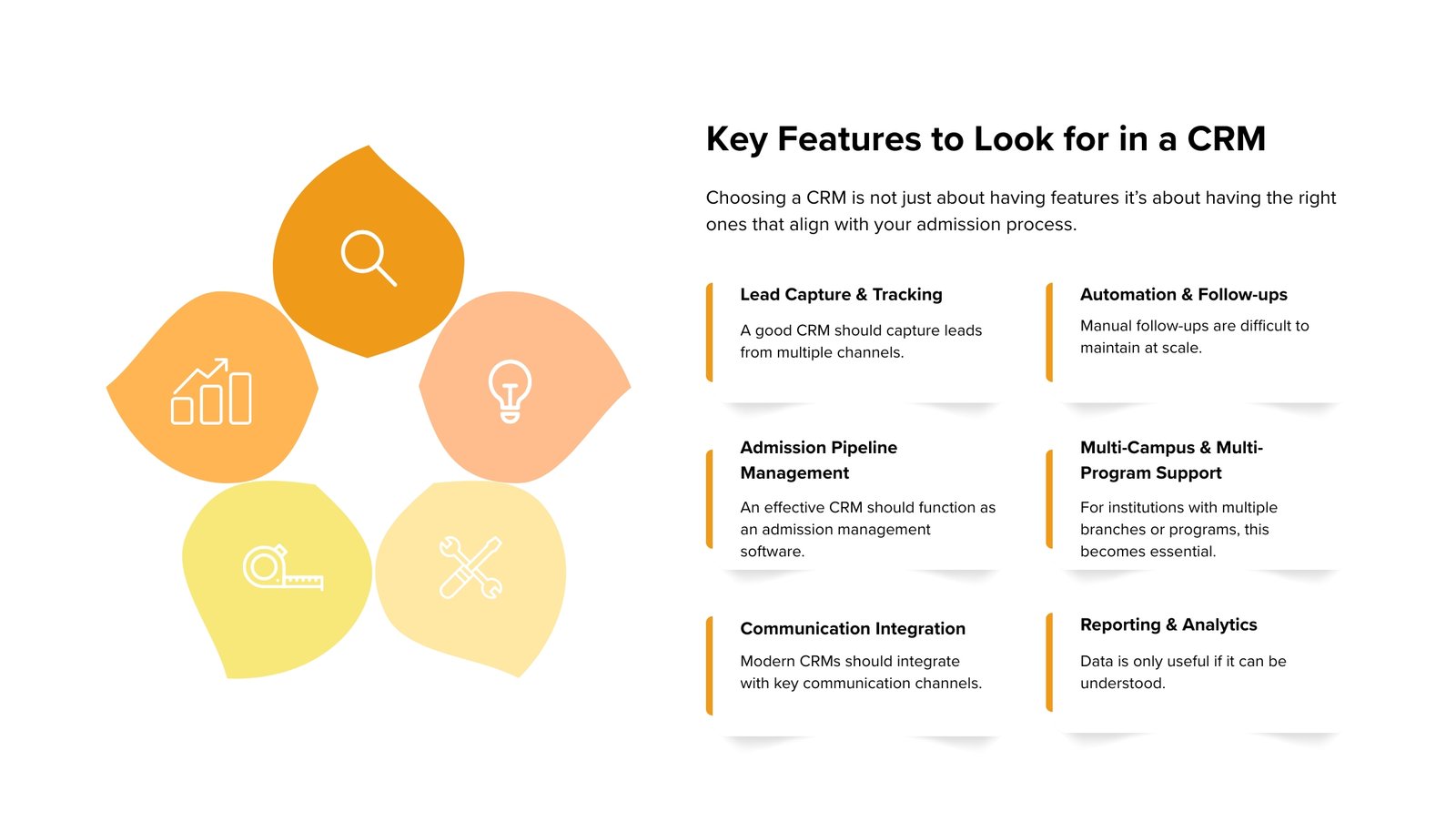
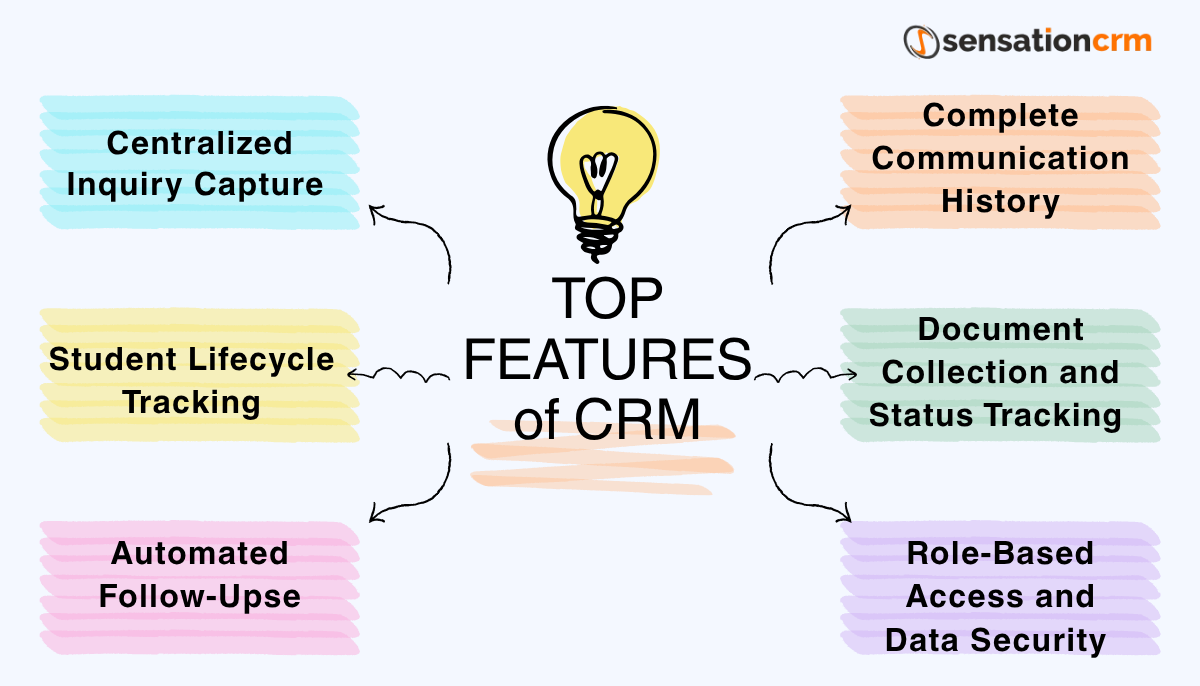
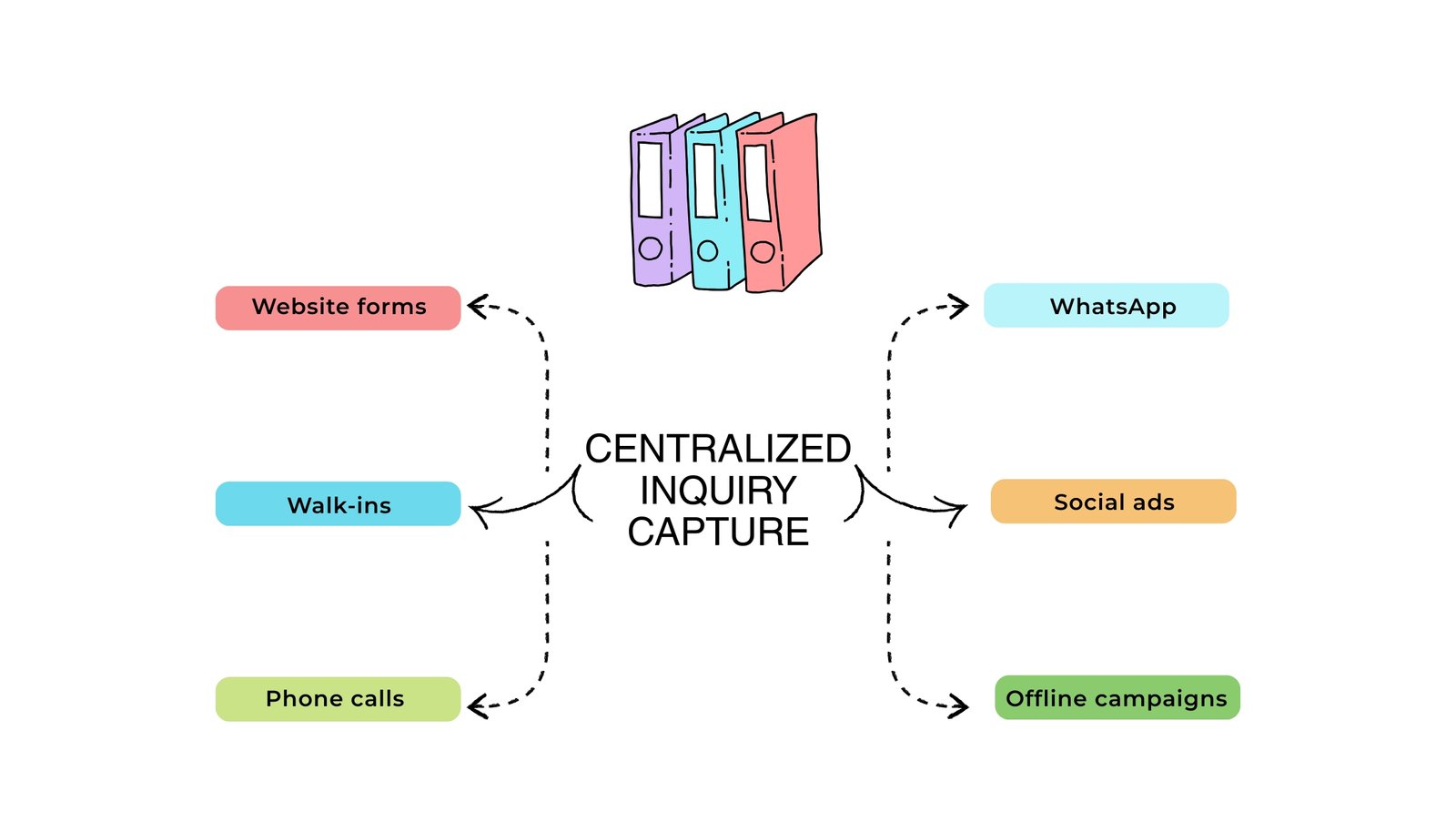
Centralized Inquiry Capture (From Everywhere) 

Centralized Inquiry Capture

This sounds obvious, but many systems still fail here. An education CRM must capture inquiries from: 

  • Website forms 

  • Walk-ins 

  • Phone calls 

  • WhatsApp 

  • Social ads 

  • Offline campaigns 

All of them should land in one place, in real time, with proper source tracking. 

No duplicate records. No manual imports. No guessing where a lead came from. 

If an institution can’t clearly see how students are finding them, decisions become guesswork. That’s not sustainable anymore. 

Student Lifecycle Tracking, Not Just Lead Stages 

Education doesn’t run on simple “lead → deal → closed” logic. 

A proper education CRM tracks the full student journey: 

  • Inquiry received 

  • Counselling started 

  • Documents pending 

  • Eligibility confirmed 

  • Fee discussion 

  • Enrollment completed 

  • Post-enrollment engagement

Each stage needs clarity. Each status needs meaning. CRMs built for education don’t force teams into sales language. They reflect academic reality.

Automated Follow-Ups That Still Feel Human 

Follow-ups fail because people are busy, not careless. 

A CRM for Educational Institutions in 2026 must strengthen Follow-Ups & Conversions by:

  • Set automatic reminders 

  • Trigger follow-up tasks 

  • Support email and message scheduling 

  • Prevent leads from going cold silently 

But automation should support staff, not replace them. 

Templates should be editable. Messaging should stay personal. The system should guide, not nag. 

Counsellor Assignment Logic That Actually Makes Sense 

Manual lead assignment doesn’t scale. 

Education CRMs need built-in logic to assign inquiries based on: 

  • Program or course interest 

  • Counsellor workload 

  • Availability 

  • Location or language preference 

This avoids uneven distribution and burnout. More importantly, it creates accountability. Everyone knows which counsellor owns which inquiry. No confusion, no overlap. 

Complete Communication History in One View 

Students don’t repeat their story neatly. They expect continuity. 

A strong education CRM shows: 

  • Call logs 

  • Email threads 

  • Messages 

  • Notes added by counsellors 

  • Status updates 

All in one timeline. If a counsellor leaves or a student speaks to someone new, context remains. That matters more than people realize. 

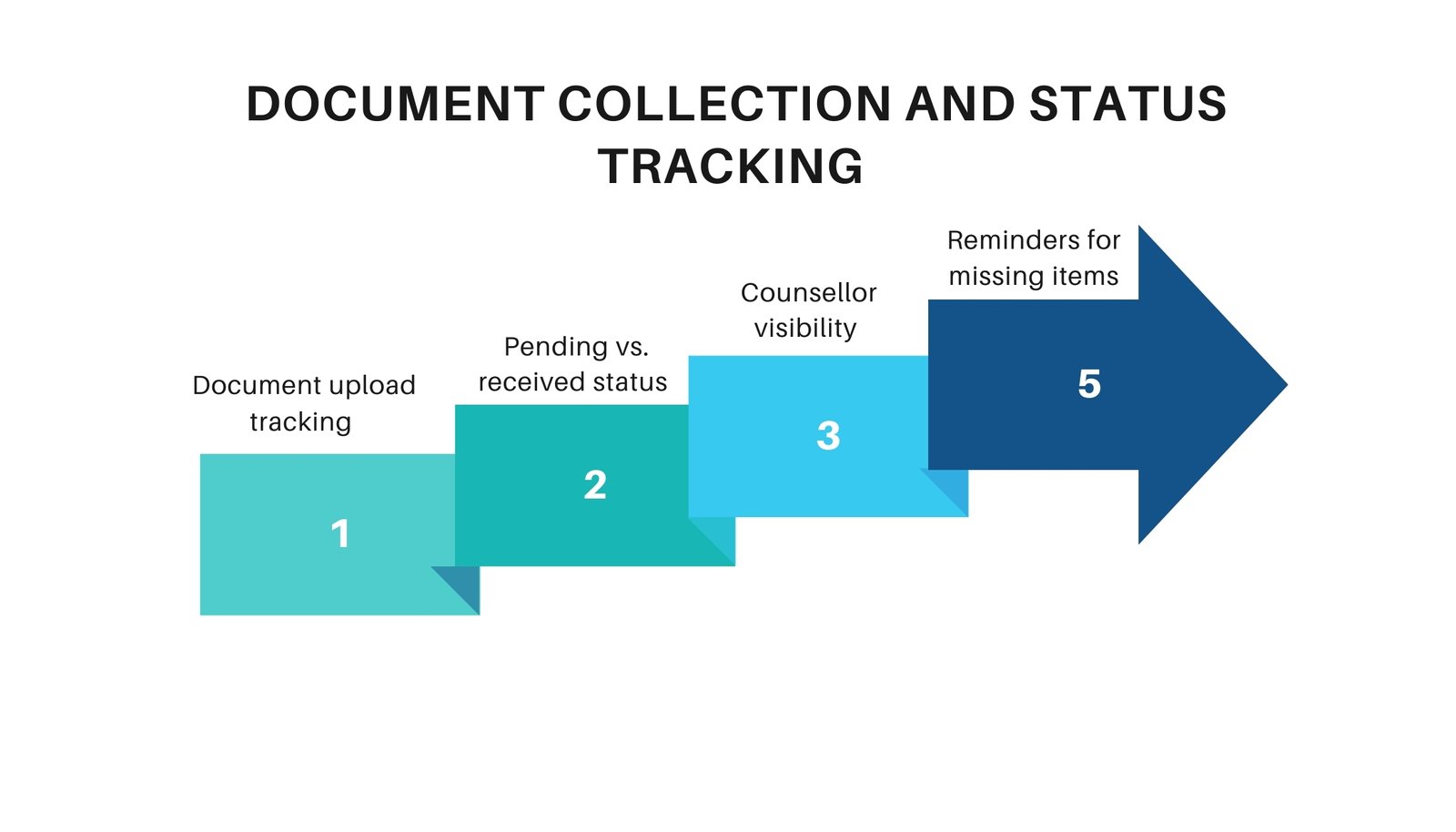
Document Collection and Status Tracking 

Document Collection and Status Tracking

Admissions involve paperwork. There’s no avoiding it.  

Education CRM software must support: 

  • Document upload tracking 

  • Pending vs. received status 

  • Counsellor visibility 

  • Reminders for missing items

Without this, teams rely on memory and follow-ups become messy. A CRM shouldn’t store files blindly. It should show what’s missing, clearly. 

Program-Wise and Campus-Wise Visibility 

Institutions don’t operate as one big funnel. 

They have: 

  • Multiple programs 

  • Multiple campuses 

  • Different intake cycles 

An education CRM must break data down cleanly: 

  • Program demand 

  • Conversion rates per course 

  • Counsellor performance by department 

  • Enrollment trends over time 

This helps leadership plan realistically, not react emotionally. 

Built-In Reporting That Non-Technical Teams Can Read 

Reports shouldn’t require training sessions. 

By 2026, CRM reports should: 

  • Be easy to understand 

  • Show trends clearly 

  • Update in real time 

  • Export cleanly when needed

Admissions heads need to know:

  • What’s working

  • What’s stuck

  • Where leads drop off

Strong reporting and analytics replace assumptions with facts.
They turn raw CRM data into clear insights, highlight trends over time, and make decision-making faster and more confident.

Simple as that.

Role-Based Access and Data Security 

Education handles sensitive data. 

A CRM must control: 

  • Who can see what 

  • Who can edit records 

  • Who can export data 

Role-based access protects institutions and builds trust with parents and students. 

Security isn’t optional anymore. It’s expected. 

Integration with Daily Tools 

CRMs shouldn’t feel like extra work. 

Education CRM software in 2026 must integrate with: 

  • Email platforms 

  • Telephony systems 

  • WhatsApp 

  • Payment gateways 

  • Learning systems (where relevant) 

If teams constantly switch tabs, adoption drops. 

The best systems feel invisible. They sit quietly behind daily work. 

Mobile Accessibility for On-the-Move Teams 

Counsellors don’t always sit at desks. 

A modern education CRM needs: 

  • Mobile access 

  • Clean UI on smaller screens 

  • Quick updates without lag 

Especially for walk-ins, events, or field counsellors, mobile access matters more than people admit. 

Customization without Heavy Development 

Every institution works slightly differently.

CRMs should allow: 

  • Custom fields 

  • Workflow tweaks 

  • Status changes 

  • Form edits 

Without weeks of development or extra cost. 

Rigid systems break trust fast. 

Scalability without Losing Control 

Growth shouldn’t create chaos. 

Education CRM software must scale with: 

  • More inquiries 

  • More counsellors 

  • More programs 

While keeping structure intact. 

If growth leads to confusion, the system has failed. 

Why Education-Specific CRM Matters More Than Ever 

Generic CRMs can be customized, yes. But customization isn’t the same as design. 

Education CRMs are built around: 

  • Longer decision cycles 

  • Multiple stakeholders 

  • Emotional choices 

  • Compliance needs 

That difference shows in daily use. 

By 2026, institutions using generic tools will feel the strain clearly. 

Where Sensation CRM Fits In 

Sensation CRM is designed specifically for education workflows not adapted from sales software. 

It focuses on: 

  • Clear admissions pipelines 

  • Counselor accountability

  • Communication continuity 

  • Practical reporting 

Institutions using Sensation CRM don’t have to fight the system to make it work. It fits naturally into admissions operations and scales without adding noise. 

That clarity is why education teams stick with it. Contact Us to see how Sensation CRM can support your admissions team.

Education doesn’t need more tools

It needs better systems 

An education CRM in 2026 should: 

  • Reduce manual work 

  • Improve follow-ups 

  • Give leadership visibility 

  • Support counselors instead of slowing them down 

The features listed above aren’t advanced. They’re essential. 

Institutions that choose CRM software thoughtfully now will feel calmer, clearer, and more in control as volumes grow. 

Frequently Asked Questions

What is education CRM software? 

It’s a system designed to manage student inquiries, admissions, communication, and enrollment workflows in one place. 

A CRM centralizes student interactions, tracks admissions stages, automates follow-ups, and provides visibility into conversion trends to improve enrollment performance.

Yes, and they often benefit faster because manual work reduces immediately. 

Usually a few weeks, depending on data and process complexity. 

No. It supports counselors by organizing work and reducing manual effort. 

Because it’s built specifically for education institutions and aligns with real admissions processes, not sales models. 

Categories
Education CRM Software

Education CRM Software vs Generic CRM: Key Differences Explained

Built for The Student Lifecycle

Education CRM software is designed to support the complete student journey. From the first inquiry to enrollment and post-admission engagement, every stage is connected within a single system.

Unlike traditional buyers, students rarely make quick decisions. They often compare institutions, ask multiple questions, and take time before applying. Some may even pause their decision-making process and return weeks later.

Admissions Workflow Support

Admissions workflows involve more than just “open” and “closed” stages. There are document checks, eligibility confirmations, fee discussions, seat availability concerns, and academic approvals. An education CRM solution includes these workflows by default, so teams can move students through each stage without confusion. Generic CRMs usually require heavy customization to replicate this, and even then, the process often feels forced or incomplete.

Parent Student Communication Handling

In education, communication is rarely one-to-one. Parents, guardians, and sometimes sponsors are involved in the decision-making process. Education CRM software allows institutions to manage multiple contacts linked to a single student profile. This ensures that updates reach the right people at the right time. Generic CRMs usually treat each contact as an individual buyer, which can result in fragmented communication and missing context.

Counselor Management Structure

Education CRM software is built to support counselors rather than sales representatives. It tracks counselor assignments, follow-ups, workloads, and response times in a way that reflects academic counseling rather than sales pressure. This helps institutions ensure fair distribution of inquiries and consistent follow-ups. Generic CRMs focus on deal ownership and sales quotas, which don’t translate well to counseling environments.

Counselor Management Structure

Academic Reporting and Insights

Education-focused reporting looks very different from sales reporting. Institutions need to understand which programs attract the most interest, where students drop off in the admission process, how long decisions take, and which counselors need support. An education CRM solution provides these insights in a usable, institution-ready format. Generic CRMs mainly report on revenue forecasts and pipeline velocity, which offer limited value in academic decision-making.

Compliance and Data Sensitivity

Educational institutions handle sensitive student information that must be protected carefully. Education CRM software is designed with this responsibility in mind, offering role-based access, audit trails, and controlled data visibility. This ensures that staff members only see the information relevant to their role. Generic CRMs can be secured, but compliance is not their primary design focus, making them riskier if not managed carefully.

Reduced Customization Dependency

One common issue with generic CRMs is the need for extensive customization to fit education workflows. Over time, this creates dependency on technical teams and increases maintenance costs. Education CRM software already understands academic structures, making it an ideal solution for schools, colleges, and coaching institutes that need stability rather than constant configuration.

Higher Student Adoption Rates

Admissions teams are more likely to use a system that feels intuitive and aligned with their daily tasks. Education CRM software mirrors how counselors already work, which leads to higher adoption and better data quality through effective student management. Generic CRMs often feel foreign to academic staff, lacking proper student management controls and causing teams to fall back on spreadsheets or personal notes, which defeats the purpose of having a CRM at all.

Scalability Without Operational Chaos

As institutions grow, they face higher inquiry volumes, more programs, and larger counseling teams. Education CRM software scales without disrupting existing workflows, maintaining structure even as complexity increases. Generic CRMs can scale technically, but without proper academic logic, they often create confusion as the institution grows.

Cost vs Long-Term Value

Long-term CRM benefits

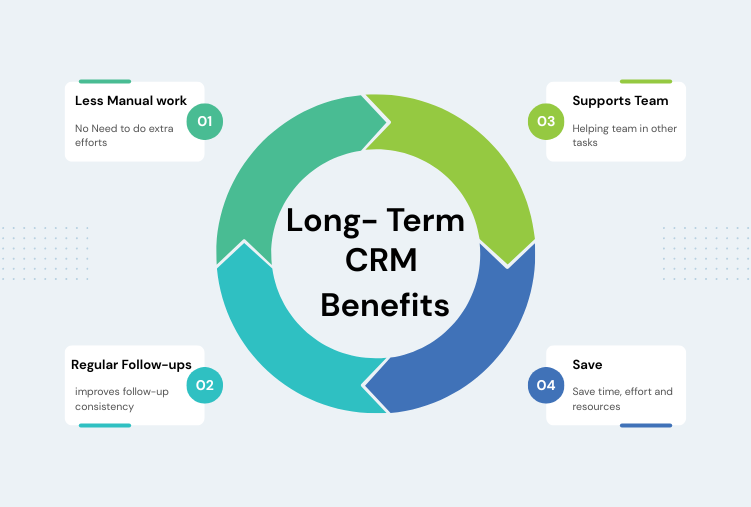
While generic CRMs may appear cheaper initially, the long-term costs of customization, training, and inefficiency often outweigh the savings. Education CRM software delivers better value over time because it reduces manual work, improves follow-up consistency, and supports admissions teams more effectively. Institutions end up saving time, effort, and resources in the long run.

Why This Difference Matters in Practice

Choosing between a generic CRM and education CRM software isn’t just a technical decision. It directly affects how smoothly admissions teams operate, how effectively lead management is handled, how students experience the institution, and how leadership makes decisions. A system built for education reduces friction and supports sustainable growth.

Final Thought

Education institutions don’t need to force their processes into a sales-oriented system. They need tools that respect how education actually works.

Sensation CRM is designed specifically for academic environments, supporting admissions workflows, counselor operations, and institutional reporting without unnecessary complexity. For schools, colleges, and coaching institutes that value clarity, accountability, and long-term scalability, using an education-focused CRM makes everyday work simpler and more effective.

Frequently Asked Questions

What is the difference between education CRM software and generic CRM?

Education CRM software is tailored around student lifecycles and admissions processes, while generic CRMs focus on sales pipelines and deal closures. 

They can be adapted, but they usually require heavy customization and may not fit natural education workflows.

Education CRMs include inquiry management, counselor assignments, admissions stage tracking, parent-student relationship mapping, and academic reporting.

Education-focused reporting highlights admissions funnels, follow-ups, conversions, and counselor performance rather than sales revenue.

Not necessarily. While education CRMs can be priced similarly, they save money long-term by reducing customization and increasing adoption.

Yes. By tracking interactions and follow-ups consistently, CRMs help institutions engage students more effectively throughout the admissions process.