
Ready to Upgrade Your Education CRM?
Manage admissions, automate workflows, and improve student engagement with a feature-rich CRM designed for educational institutions
Why Education CRM Software in India Is No Longer Optional
Student admission journeys across India have become longer and more competitive. Students and parents compare multiple institutions, ask detailed questions, and communicate across WhatsApp, phone calls, websites, social media, email, and education portals before making an admission decision.
Without a centralized lead management CRM in India, admission teams often struggle with missed follow-ups, scattered student data, inconsistent communication, and limited visibility into admission performance.
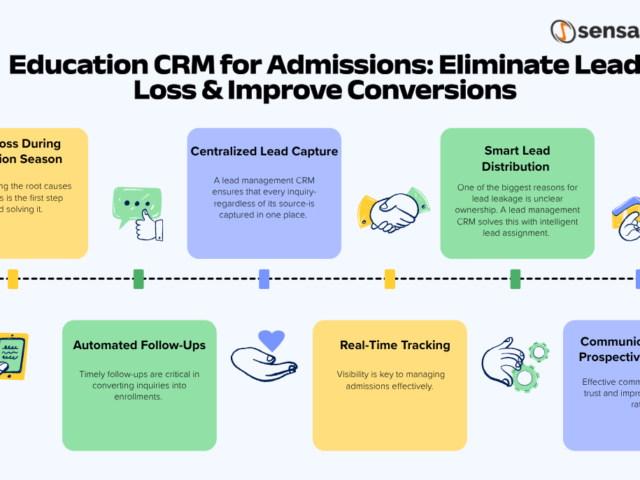
Centralized Inquiry Capture (From Everywhere)
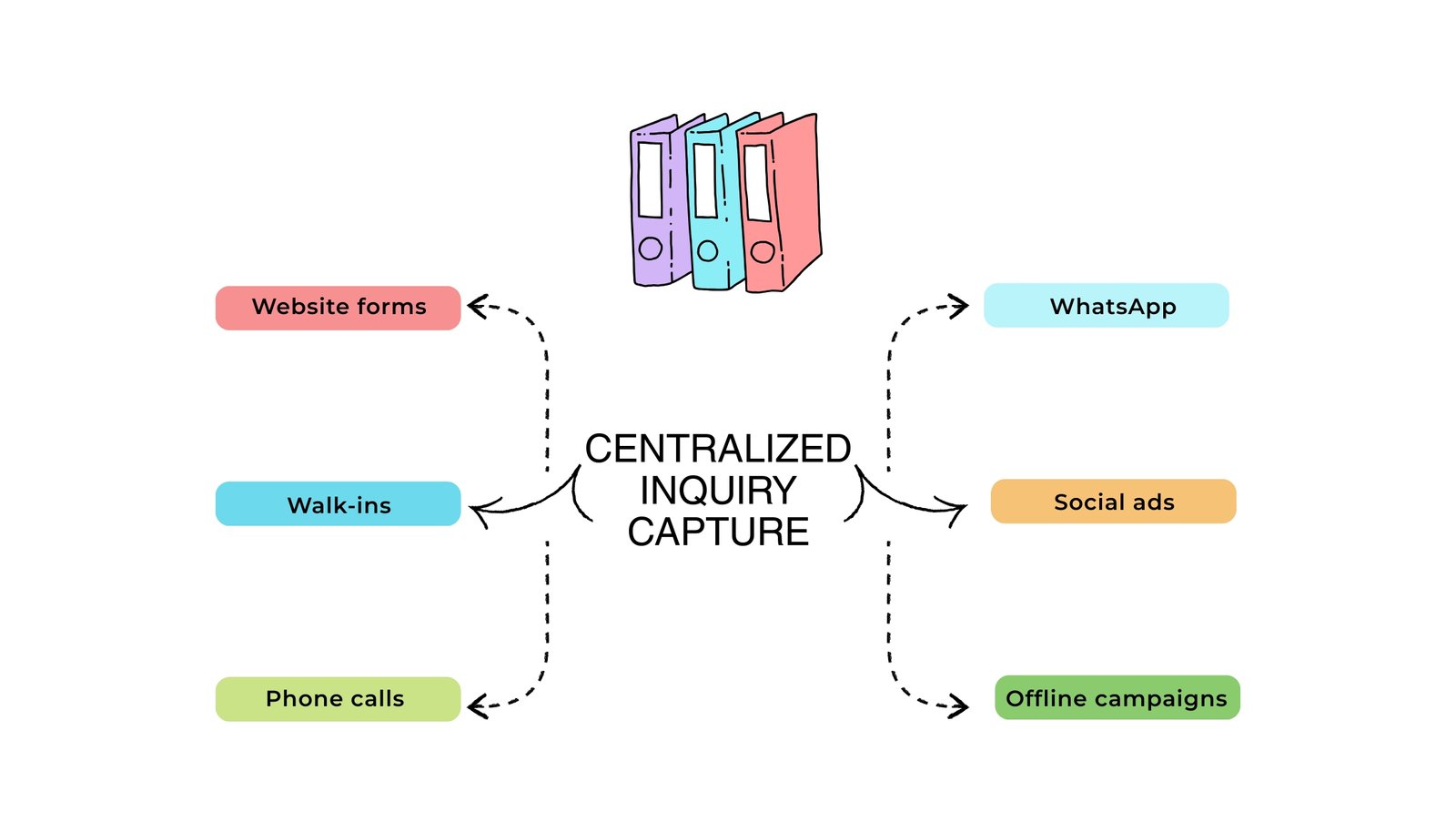
This sounds obvious, but many systems still fail here. An education CRM must capture inquiries from:
- Website forms
- Walk-ins
- Phone calls
- Social ads
- Offline campaigns
Every inquiry should appear instantly in a centralized dashboard with complete source tracking, ensuring no prospective student is overlooked.
Student Lifecycle Tracking, Not Just Lead Stages
Unlike traditional sales CRMs, an Education CRM in India should manage the complete student admission journey instead of only tracking leads.
A structured student lifecycle includes:
- Student Inquiry
- Counseling
- Documents Submitted
- Eligibility Verification
- Fee Discussion
- Admission Confirmation
- Enrollment
- Post-Admission Engagement
This provides complete visibility into every student’s admission progress.
Automated Follow-Ups That Improve Student Engagement
Follow-ups fail because people are busy, not careless.
A CRM for Educational Institutions in 2026 must strengthen Follow-Ups & Conversions by:
Automation should include:
- WhatsApp reminders
- Email scheduling
- SMS notifications
- Counselor task reminders
- Follow-up alerts
- Application deadline reminders
Automation supports counselors without replacing the personal interactions that students and parents value.
Counsellor Assignment Logic That Actually Makes Sense
Educational institutions with multiple campuses or departments require intelligent lead distribution.
A modern CRM for Educational Institutions in India should automatically assign student inquiries based on:\
- Preferred course
- Campus
- Student location
- Language preference
- Counselor expertise
- Current workload
This improves accountability while balancing counselor workloads.
Complete Communication History in One View
Students don’t repeat their story neatly. They expect continuity.
A modern Education CRM App in India should provide a unified view of:
- Call logs
- Email threads
- Messages
- Notes added by counsellors
- Status updates
All in one timeline. If a counsellor leaves or a student speaks to someone new, context remains. That matters more than people realize.
Document Collection and Status Tracking
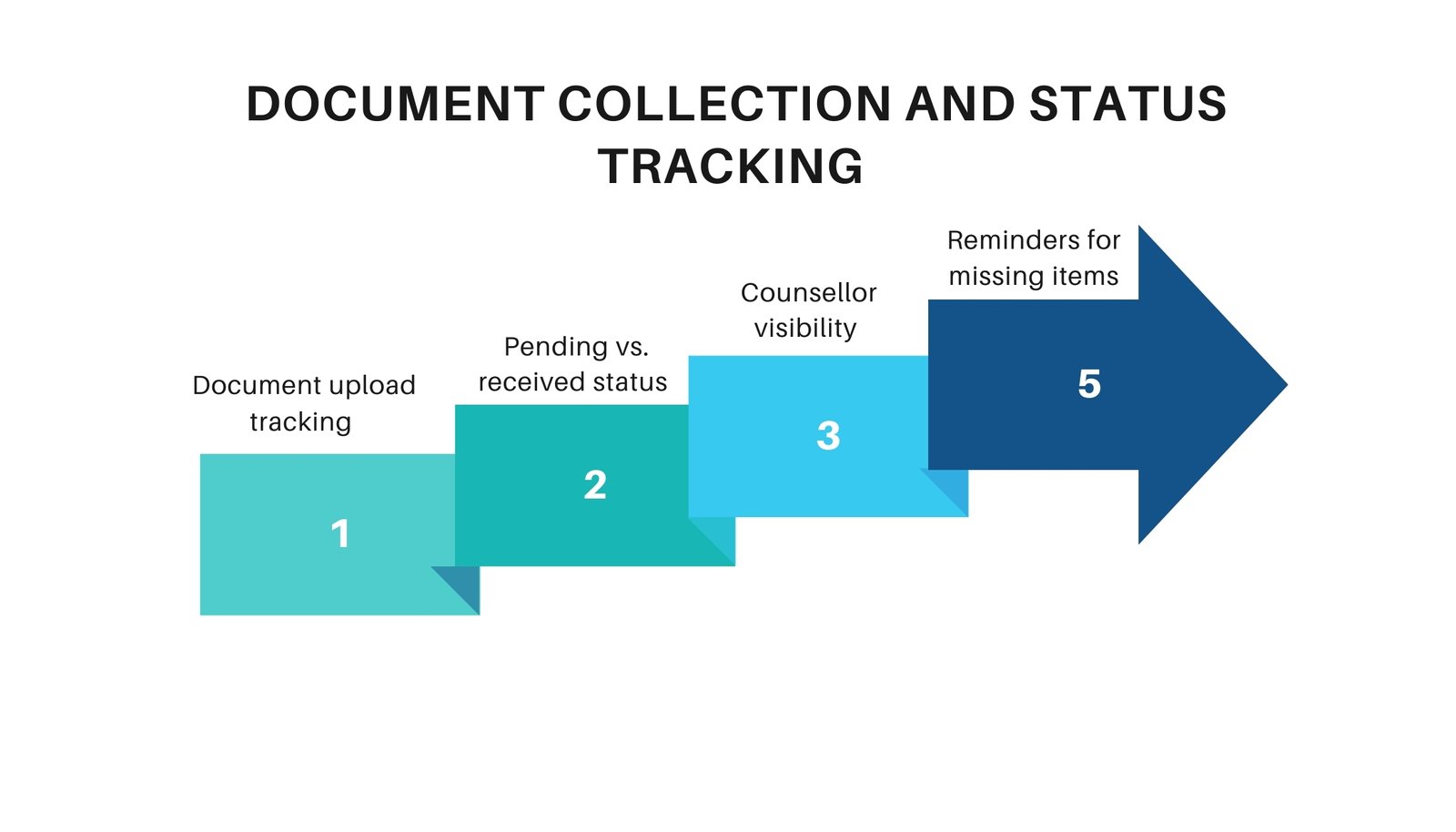
Managing admission documents remains one of the biggest operational challenges for educational institutions in India.
Education CRM software must support:
- Track uploaded documents
- Identify pending documents
- Send automatic reminders
- Monitor document verification status
This reduces manual follow-ups and accelerates the admission process.
Program-Wise and Campus-Wise Visibility
Educational institutions across India often operate multiple campuses, departments, and academic programs.
A modern Higher Education CRM in India should provide insights such as:
- Multiple programs
- Multiple campuses
- Different intake cycles
An education CRM must break data down cleanly:
- Program demand
- Conversion rates per course
- Counsellor performance by department
- Enrollment trends over time
This helps leadership plan realistically, not react emotionally.
Built-In Reporting That Non-Technical Teams Can Read
Reports shouldn’t require training sessions.
By 2026, CRM reports should:
- Be easy to understand
- Show trends clearly
- Update in real time
- Export cleanly when needed
Admissions heads need to know:
- What’s working
- What’s stuck
- Where leads drop off
Strong reporting and analytics replace assumptions with facts.
They turn raw CRM data into clear insights, highlight trends over time, and make decision-making faster and more confident.
Simple as that.
Role-Based Access and Data Security
Education handles sensitive data.
A CRM must control:
- Who can see what
- Who can edit records
- Who can export data
Role-based access protects institutions and builds trust with parents and students.
Security isn’t optional anymore. It’s expected.
Integration with Daily Tools
CRMs shouldn’t feel like extra work.
Education CRM software in 2026 must integrate with:
- Email platforms
- Telephony systems
- Payment gateways
- Learning systems (where relevant)
If teams constantly switch tabs, adoption drops.
The best systems feel invisible. They sit quietly behind daily work.
Mobile Accessibility for On-the-Move Teams
Counsellors don’t always sit at desks.
A modern education CRM needs:
- Mobile access
- Clean UI on smaller screens
- Quick updates without lag
Especially for walk-ins, events, or field counsellors, mobile access matters more than people admit.
Customization without Heavy Development
Every institution works slightly differently.
CRMs should allow:
- Custom fields
- Workflow tweaks
- Status changes
- Form edits
Without weeks of development or extra cost.
Rigid systems break trust fast.
Scalability without Losing Control
Growth shouldn’t create chaos.
Education CRM software must scale with:
- More inquiries
- More counsellors
- More programs
While keeping structure intact.
If growth leads to confusion, the system has failed.
Why Education-Specific CRM Matters More Than Ever
Generic CRMs can be customized, yes. But customization isn’t the same as design.
Education CRMs are built around:
- Longer decision cycles
- Multiple stakeholders
- Emotional choices
- Compliance needs
That difference shows in daily use.
By 2026, institutions using generic tools will feel the strain clearly.
Why AI-Powered Education CRM Software Is the Future of Admissions
Educational institutions across India are increasingly adopting AI-powered CRM platforms to improve admission efficiency.
AI helps institutions:
- Prioritize high-intent student inquiries
- Automate routine communication
- Predict enrollment trends
- Improve counselor productivity
- Personalize student engagement
- Reduce manual administrative work
This enables admission teams to focus more on guiding prospective students instead of managing repetitive tasks.