Today’s students in India expect fast, personal, and consistent communication from the institutions they apply to and attend. Yet many colleges and universities still rely on scattered spreadsheets, disconnected email tools, and manual follow-ups that let prospects slip through the cracks. An Education CRM changes that.
By bringing every enquiry, interaction, and student record into one place, Education CRM software helps institutions engage students more effectively at every stage, from first enquiry to enrolment and beyond. Here’s how it works, the trends driving its adoption, and why it matters.
What Is an Education CRM?
An Education CRM (Customer Relationship Management) system is a platform built specifically for the way colleges and universities work. Instead of managing generic sales contacts, it manages prospective students, applicants, current students, and even alumni, tracking every touchpoint across the entire student lifecycle.
Where a general CRM focuses on deals and revenue, Education CRM software focuses on relationships and outcomes: responding to enquiries quickly, guiding applicants through admissions, and keeping students engaged throughout their journey. It becomes the single source of truth for every interaction your institution has with a student.
Market Trends: Why Education CRM Adoption Is Accelerating in India
The move toward Education CRM software isn’t a passing fad, it reflects deep shifts in how students behave and how institutions compete. Several clear trends are driving adoption across the sector.
1. The CRM market is growing fast: CRM is already one of the largest software categories in the world, and both the overall CRM market and the education-specific segment are widely projected to keep expanding at strong double-digit annual rates over the coming years.
2. Students behave like consumers:Students in India increasingly behave like consumers, researching institutions online and often searching for colleges near me before making admission decisions.
3. Competition for enrolments is intensifying: With more institutions competing for a limited pool of applicants, the colleges that communicate best and respond fastest win more students. A CRM is increasingly seen as core infrastructure rather than a nice-to-have.
4. Personalisation is now expected: Generic mass emails no longer cut through. Institutions are turning to CRM-driven segmentation and tailored messaging to engage students meaningfully at every stage.
5. Data-driven decision-making is the new standard: Leadership teams increasingly demand measurable results from marketing and admissions spend. Enquiry-to-enrolment analytics and admissions analytics have moved from optional extras to essential tools for proving and improving performance.
The takeaway: as competition rises and student expectations climb, Education CRM software has shifted from a back-office convenience to a strategic advantage.
Why Student Engagement Is Harder Than Ever
Many prospective students begin their admission journey by searching for colleges, universities, or courses “near me”, making timely responses even more important.
Modern institutions face rising expectations and growing competition. Prospective students research dozens of options, apply to several, and gravitate toward the colleges that respond fastest and communicate best. Meanwhile, admissions and marketing teams are stretched thin, juggling high enquiry volumes across phone, email, social media, and web forms.
Without a unified system, enquiries get missed, follow-ups are inconsistent, and staff spend more time on admin than on building relationships. The result is lost prospects, frustrated applicants, and disengaged students.
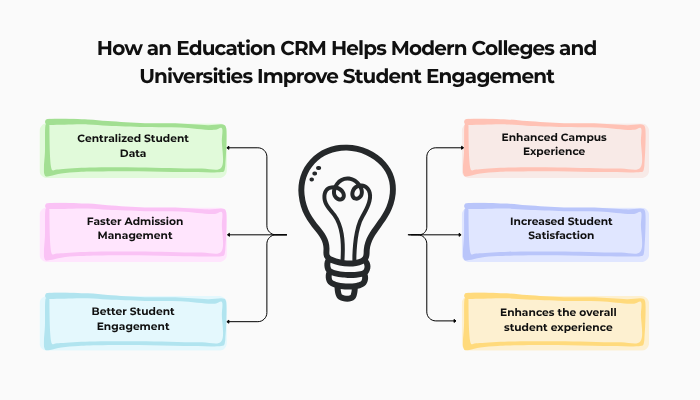
A CRM for College and Universities, powered by an advanced Education CRM, tackles these challenges head-on by centralizing student enquiries, automating follow-ups, streamlining admissions, and improving engagement throughout the entire student lifecycle.
How an Education CRM Improves Student Engagement
1. Captures Every Enquiry Instantly
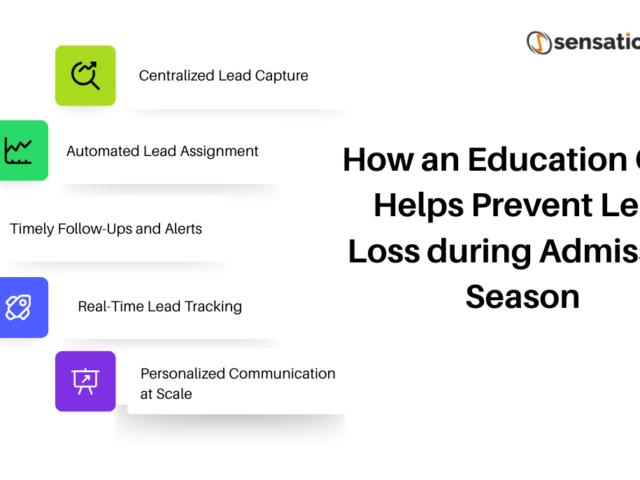
Whether a student reaches out through a web form, phone call, email, or social channel, an Education CRM captures the enquiry automatically and in one place. Nothing gets lost, and every prospect enters a clear, trackable pipeline from the moment they show interest.
2. Enables Fast, Personalised Follow-Up
Speed matters. The institutions that respond first often win the student. Education CRM software automates timely follow-ups and lets staff personalise communication based on a student’s interests, course preferences, and stage in the journey, so every message feels relevant rather than generic.
3. Automates Repetitive Communication
Reminders, application updates, event invitations, and nurture emails can all be automated. This keeps students consistently engaged without adding to your team’s workload, freeing staff to focus on the conversations that need a human touch.
4. Unifies the Entire Student Journey
From first enquiry to enrolment and student support, every interaction is logged in one profile. Any team member can pick up where another left off, delivering a seamless, joined-up experience that makes students feel known and valued.
5. Delivers Powerful Admissions Analytics
A strong Education CRM turns activity into insight. With enquiry-to-enrolment analytics, institutions can see exactly where students drop off, which channels deliver the best applicants, and how quickly teams respond. These admissions analytics help you refine your approach, allocate resources wisely, and continually improve conversion and engagement.
6. Strengthens Long-Term Relationships
Engagement doesn’t end at enrolment. An Education CRM helps institutions stay connected with current students and alumni through ongoing communication, support, and community-building, boosting satisfaction, retention, and advocacy over time.
The Role of Analytics in Student Engagement
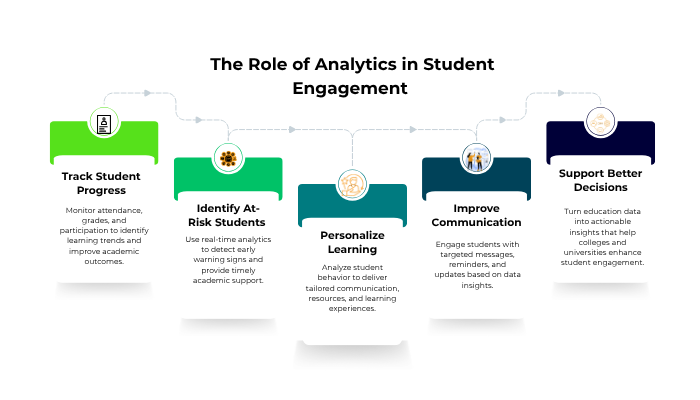
Data is where an Education CRM truly proves its value. Enquiry-to-enrolment analytics give admissions teams a clear view of the full funnel: how many enquiries arrive, how many convert to applications, and how many result in enrolments.
This visibility helps institutions spot bottlenecks, respond faster, and personalise outreach where it matters most. Admissions analytics also reveal which marketing channels and campaigns bring in the strongest prospects, so budgets go further.
Instead of guessing, decision-makers get evidence, turning student engagement from a hopeful effort into a measurable, improvable process. In an era where leadership expects a clear return on every rupee spent, that measurability is often what justifies the investment in Education CRM software in the first place.
For more insights, best practices, and expert guidance on student admissions, lead management, and CRM solutions, explore Our blogs to stay updated with the latest trends in education technology.
What to Look for in an Education CRM
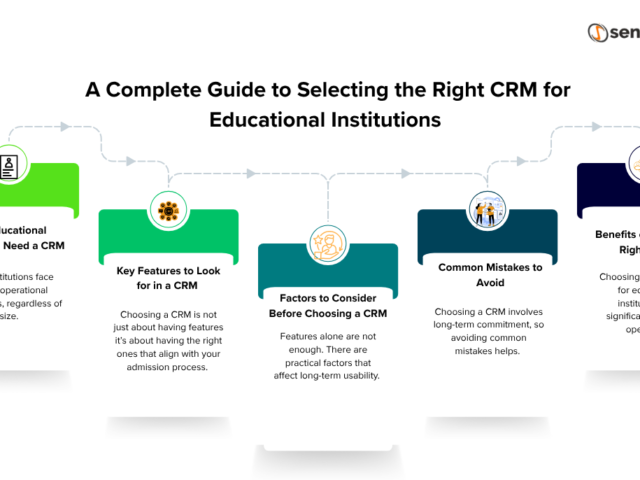
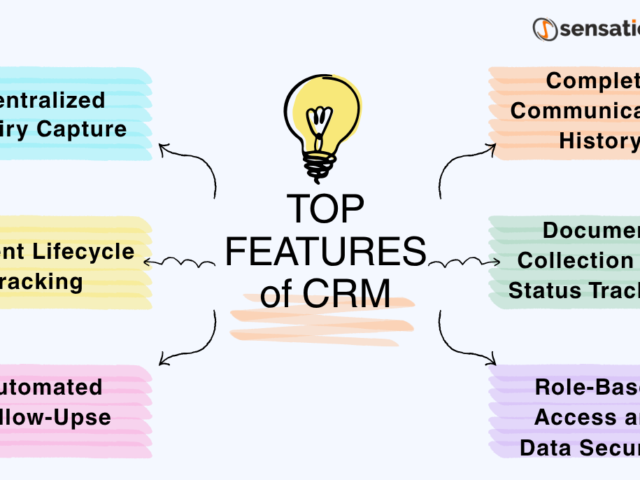
Not all Education CRM software is created equal. When evaluating options, institutions should look for a platform that captures enquiries from every channel automatically, automates follow-ups and nurture communication, and unifies the full student journey in a single profile.
Strong reporting is essential too, so prioritise a system with genuine enquiry-to-enrolment analytics and admissions analytics rather than surface-level dashboards.
Just as important is ease of use. A CRM only delivers value if your teams actually adopt it, so intuitive design, smooth onboarding, and responsive support should weigh heavily in your decision.
Finally, choose a platform built for education specifically. Purpose-built Education CRM software will always fit admissions workflows better than a generic sales tool adapted after the fact.
Why Colleges and Universities Across India Choose Sensation CRM
Sensation CRM is Education CRM software built specifically for colleges and universities that want to engage students better and convert more enquiries into enrolments.
Rather than forcing your team to adapt to a generic sales tool, it’s designed around the realities of admissions and student engagement.
With Sensation CRM, your institution can:
- Capture every enquiry from web, phone, email, and social media in one unified platform.
- Automate follow-ups so no prospective student is ever forgotten.
- Track the full journey with enquiry-to-enrolment analytics and detailed admissions analytics.
- Personalise communication at scale across the entire student lifecycle.
- Empower your teams with intuitive tools that are quick to learn and easy to use.
By combining automation, unified records, and powerful analytics, Sensation CRM helps colleges and universities respond faster, engage students more meaningfully, and make smarter, data-driven decisions.
Ready to Improve Student Engagement With Sensation CRM?
Students across India expect fast, personalized communication throughout the admission process. Many begin by searching for colleges near me or universities near me, making timely engagement essential.
Sensation CRM helps educational institutions capture every enquiry, automate follow-ups, and improve student engagement with powerful admissions analytics.
If you’re looking for the best Education CRM software in India, Sensation CRM simplifies admissions, increases enrolments, and supports long-term student success.
Common Questions About CRM
Q: What are the 4 types of CRM?
The four main types of CRM are operational CRM (which streamlines day-to-day tasks like enquiries, follow-ups, and admissions workflows), analytical CRM (which turns data into insights, such as enquiry-to-enrolment analytics), collaborative CRM (which shares information across teams for a unified student experience), and strategic CRM (which focuses on building long-term relationships).
A strong Education CRM combines all four to support the full student lifecycle.
Q: Which CRM is most used?
Globally, large general-purpose platforms like Salesforce, HubSpot, Microsoft Dynamics, and Zoho are among the most widely used CRMs across industries.
However, colleges and universities increasingly choose purpose-built Education CRM software, because it’s designed around admissions, enquiries, and student engagement rather than generic sales, making it a far better fit for institutional needs.
Q: Is CRM easy to learn and use?
Modern CRMs are built to be user-friendly, with intuitive dashboards, automation, and guided workflows that reduce manual effort.
A good Education CRM is designed for admissions and marketing teams rather than technical specialists, so most staff can learn the essentials quickly, especially when the provider offers onboarding, training, and support.
Frequently Asked Questions
Q: What is an Education CRM used for?
An Education CRM is used to manage every interaction between an institution and its students, from capturing enquiries and automating admissions follow-ups to tracking the student journey and analysing performance.
It centralises communication so colleges and universities can respond faster, personalise outreach, and improve student engagement at every stage.
Q: How does an Education CRM improve enrolment rates?
By capturing every enquiry instantly and automating timely, personalised follow-ups, an Education CRM ensures no prospective student is forgotten.
Faster responses and consistent nurturing keep applicants engaged through the funnel, while enquiry-to-enrolment analytics highlight where students drop off, so teams can fix bottlenecks and convert more enquiries into enrolments.
Q: What is enquiry-to-enrolment analytics?
Enquiry-to-enrolment analytics track a prospective student’s full journey, from the first enquiry through application to final enrolment.
It shows how many enquiries convert at each stage, which channels deliver the best applicants, and where prospects are lost, giving admissions teams the insight to improve conversion and allocate resources effectively.
Q: Can Education CRM software integrate with our existing systems?
Most modern Education CRM software is built to integrate with the tools institutions already use, such as student information systems, marketing platforms, email, and communication channels.
Integration keeps data consistent across systems and gives teams a single, unified view of each student. It’s always worth confirming specific integrations with your provider.
Q: Is student data secure in an Education CRM?
Reputable Education CRM platforms are designed with data security and privacy in mind, using access controls, secure storage, and compliance measures to protect sensitive student information.
When choosing a provider, ask about their security standards and data-handling practices to ensure they meet your institution’s requirements.
Q: Do smaller colleges really need an Education CRM?
Yes. An Education CRM isn’t just for large universities.
Smaller colleges often benefit even more, because automation lets lean teams handle high enquiry volumes, respond quickly, and compete with larger institutions, without adding headcount. Purpose-built Education CRM software scales to fit institutions of any size.
Q: How long does it take to implement an Education CRM?
Implementation timelines vary with the size of the institution and the complexity of the setup, but a good provider makes onboarding straightforward with guided setup, data migration support, and training.
Because modern Education CRM software is designed to be easy to learn, teams can typically get up and running without a lengthy or disruptive rollout.
Related Resources
Shikha Adya – June 23, 2026
Shikha Adya – March 26, 2026
Shikha Adya – March 20, 2026
Shikha Adya – February 19, 2026
Shikha Adya – January 29, 2026
Shikha Adya – January 20, 2026