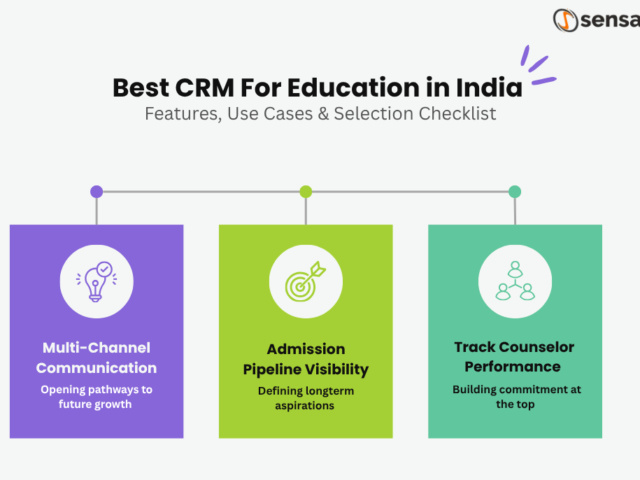
Choosing the right CRM for Educational Institutions in India has become one of the most important technology decisions for schools, colleges, universities, coaching institutes, and EdTech organizations. As student inquiries increase across websites, WhatsApp, Google Ads, social media, education portals, and phone calls, institutions need a centralized system to manage admissions efficiently.
With so many CRM platforms available, it’s easy to choose software that looks impressive but doesn’t actually solve day-to-day admission challenges. Many institutions in India end up paying for features they rarely use because the CRM is designed for business sales instead of education workflows.
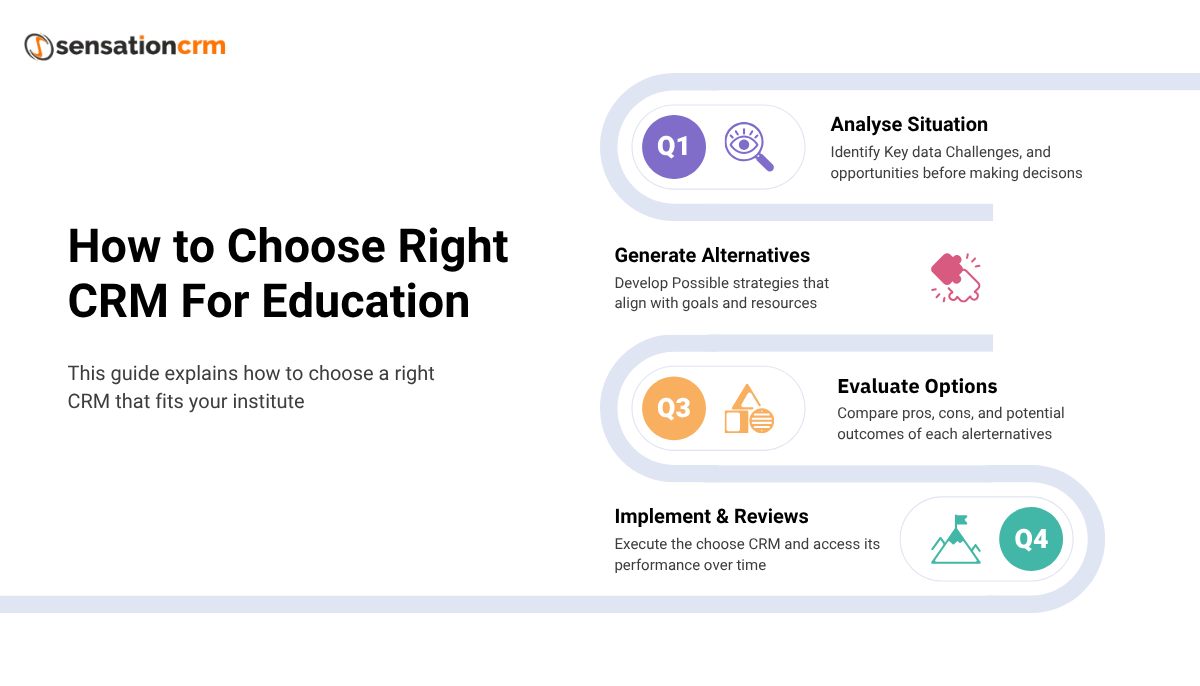
This guide explains how to choose an Education CRM in India that aligns with your admission process, supports long-term growth, improves student engagement, and helps you avoid unnecessary software costs.
Why Educational Institutions in India Often Overpay for CRM Software
Many educational institutions across India invest in CRM software expecting better admissions, improved communication, and higher enrollments.
However, overpaying rarely happens because of poor budgeting. It usually happens because institutions purchase generic CRM systems that require expensive customization before they can support student admissions effectively.
Admission processes in India are very different from traditional business sales. Student decisions often involve parents, counselors, entrance examinations, scholarship discussions, fee planning, and multiple follow-ups over several weeks or months.
A generic sales CRM rarely supports these workflows without significant customization, increasing implementation costs over time.
Capture Inquiries
From all sources in one place
Automate Follow-ups
Timely reminders & communication
Monitor Performance
Track counselors & team activity
Increase Enrollments
Convert more inquiries into admissions
Why Education Requires a Specialized CRM in India
A CRM designed for education needs to understand how students move through the system. This includes inquiry, counseling, documentation, fee discussion, enrollment, and post-admission communication.
In many institutions, the same student interacts with multiple staff members over weeks or months. A proper CRM for educational institutions keeps that entire history visible and accessible. Generic CRMs usually don’t do this well without heavy modification.
If a system treats students like short-term sales leads, it’s not a good match.
Start With Your Actual Admission Process
Before comparing CRM software, educational institutions should carefully evaluate how admissions currently work.
Questions to consider include:
- How do inquiries arrive?
- Through website forms, phone calls, walk-ins, or social media?
- Who responds first?
- How are follow-ups tracked?
- Where do delays happen?
The best Education CRM should improve your existing workflow rather than forcing your admission team to change how they work.
Don’t Pay for Features Your Institution Doesn’t Need
Many CRM vendors bundle features like:
- Advanced sales forecasting
- Revenue pipelines
- AI deal scoring
- Complex automation chains
Most schools, colleges, universities, and coaching institutes in India benefit far more from reliable admission tracking, automated follow-ups, counselor management, and student communication.
Ease of Use Is More Important Than Feature Volume
Even the most advanced CRM fails if staff don’t use it properly. Admissions teams are busy. If a CRM requires too many steps to log a call or update a status, people will avoid it. Data becomes incomplete. Reports become unreliable.
The best CRM for Higher education feels intuitive. Staff should be able to learn it quickly, without long training sessions. When the system feels simple, consistency follows.
Customization Should Support, Not Complicate
The best CRM for Colleges and Schools in India should already include admission-specific workflows.
Excessive customization often indicates the CRM wasn’t originally built for education.
Institutions should prioritize platforms that work effectively with minimal configuration.
- Extra setup costs
- Consultants
- Long implementation timelines
- Ongoing dependency
If a CRM needs constant changes to function properly, it’s probably not designed for education in the first place.
Admission Reports Should Help Decision-Making
Reports should answer real questions, not just display numbers. Institutions typically want to know how many inquiries are active, where students drop off, which programs perform well, and how counselors are managing follow-ups.
A good CRM for educational institutions presents this information in simple language. If reports require interpretation or technical knowledge, they won’t be used consistently.
Integration Should Feel Natural
Educational institutions in India already use multiple platforms such as websites, WhatsApp Business, email, SMS, payment gateways, and Learning Management Systems.
A modern Education CRM in India should integrate seamlessly with these tools instead of replacing them.
Data Security Is Non-Negotiable
Student and parent data must be protected. Any CRM solution should include secure hosting, strong access controls, detailed activity logs, and regular backups to ensure data privacy and compliance.
Security shouldn’t be treated as an optional feature. It should be standard. Institutions that ignore this risk not just operational issues, but trust as well.
Pricing Transparency Prevents Long-Term Cost Surprises
The lowest-priced CRM isn’t always the most affordable in the long run.
When comparing Education CRM software in India, evaluate:
- User limits
- Storage caps
- Feature upgrades
- Support fees
Clear, predictable pricing is safer than aggressive discounts. Over time, transparency saves more money than cheap entry plans.
Support and Onboarding Matter More Than Demos
CRM success depends on implementation. Strong onboarding, workflow setup, and ongoing support are essential.
Vendors who disappear after the sale leave institutions struggling to adapt. Education institutions should value long-term partnership over flashy demos. Support quality often determines whether a CRM succeeds or fails.
Choosing a CRM That Grows With You
Institutions grow gradually. New programs. More counselors. Higher inquiry volume.
A CRM should scale smoothly without forcing system changes every year. Scalability doesn’t mean complexity. It means stability under growth.
Why Education-Focused CRM Platforms Make Sense
Education CRMs are built with real institutional workflows in mind.
They understand:
- Admission seasons
- Multiple stakeholders
- Long decision cycles
- Counselor accountability
- Parent communication
This reduces friction. Less friction means better outcomes.
Why AI-Powered Education CRMs Are Becoming Popular in India
Educational institutions are increasingly adopting AI-powered CRM platforms to improve operational efficiency.
Modern AI-enabled Education CRMs help institutions:
- Automate repetitive tasks
- Prioritize student inquiries
- Personalize communication
- Improve counselor productivity
- Generate admission insights
- Increase enrollment forecasting accuracy
This allows admission teams to focus more on student engagement and less on administrative work.
Sensation CRM: Designed for Education, Not Sales Pipelines
For institutions seeking a practical and education-focused solution, Sensation CRM is built around actual academic workflows. It supports inquiry management, admissions tracking, counselor coordination, and reporting without unnecessary complexity.
Instead of adapting sales tools for education, Sensation CRM provides structure that fits schools, colleges, and coaching institutes helping teams stay organized, accountable, and scalable without overpaying for features they don’t need.

Looking for a Cost-Effective Education CRM?
From inquiry capture to enrollment, manage everything
in one place and never miss a potential student.
Choosing The Right CRM
Choosing the right CRM for educational institutions isn’t about buying the most advanced software. It’s about selecting a system that matches how education actually operates.
Institutions that prioritize usability, clarity, and education-specific design avoid wasted spending and operational stress. A good CRM supports people, processes, and growth without getting in the way, while making it easy for prospects to contact us and receive timely responses.
Conclusion
Choosing the right CRM for Educational Institutions in India isn’t about selecting the platform with the longest feature list. It’s about investing in a solution that supports the way educational institutions actually manage admissions.
A modern Education CRM in India helps schools, colleges, universities, coaching institutes, and EdTech organizations centralize student inquiries, automate admission workflows, improve counselor collaboration, and deliver a better enrollment experience.
By focusing on usability, transparency, security, scalability, and education-specific functionality, institutions can reduce unnecessary software costs while improving operational efficiency and student engagement.
As competition in India’s education sector continues to grow, adopting an AI-powered Education CRM will help institutions manage admissions more effectively and achieve sustainable enrollment growth.
Frequently Asked Questions
Q: What is a CRM for educational institutions?
A CRM for educational institutions is software designed to manage student inquiries, communication history, admissions workflows, and engagement across the student lifecycle.
Q: How is education CRM different from sales CRM?
Education CRMs focus on inquiries, counseling, enrollment, and student communication, whereas sales CRMs are built around short sales cycles and revenue pipelines.
Q: Why shouldn’t schools use generic CRM systems?
Generic CRMs require heavy customization, don’t follow education workflows out of the box, and often force institutions to overpay for features they will not use.
Q: What should schools look for when choosing a CRM?
Schools should look for ease of use, built-in education workflows, simple reporting, secure data handling, predictable pricing, and support tailored to admissions teams.
Q: Can a CRM integrate with existing systems like Whatsapp or Facebook?
Yes. Many education-focused CRMs can integrate with these platforms, inquiry forms, and communication tools to streamline information flow.
Related Resources
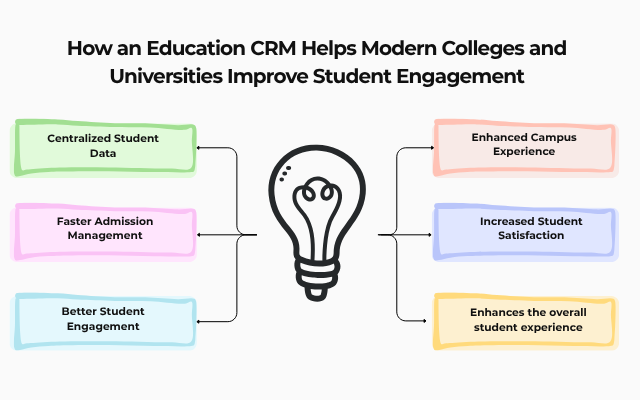
How an Education CRM Helps Modern Colleges and Universities Improve Student Engagement
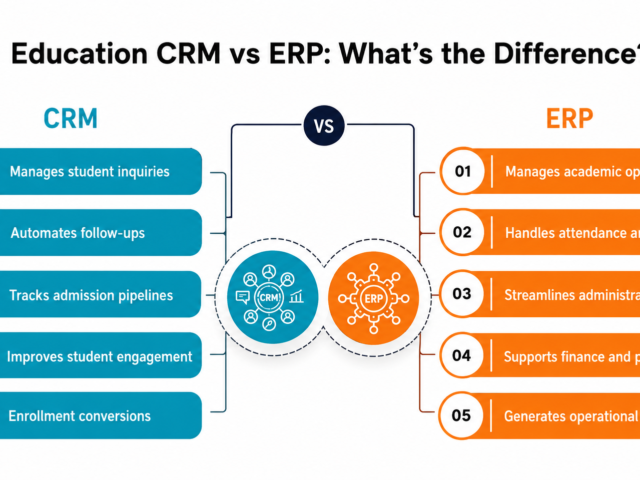
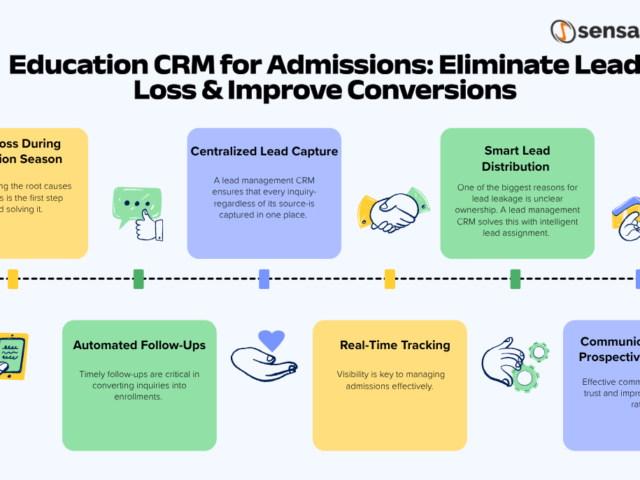
Education CRM for Admissions: Eliminate Lead Loss & Improve Conversions
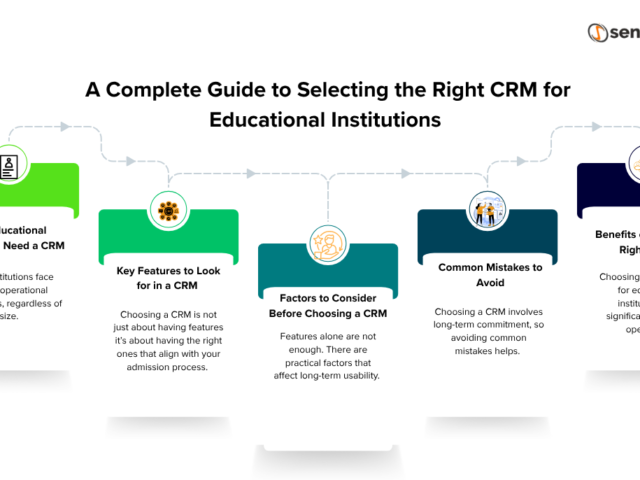
A Complete Guide to Selecting the Right CRM for Educational Institutions
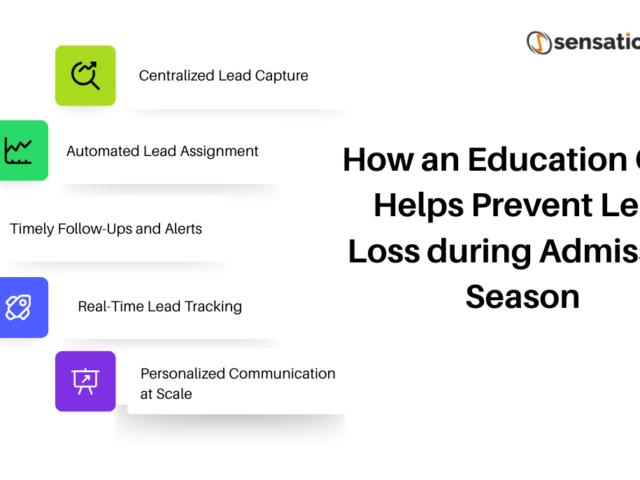
How an Education CRM Helps Prevent Lead Loss during Admission Season