Categories
CRM Automation

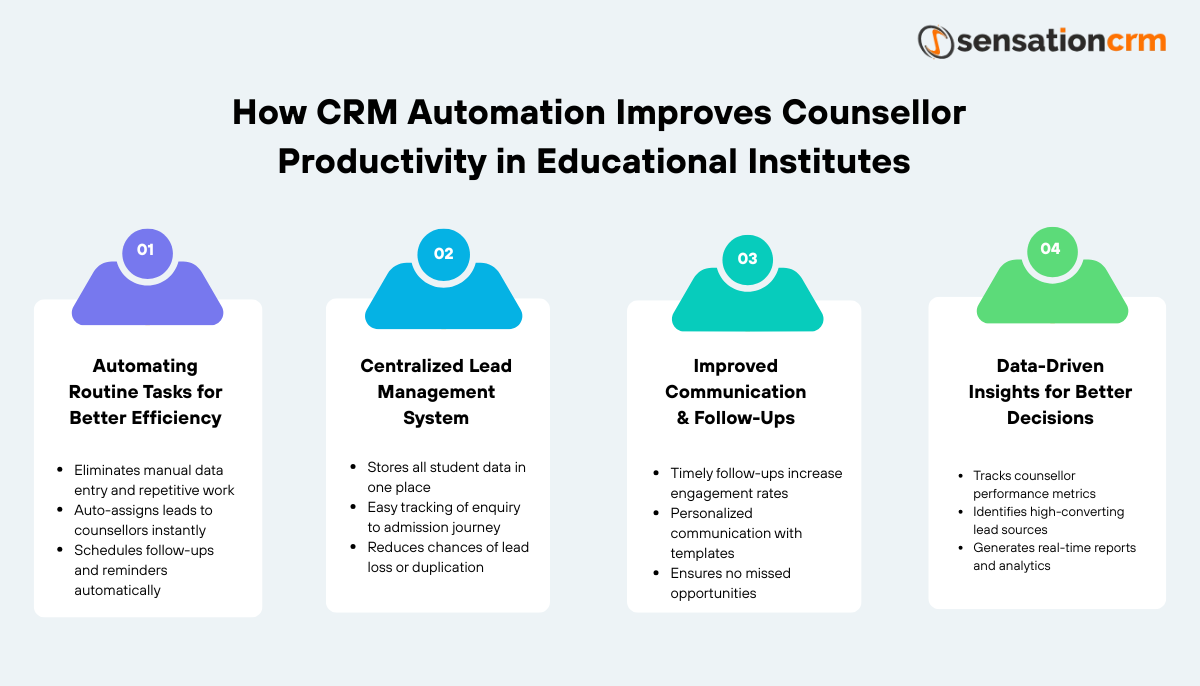
How CRM Automation Improves Counsellor Productivity in Educational Institutes

Admission season in educational institutes across India is honestly, quite hectic. Counsellors are handling hundreds (sometimes thousands) of inquiries, follow-ups, applications, and student queries all at the same time.

And this is exactly where CRM Automation becomes not just useful, but necessary. 

With the help of tools like CRM WhatsApp automationstudent managementadmissions workflow automation, and automated status tracking, institutes can reduce manual work and help counsellors focus on what actually matters converting and guiding students.

What is CRM Automation in Education? 

CRM Automation refers to using technology to automate repetitive and time-consuming tasks involved in managing student leads and admissions. 

Instead of manually tracking everything, a CRM system handles: 

  • Lead capture 
  • Follow-ups 
  • Application tracking 
  • Communication 

As discussed in our blog, Sensation CRM is specifically designed for educational institutes across India, making it easier to manage the entire admission lifecycle from student inquiry to enrollment in one centralized platform.

Why Counsellor Productivity is a Challenge? 

Before understanding automation, it’s important to see where time actually goes. 

Counsellors usually spend a lot of time on: 

  • Repetitive follow-ups 
  • Managing data across Excel, WhatsApp, and emails 
  • Tracking application status manually 
  • Responding to common queries 

The result? 

  • Delayed responses 
  • Missed follow-ups 
  • Lead leakage 
  • Burnout among counsellors 

Automation helps fix these problems at the root level. 


Logo

Ready to Boost Counsellor Productivity?

Automate repetitive tasks, streamline student follow-ups, and help your counsellors focus on more admissions.

CRM WhatsApp Automation for Faster Communication 

Students across India expect quick responses and increasingly prefer communicating through WhatsApp during the admission process.

With CRM WhatsApp automation, institutes can: 

  • Send instant replies to inquiries 
  • Automate follow-up messages 
  • Share course details and updates 
  • Send reminders for deadlines 

How it improves productivity? 

  • Counsellors don’t have to reply manually every time 
  • Faster response = higher chances of conversion 
  • Consistent communication across all leads 

Instead of typing the same answers again and again, counsellors can focus on meaningful conversations. 

Admissions Workflow Automation 

Admissions involve multiple steps, and managing them manually can get messy. 

Admissions workflow automation helps streamline the entire process. 

What gets automated? 

  • Lead assignment to counsellors 
  • Follow-up scheduling 
  • Application movement through stages 
  • Notification triggers 

Example Workflow: 

StageAction
InquiryAuto-assign to counsellor
Follow-upAutomated reminders
ApplicationStatus update
EnrollmentFinal confirmation

Benefits: 

  • Clear process flow 
  • No confusion or overlap 
  • Faster progression of leads 

Application Automation Simplifies the Process 

Handling applications manually is time-consuming and error-prone. 

With application automation, institutes can: 

  • Collect applications digitally 
  • Auto-fill data from lead profiles 
  • Track document submissions 
  • Send alerts for incomplete applications 

Key advantages: 

  • Reduced paperwork 
  • Faster processing 
  • Fewer errors 

This allows counsellors to handle more applications without increasing workload. 

Automated Status Tracking for Better Visibility 

One of the biggest challenges is knowing where each lead stands. 

With automated status tracking, every lead is updated in real-time. 

What it tracks: 

  • Inquiry stage 
  • Application progress 
  • Payment status 
  • Enrollment confirmation 

Why it matters 

  • Counsellors don’t need to check manually 
  • Managers get full visibility 
  • No lead is forgotten 

It creates a “single source of truth” for the entire team. 

Role of Automation Tools in Daily Operations 

Modern automation tools are not just about saving time they improve overall efficiency. 

Key areas where automation tools help: 

  • Communication (emails, WhatsApp, SMS) 
  • Task management 
  • Reporting and analytics 
  • Lead tracking 

This reduces dependency on manual processes and improves team coordination. 

How CRM Automation Directly Improves Counsellor Productivity? 

When all these automation features work together, the impact is very clear. 

Productivity Improvements: 

  • Less manual work: Repetitive tasks are automated 
  • Faster responses: Leads are handled instantly 
  • Better focus: Counsellors spend more time on conversions 
  • Higher efficiency: More leads managed in less time
     

Before vs. After Automation:

TaskBefore CRMAfter CRM Automation
Follow-upsManualAutomated
Lead trackingExcel sheetsReal-time dashboard
CommunicationScatteredCentralized
ProductivityLowHigh

Why Institutes Are Adopting CRM Automation? 

Educational institutes across India are adopting CRM automation because:

  • Admissions are becoming more competitive 
  • Lead volumes are increasing 
  • Students expect quick responses 

Using solutions like Sensation CRM, institutes can: 

  • Manage leads efficiently
  • Improve counsellor performance
  • Increase conversion rates

Best Practices to Maximize CRM Automation

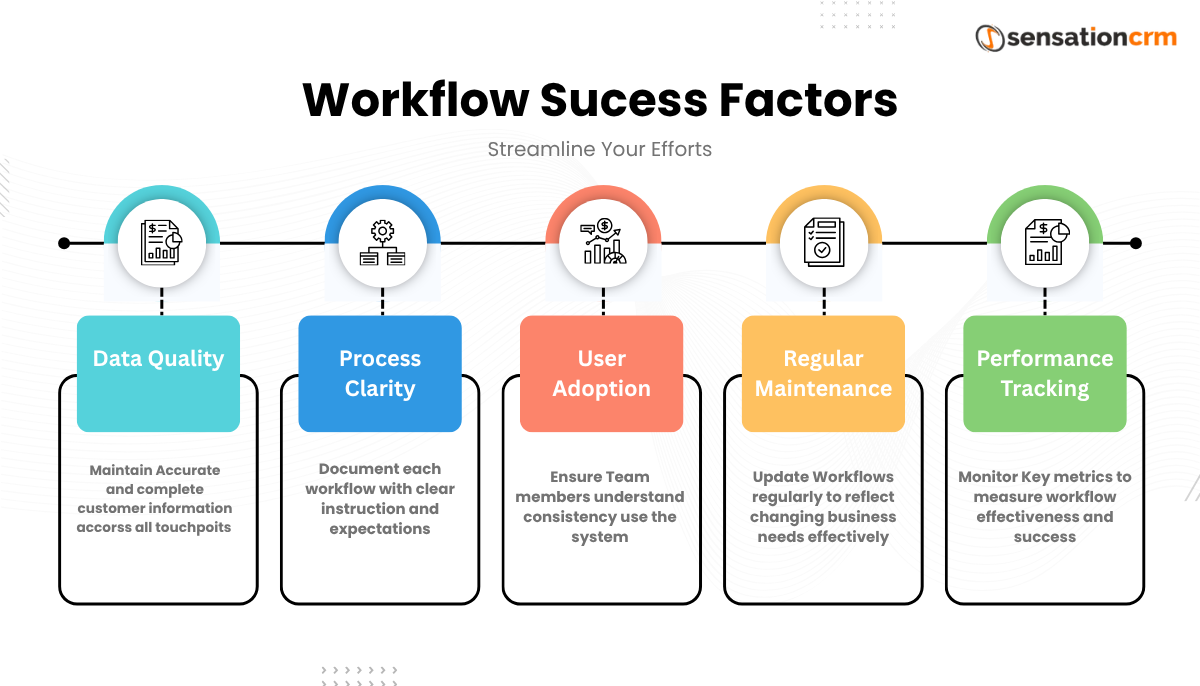
To get the best results, automation needs to be used correctly. 

Recommended practices: 

  • Set clear workflows 
  • Train counsellors properly 
  • Keep data updated 
  • Monitor performance regularly 
  • Use automation smartly (not blindly) 

Automation works best when combined with human judgment. 

Logo

Empower Your Counsellors with CRM Automation

Reduce manual work, improve response times, and manage every student inquiry from one intelligent CRM.

Capture Inquiries

From all sources in one place

Automate Follow-ups

Timely reminders & communication

Monitor Performance

Track counselors & team activity

Increase Enrollments

Convert more inquiries into admissions

Final Thoughts 

CRM Automation is not just about saving time it’s about working smarter. 

By using tools like: 

  • CRM WhatsApp automation 
  • Admissions workflow automation 
  • Application automation 
  • Automated status tracking 

Institutes can significantly improve counsellor productivity and overall admission performance. 

Platforms like Sensation CRM help educational institutions across India implement CRM automation without complexity. When counsellors spend less time managing data and more time engaging with students, conversions naturally improve while creating a better admission experience.

Frequently Asked Questions

Q: What is CRM automation in education?

CRM automation helps automate tasks like lead management, follow-ups, and application tracking in educational institutes. 

Q: How does CRM WhatsApp automation help counsellors?

It automates communication, reduces manual replies, and ensures faster responses to student inquiries. 

Q: What is admissions workflow automation?

It is the automation of the entire admission process, from lead capture to enrollment. 

Q: How does automated status tracking work?

It updates the status of each lead in real-time, giving full visibility to counsellors and management. 

Q: Can CRM automation improve conversion rates?

Yes, faster responses and better follow-ups significantly improve conversion rates. 

Q: Why should institutes use CRM automation tools?

To reduce manual work, improve efficiency, and manage large volumes of leads effectively.
Categories
CRM Automation CRM for Higher Education

CRM for Higher Education: Solving Admission & Enrollment Challenges in Colleges & Universities

Colleges and universities across India are facing increasing pressure to modernize their admission and enrollment processes. Student expectations continue to evolve, competition among higher education institutions is growing, and admission cycles are becoming longer and more complex.

A single admission cycle may involve thousands of student inquiries from websites, Google Ads, education portals, WhatsApp, phone calls, campus events, and referrals. Admission teams must also manage entrance exams, counseling sessions, document verification, financial discussions, interviews, and extended follow-ups before a student finally enrolls.

Many colleges and universities in India still rely on spreadsheets, emails, and disconnected software to manage these processes. While this may work for smaller institutions, it quickly becomes inefficient as inquiry volumes increase. Student information gets scattered, follow-ups are delayed, and institutional leaders struggle to gain accurate visibility into enrollment performance.

A modern CRM for Higher Education in India helps institutions centralize admission management, automate follow-ups, improve collaboration across departments, and make data-driven enrollment decisions. Rather than functioning as a sales tool, it serves as a strategic admission management platform designed specifically for colleges and universities.

What Does CRM Mean in Higher Education in India?

Within India’s higher education sector, CRM is less about customer management and more about building long-term relationships with prospective students and their families throughout the admission journey.

A modern Higher Education CRM in India helps institutions manage student inquiries, automate admission workflows, improve communication, and provide a seamless enrollment experience.

Core functions typically include: 

  • Capturing and organizing student inquiries
  • Managing multi-stage admission workflows
  • Tracking communication across calls, emails, and messages
  • Coordinating counselors, departments, and campuses
  • Providing enrollment visibility and reporting

The emphasis is on process control and data clarity rather than aggressive automation.

Admission and Enrollment Challenges for Colleges and Universities in India

Colleges and universities across India experience several operational challenges during admission season. As inquiry volumes increase and student decision-making becomes more complex, managing admissions manually often leads to inefficiencies, delayed responses, and reduced enrollment conversions.

1. High Inquiry Volume With Long Decision Timelines

Universities in India often receive thousands of student inquiries months before admissions close.

Students typically compare multiple colleges, entrance exam scores, scholarships, fee structures, campus facilities, and placement opportunities before making a final decision.

A modern Education CRM in India helps institutions maintain continuous engagement throughout this extended admission journey.

2. Multiple Programs, Criteria, and Deadlines

Higher education institutions offer diverse programs with different:

  • Capturing and organizing student inquiries
  • Managing multi-stage admission workflows
  • Tracking communication across calls, emails, and messages
  • Coordinating counselors, departments, and campuses
  • Providing enrollment visibility and reporting

Managing this complexity manually increases the risk of errors, missed deadlines, and student frustration.

3. Siloed Departments and Information Gaps

Admissions teams, academic departments, finance offices, and marketing teams often operate on separate systems. When information is not shared effectively, students receive inconsistent answers and internal coordination suffers.

4. Limited Enrollment Predictability

Leadership teams often struggle to forecast enrollment accurately due to gaps in lead management. Questions such as how many applicants are likely to convert or which programs may fall short often remain unanswered until late in the cycle.

Logo

Simplify Admissions for Colleges & Universities

Capture Inquiries

From all sources in one place

Automate Follow-ups

Timely reminders & communication

Monitor Performance

Track counselors & team activity

Increase Enrollments

Convert more inquiries into admissions

How CRM Supports the Higher Education Admission Process

1. Centralized Prospect and Applicant Data

A modern CRM for Universities in India captures student inquiries from every admission channel into one centralized platform.

  • Institutional websites
  • Education portals
  • Campus events and fairs
  • Walk-ins and referrals

Each prospect profile stores complete interaction history, program interest, eligibility notes, and current admission status. This centralized view eliminates duplication and ensures continuity across departments.

2. Structured Admission Pipelines

An Admission CRM in India enables colleges and universities to create structured admission workflows that align with institutional processes.

Typical admission stages include:

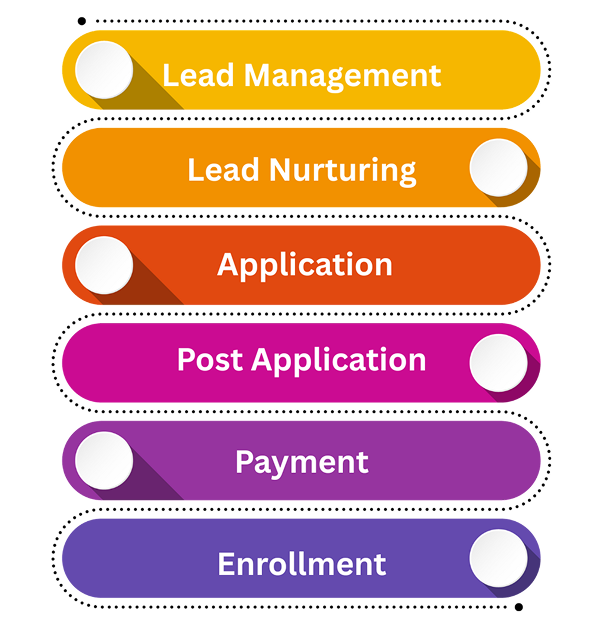
Inquiry → Counseling → Eligibility Review → Application Submitted → Entrance Exam → Interview → Offer Letter → Fee Payment → Enrollment

This structured pipeline helps admission teams monitor student progress and improve enrollment efficiency.

Managing Follow-Ups Over Extended Admission Cycles

Managing Follow ups

Follow-ups in higher education require patience, consistency, and relevance.

1. Automated Reminders and Task Management

CRMs generate reminders for scheduled calls, emails, document checks, and meetings. Counsellors no longer depend on memory or personal tracking methods.

2. Complete Communication Context

All interactions are logged within the CRM. If a student reconnects after weeks or months, staff can continue the conversation without repetition or confusion.

3. Program-Specific and Stage-Based Communication

CRMs enable targeted messaging based on:

  • Program interest
  • Admission stage
  • Exam or interview outcomes

This ensures students receive relevant information at the right time.

Improving Enrollment Conversion Rates

Enrollment challenges often arise due to uncertainty rather than lack of interest.

1. Reduced Drop-Offs Through Process Clarity

When students clearly understand next steps, documentation requirements, and timelines, they are less likely to disengage.

2. Early Identification of At-Risk Applicants

CRMs highlight stalled applications and inactive prospects, allowing teams to intervene before students drop out of the process.

3. Source and Program-Level Insights

Institutions gain visibility into which inquiry sources and programs generate the most enrollments, enabling better planning and outreach.


Logo

Ready to Improve Student Enrollment?

Streamline admission workflows, empower your admissions team, and convert more applicants with an AI-powered Education CRM

Data Visibility for Academic and Administrative Leadership

A modern CRM for Higher Education in India provides real-time dashboards that help institutional leaders monitor:

CRM dashboards provide insights into:

  • Inquiry-to-application ratios
  • Application-to-enrollment conversion rates
  • Program-wise demand trends
  • Counselor workload and productivity

These insights support informed decisions around capacity planning, staffing, and marketing investments.

Cross-Department Collaboration and Accountability

Admissions in Indian colleges and universities require collaboration between admission counselors, academic departments, finance teams, scholarship offices, and marketing teams.

A centralized Education CRM enables every department to work from the same student record, improving coordination and reducing communication gaps.

A CRM supports collaboration by:

  • Providing shared access to applicant information
  • Defining ownership at each stage of the process
  • Creating transparent handoffs between departments

This reduces miscommunication and improves the applicant experience.

CRM Use Cases Across Higher Education Institutions in India

1. Undergraduate Admissions: Managing high volumes, entrance exams, counseling schedules, and parent communication.

2. Postgraduate and Research Programs: Tracking eligibility reviews, interviews, recommendations, and documentation across longer timelines.

3. Professional and Executive Education: Handling working professionals, flexible timelines, cohort-based enrollments, and batch planning.

Comparison Table: Higher Education Admissions With and Without CRM


Area Without CRM With CRM
Prospect Tracking Fragmented systems Centralized database
Follow-Ups Manual and inconsistent System-driven and timely
Admission Visibility Limited Real-time pipeline
Department Coordination Disconnected Structured collaboration
Enrollment Forecasting Assumption-based Data-backed

Why Indian Colleges and Universities Are Adopting AI-Powered Education CRMs

As competition for student enrollments increases across India, educational institutions are adopting AI-powered CRM platforms to automate repetitive tasks, improve counselor productivity, personalize communication, and provide a better admission experience.

AI-powered Education CRMs help institutions reduce manual work while improving enrollment forecasting and operational efficiency.

Common Misconceptions About CRM for Higher Education in India

  • CRM is only for private institutions. Public universities benefit equally from process visibility and accountability.
  • CRM interferes with academic autonomy. CRM supports administration, not academic evaluation.
  • CRM implementation is disruptive. Modern systems allow phased adoption without interrupting admission cycles.

Best Practices for Implementing a Higher Education CRM in India

A CRM delivers value only when aligned with institutional workflows.

Key considerations include:

  • Mapping current admission processes accurately
  • Defining realistic pipeline stages
  • Training staff with real scenarios
  • Reviewing data regularly during the admission cycle

Simplicity and consistency matter more than feature depth.

CRM for Higher Education Brings Leads

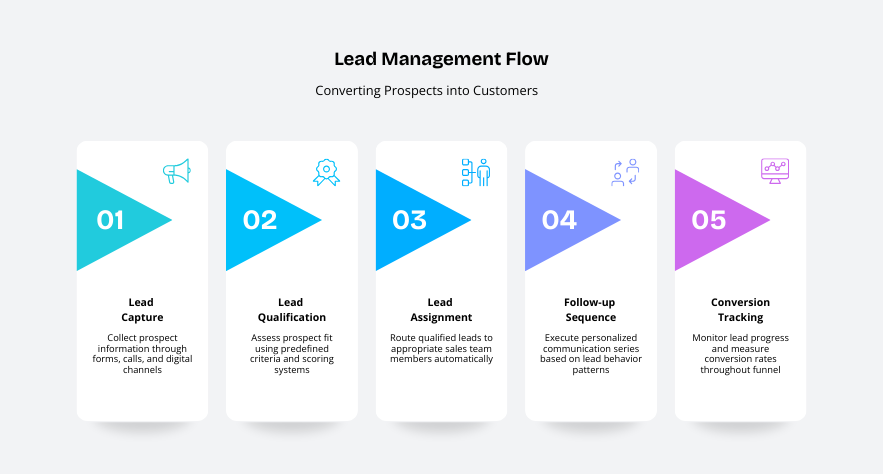
Lead Management Flow

A CRM for higher education brings order to admissions and enrollment without compromising academic values. It allows colleges and universities to manage scale, complexity, and long decision cycles with clarity and consistency.

For institutions seeking a CRM aligned with higher education workflows, Sensation CRMs offers solutions built specifically for colleges and universities. The platform supports inquiry management, admission tracking, structured follow-ups, and enrollment visibility while remaining practical and easy to adopt.

When implemented thoughtfully, a CRM becomes a reliable operational foundation for modern higher education admissions.

Frequently Asked Questions

Q: What challenges do colleges face in admissions?

Higher education institutions often struggle with managing large inquiry volumes, long decision timelines, complex program options, and consistent follow-ups.

Q: How does a CRM help colleges improve admissions?

A CRM centralizes student interactions, tracks admissions stages, automates follow-ups, and provides visibility into conversion trends to improve enrollment performance.

Q: Does CRM improve communication with prospective students?

Yes. It logs all interactions email, calls, messages and ensures counselors always have context for each conversation. 

Q: Is CRM only useful during admissions?

No. A CRM supports engagement from inquiry through enrollment and can also assist with retention, communication, and alumni tracking.

Q: How does CRM reduce manual workload for admissions staff?

CRMs automate reminders, track tasks, and reduce repetitive data entry, freeing staff to focus on higher-value student engagement.