Categories
Education CRM

Education CRM for Admissions: Eliminate Lead Loss & Improve Conversions

Admission season can be one of the busiest periods for educational institutions. With inquiries arriving from websites, social media, phone calls, and email campaigns, admission teams often struggle to keep up with growing volumes of student interest.

When follow-ups are delayed or student information is scattered across different platforms, valuable opportunities can be lost. Prospective students expect quick responses and personalized communication, making efficient lead management more important than ever.

This is where an admissions CRM plays a vital role. By centralizing data, automating routine tasks, and improving visibility across the admission funnel, institutions can reduce lead loss and improve enrollment outcomes.

This is where an Education CRM becomes essential. A well-implemented CRM in higher education centralizes processes, automates communication, and ensures no lead is ignored-helping institutions manage high volumes efficiently and convert more inquiries into admissions.

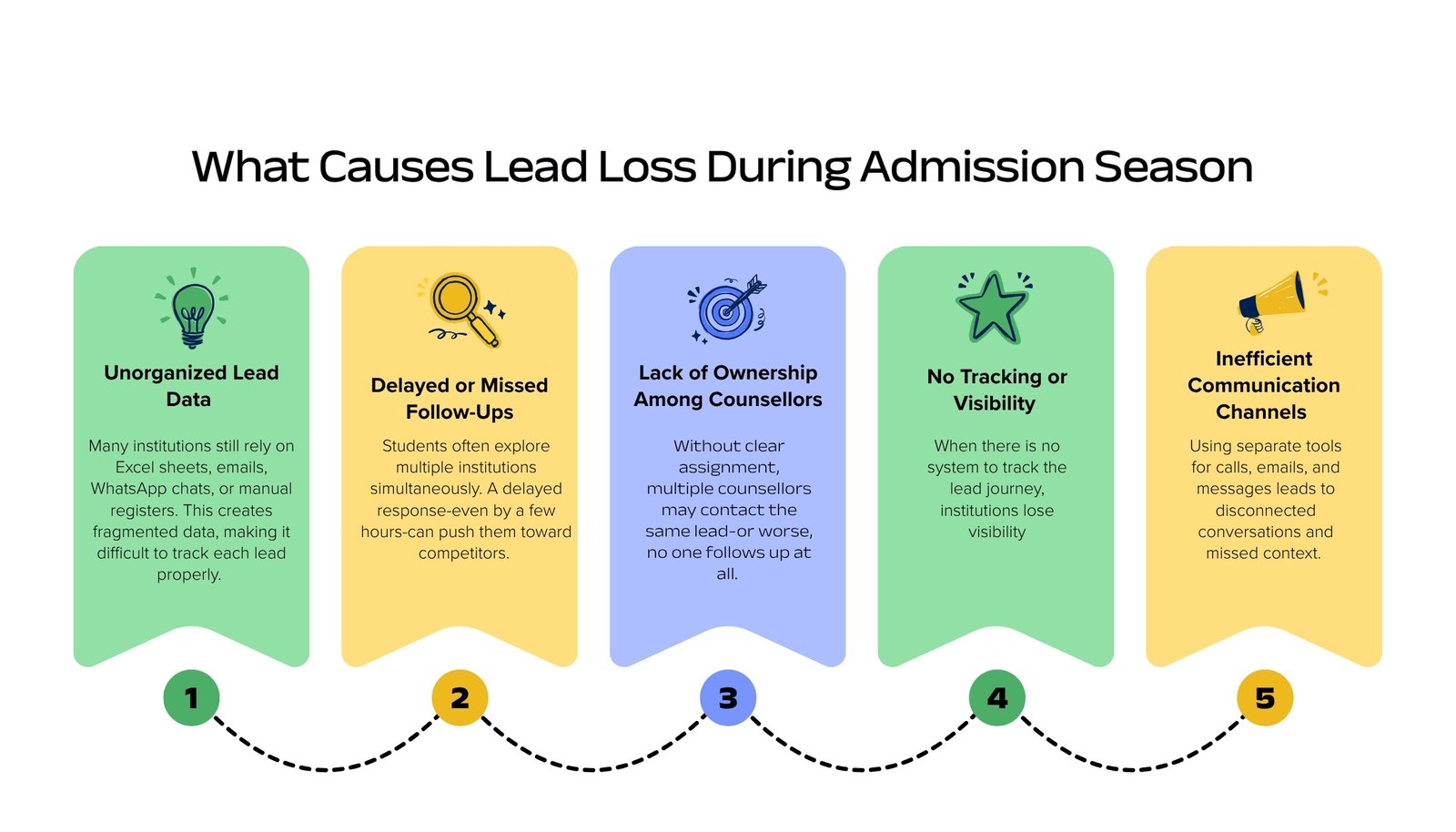
What Causes Student Lead Loss During Admission Season in India?
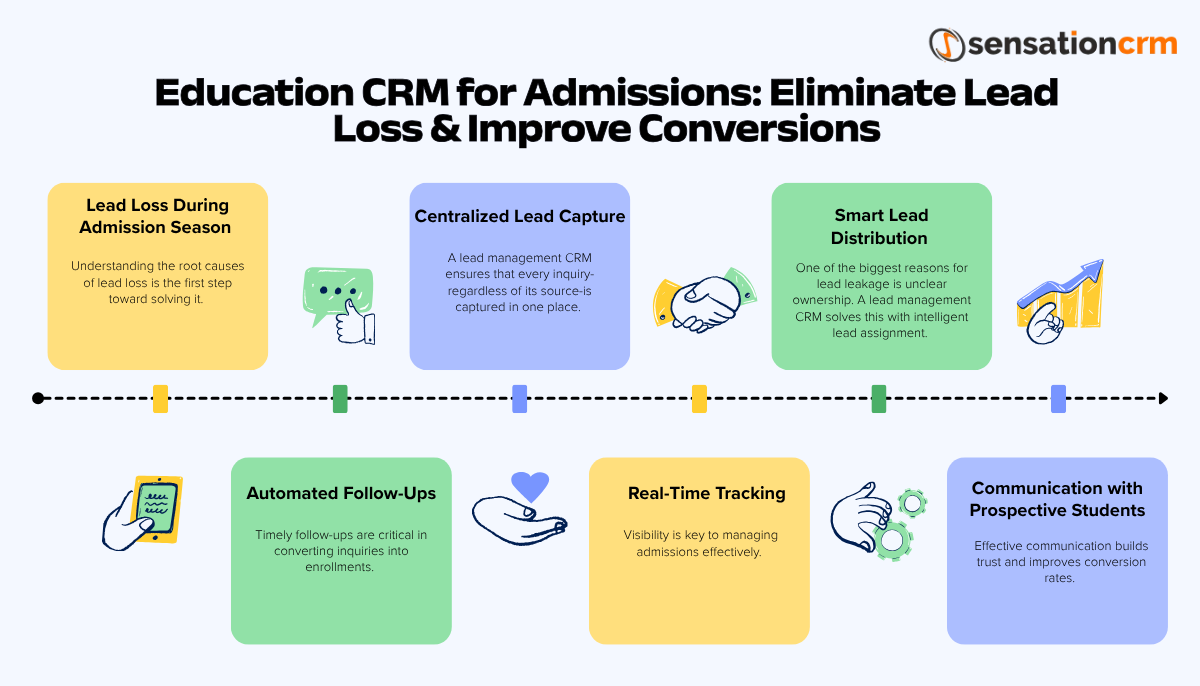
Lead Loss During Admission Season

Understanding the root causes of lead loss is the first step toward solving it. 

1. Unorganized Lead Data 

Many schools, colleges, universities, and educational institutions in India still rely on Excel sheets, emails, WhatsApp chats, or manual registers to manage admissions. This fragmented approach makes it difficult to track student inquiries, resulting in delayed follow-ups and missed admission opportunities.

2. Delayed or Missed Follow-Ups 

Students often explore multiple institutions simultaneously. A delayed response-even by a few hours-can push them toward competitors. 

3. Lack of Ownership Among Counsellors 

Without clear assignment, multiple counsellors may contact the same lead-or worse, no one follows up at all. 

4. No Tracking or Visibility 

When there is no system to track the lead journey, institutions lose visibility into: 

  • Which stage the student is in 

  • What actions have been taken 

  • What needs to happen next 

5. Inefficient Communication Channels 

Using separate tools for calls, emails, and messages leads to disconnected conversations and missed context. 

All these challenges create friction in the admission process, resulting in lost opportunities. 

Logo

Stop Losing Student Leads Today

Centralized Lead Management

Automated Follow-ups

Real-time Reports & Analytics

Secure & Reliable

What is an Education CRM?

An Education CRM in India is specialized admission management software that helps educational institutions manage the complete student lifecycle from the first inquiry to enrollment and beyond.

Unlike generic CRM tools, an Education CRM is tailored specifically for academic institutions, and an Education CRM App further enhances accessibility by allowing teams to manage admissions on the go. It understands the admission funnel and includes features such as:

  • Lead capture and tracking 

  • Admission workflow management 

  • Counsellor assignment 

  • Communication automation 

  • Reporting and analytics 

In the context of CRM in higher education, it acts as a centralized system that brings together marketing, admissions, and communication processes into one platform. 

The key advantage is automation combined with centralization, ensuring efficiency and accuracy during high-pressure admission cycles. 

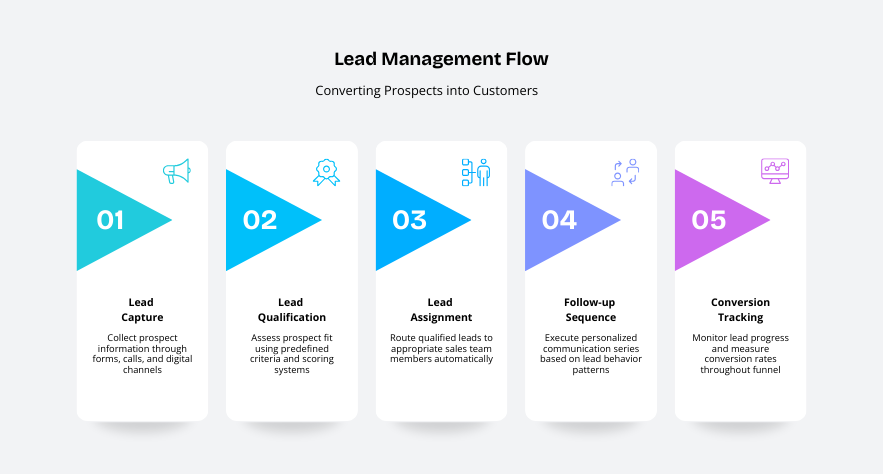
Centralized Lead Capture with Lead Management CRM

A Lead Management CRM for Educational Institutions in India ensures every student inquiry is captured automatically, regardless of whether it comes from your website, Google Ads, Meta Ads, WhatsApp, phone calls, education portals, walk-ins, or referral campaigns.

Lead Sources Integrated: 

  • Website forms 

  • Phone calls 

  • Social media platforms 

  • Email inquiries 

  • Walk-ins 

Instead of scattered data, all leads flow into a single dashboard, creating a single source of truth

Key Benefits: 

  • No duplication of leads 

  • No missing data 

  • Easy access for the entire team 

  • Better tracking from day one 

With centralized lead capture, institutions eliminate the risk of losing leads due to manual errors or system gaps. 

Smart Lead Distribution and Ownership

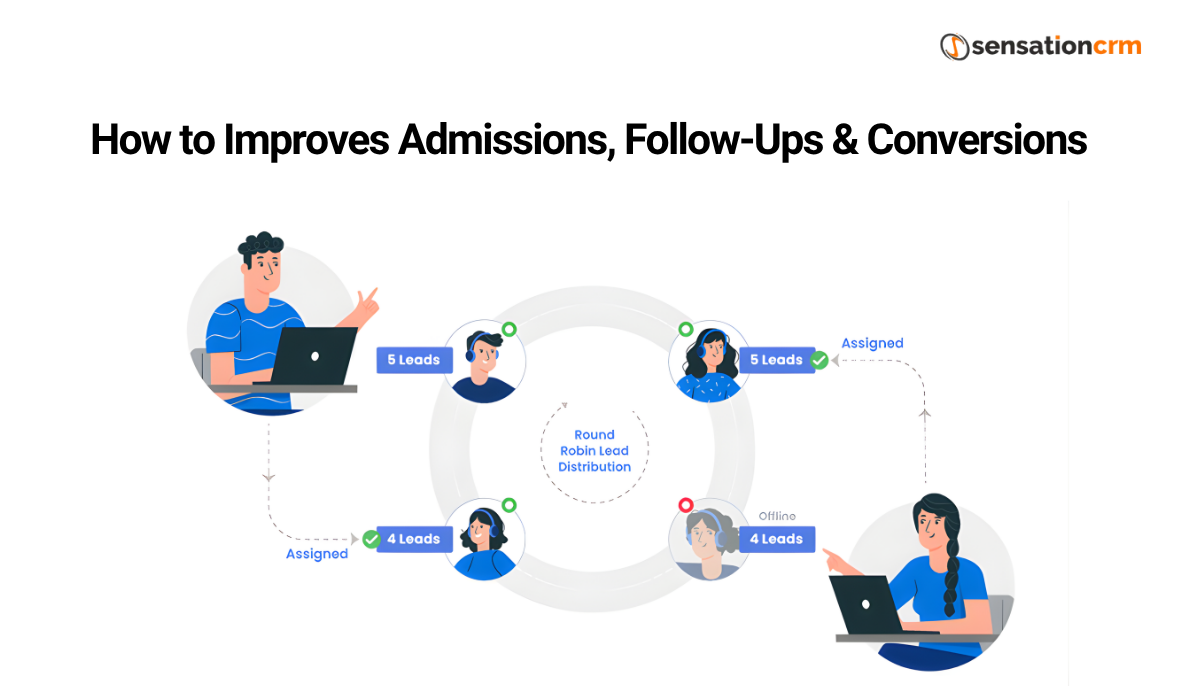
One of the biggest reasons educational institutions in India lose student inquiries is the absence of a structured lead assignment process. An AI-powered Education CRM in India automatically assigns leads to counselors based on predefined rules such as course preference, city, department, workload, or campus.

How It Works: 

  • Leads are automatically assigned to counsellors 

  • Distribution can be based on rules (location, course, workload) 

  • Role-based access ensures accountability 

Impact: 

  • Faster response times 

  • Clear responsibility for each lead 

  • No overlap or confusion 

When every lead has a defined owner, follow-ups become consistent, and the chances of conversion increase significantly. 

Automated Follow-Ups and Reminders

Timely follow-ups are essential for improving student admissions in India’s highly competitive education sector.

An Education CRM automates this process through: 

Automation Features: 

  • Scheduled email campaigns 

  • SMS reminders 

  • Call follow-up alerts 

  • Task notifications for counsellors 

Why It Matters: 

  • Ensures no lead is forgotten 

  • Maintains consistent communication 

  • Keeps prospects engaged throughout the decision-making process 

Automation reduces dependency on manual effort and ensures every lead is nurtured at the right time. 

Real-Time Tracking and Visibility
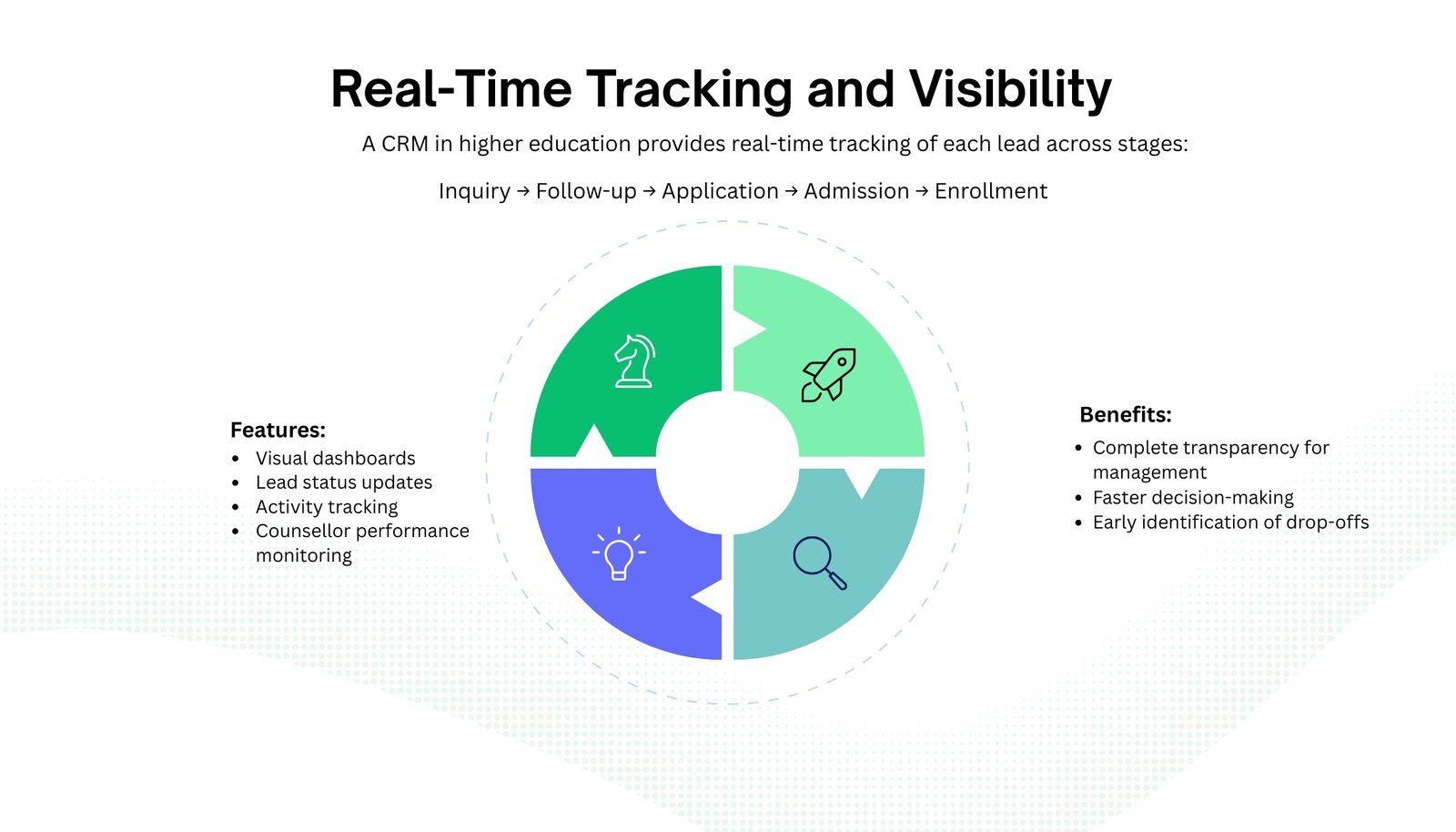
Real-Time Tracking and Visibility

Visibility is key to managing admissions effectively. 

A CRM for Colleges and Universities in India provides complete visibility into every stage of the admission process:

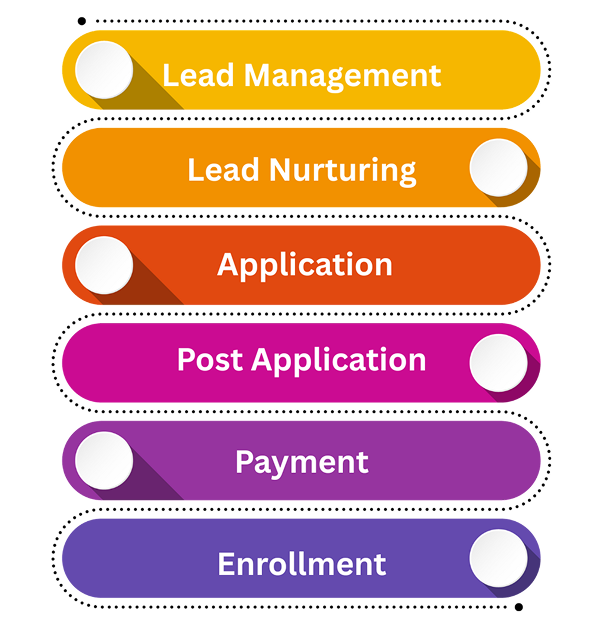
Student Inquiry → Follow-up → Application → Document Verification → Admission → Enrollment

This enables admission managers to identify bottlenecks quickly and improve conversion rates.

Features: 

  • Visual dashboards 

  • Lead status updates 

  • Activity tracking 

  • Counsellor performance monitoring 

Benefits: 

  • Complete transparency for management 

  • Faster decision-making 

  • Early identification of drop-offs 

Institutions can instantly see where leads are getting stuck and take corrective actions. 

Improved Communication with Prospective Students

An Education CRM in India centralizes every interaction with prospective students, including calls, emails, WhatsApp conversations, SMS messages, and counselor notes, allowing admission teams to deliver personalized communication and a better student experience.

Unified Communication Includes: 

  • Call logs 

  • Email history 

  • WhatsApp messages 

  • Notes from counsellors 

Advantages: 

  • Personalized interactions 

  • Context-aware conversations 

  • Consistent messaging across channels 

Students receive timely, relevant information, which enhances their experience and increases the likelihood of enrollment. 

Data-Driven Insights to Reduce Lead Loss

A Lead Management CRM in India provides actionable insights that help educational institutions make smarter admission decisions.

Key Reports: 

  • Lead source performance 

  • Conversion rates 

  • Campaign effectiveness 

  • Counsellor productivity 

How It Helps: 

  • Identify which channels bring high-quality leads 

  • Detect bottlenecks in the admission funnel 

  • Optimize strategies in real time 

Instead of guessing, institutions can make informed decisions based on actual data. 

Benefits of Using a CRM in Higher Education in India

Implementing a CRM in higher education delivers measurable improvements: 

1. Reduced Lead Leakage : Centralized tracking ensures no inquiry is missed. 

2. Faster Response Time : Automation and smart assignment enable quick responses. 

3. Higher Conversion Rates : Consistent follow-ups and personalized communication improve outcomes. 

4. Better Team Coordination : All departments work on the same system with shared visibility. 

5. Scalable Admission Process : Institutions can handle increased lead volume without operational breakdown. 

6. Better Admission Planning Across Multiple Campuses: Educational institutions operating across multiple campuses in India can manage admissions from a single centralized platform, ensuring standardized workflows, better reporting, and improved collaboration between teams.

Overall, a CRM transforms admission management from reactive to proactive. 


Logo

Turn More Student Inquiries into Enrollments

Streamline admissions, eliminate lead loss, and convert more prospects with an AI-powered Education CRM
Best Practices to Maximize CRM Effectiveness

Simply implementing an Education CRM is not enough. To get maximum value, institutions must follow best practices:

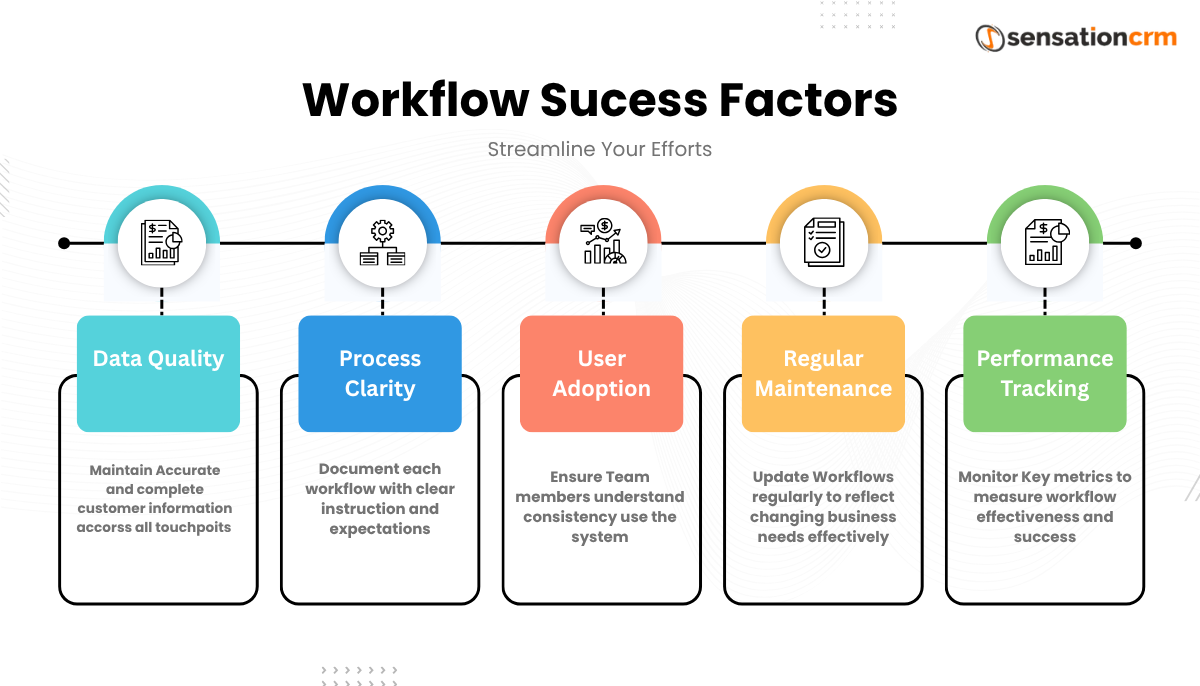
1. Train Your Admission Team: Ensure counsellors understand how to use the CRM effectively.

2. Set Clear Workflows: Define processes for lead handling, follow-ups, and status updates.

3. Monitor Dashboards Regularly: Track performance metrics and take action when needed.

4. Use Automation Smartly: Automate repetitive tasks but maintain a human touch in communication.

5. Keep Data Updated: Accurate and updated data ensures reliable insights and smooth operations.

When used correctly, a CRM becomes a powerful growth tool rather than just a management system.

Admission Season is more Chaotic

Admission success is not just about generating more inquiries—it is about managing every opportunity effectively. Across India, educational institutions are competing to attract and enroll quality students. Even the most successful marketing campaigns can underperform if student inquiries are not tracked, nurtured, and followed up consistently.

A modern admissions CRM helps institutions create a more organized and student-focused enrollment process. By combining automation, visibility, and personalized communication, colleges and universities can reduce lead loss, improve team productivity, and convert more prospective students into enrolled learners.

As competition in India’s education sector continues to grow, institutions that invest in a modern CRM for Colleges and Universities in India will be better positioned to improve student experiences, reduce lead loss, and achieve sustainable enrollment growth.

The key takeaway:

Educational institutions that implement the right Education CRM in India don’t just manage student inquiries they build a scalable admission process that consistently converts prospects into enrolled students. For more information, contact us to explore how the right solution can transform your admissions process.

Frequently Asked Questions

Q: How does CRM improve admissions?

An Education CRM is a specialized system designed to manage student inquiries, track interactions, and streamline the admission process. During admission season, it helps institutions handle high volumes of leads efficiently, ensuring no inquiry is missed or delayed.

Q: How does a lead management CRM prevent lead loss?

A lead management CRM prevents lead loss by:

  • Capturing all leads in one system
  • Assigning them to the right counsellors
  • Automating follow-ups
  • Tracking every interaction

This ensures that every lead is consistently nurtured until conversion.

Q: How is CRM in higher education different from a regular CRM?

A CRM in higher education is tailored specifically for admission workflows. Unlike generic CRMs, it includes:

  • Student lifecycle tracking
  • Course/program-based segmentation
  • Admission funnel management
  • Education-specific automation

This makes it more effective for managing student inquiries and enrollments.

Q: Can an Education CRM integrate with multiple lead sources?

Yes, an Education CRM can integrate with various lead sources such as:

  • Website forms
  • Social media platforms
  • Phone calls
  • Email campaigns
  • Walk-ins

This ensures all leads are captured in a single system without duplication.

Q: Does a CRM help improve response time to student inquiries? ?

Absolutely. A lead management CRM enables:

  • Instant lead assignment
  • Automated responses
  • Real-time notifications

This significantly reduces response time, which is critical for improving conversion rates.


Categories
Education CRM

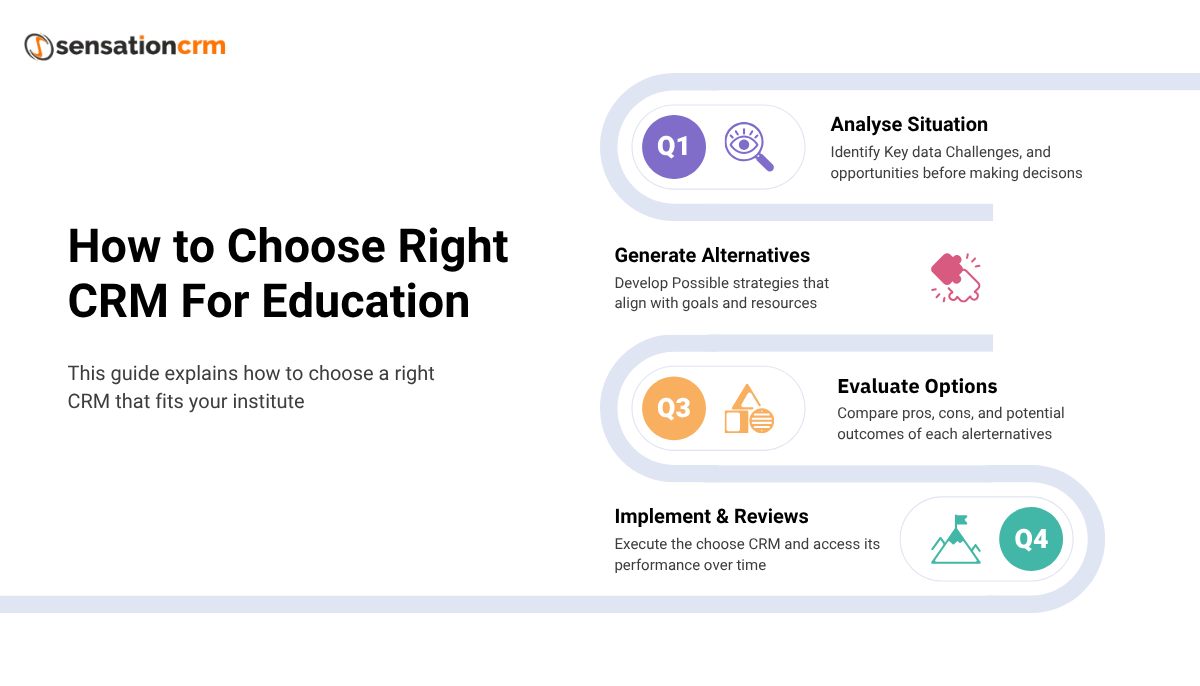
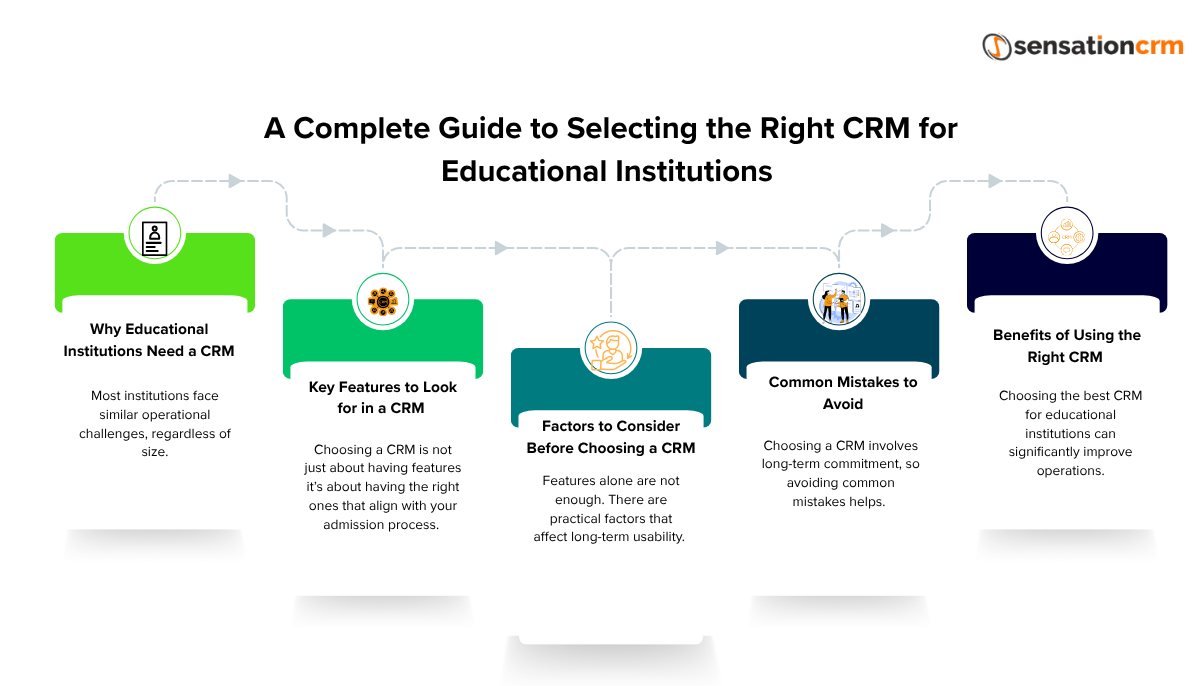
A Complete Guide to Selecting the Right CRM for Educational Institutions

Educational institutions today are handling more inquiries than ever before. Students reach out through websites, WhatsApp, calls, social media, and email, often across multiple touchpoints before making a decision.  Managing this volume manually is difficult. Leads get missed, follow-ups are delayed, and communication becomes inconsistent. In many cases, institutions don’t even have a clear view of how many inquiries actually convert into admissions.

This is where a CRM for educational institutions becomes important. A well-implemented CRM helps centralize data, track every interaction, and streamline the admission process. It doesn’t solve everything instantly, but it brings structure, and that alone improves outcomes over time.

Why Educational Institutions in India Need a CRM

Most institutions face similar operational challenges, regardless of size. 

1. Managing High Volumes of Inquiries

Admission teams across colleges, universities, schools, coaching institutes, and higher education institutions in India often receive hundreds or even thousands of student inquiries during every admission cycle. Without a centralized Education CRM in India, tracking each inquiry becomes difficult, resulting in missed follow-ups and lower conversion rates.

A CRM helps store and organize all leads in one place, making it easier to manage volume without losing visibility. 

2. Streamlining Communication Across Teams
A CRM for Colleges and Universities in India enables admission counselors, marketing teams, and administrators to work from a single platform.

Without a shared system: 

  • Communication gets fragmented 

  • Leads are duplicated 

  • Follow-ups overlap or get missed 

A CRM for colleges or a CRM for private schools ensures everyone works on the same data, reducing confusion. 

3. Improving Conversion Rates
Response time plays a big role in admissions. Studies across sales processes show that responding within the first 5–10 minutes can increase conversion chances significantly sometimes by 2–3x. 

A modern Admission CRM in India helps institutions improve conversion rates by:

  • Assigning leads instantly 

  • Triggering reminders 

  • Tracking follow-ups 

This improves consistency, even if teams are handling large volumes. 

4. Centralized Data Management
Instead of scattered spreadsheets or disconnected tools, a CRM provides a single source of truth. 

This includes: 

  • Student details 

  • Communication history 

  • Lead status 

  • Source of inquiry 

Having everything in one place makes reporting and decision-making more reliable. 

Key Features to Look for in a CRM for Educational Institutions in India

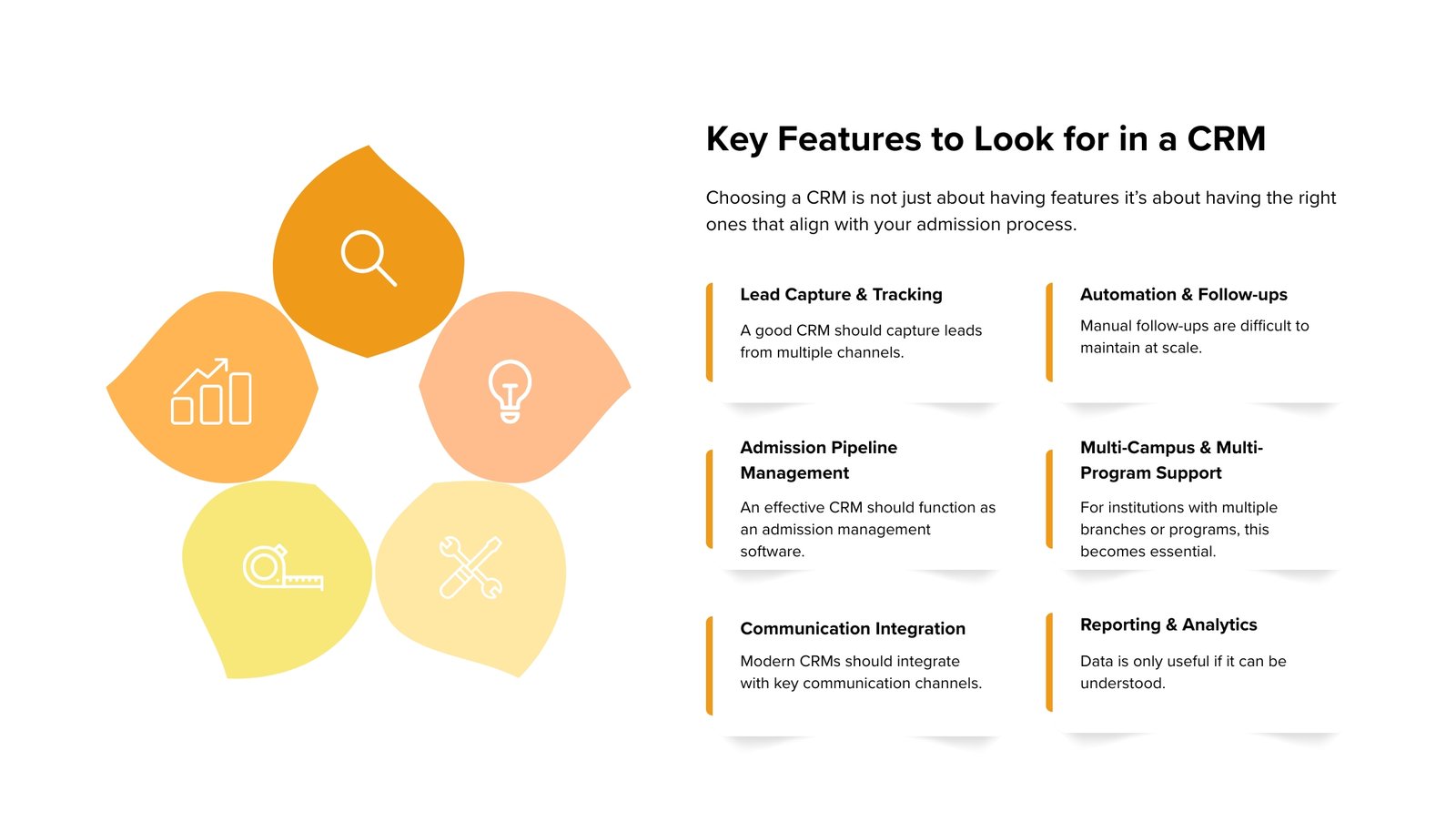
Key Features to Look for in a CRM

Choosing a CRM is not just about having features it’s about having the right ones that align with your admission process. 

 1. Lead Capture & Tracking 

A good CRM should capture leads from multiple channels: 

  • Website forms 

  • WhatsApp 

  • Calls 

  • Email campaigns 

Centralized CRM Lead Management helps institutions assign leads quickly, monitor inquiry sources, and improve admission conversions.

  • Track lead sources 

  • Assign leads quickly 

  • Monitor status changes 

Without proper tracking, even a high number of inquiries doesn’t translate into admissions. 

 2. Automation & Follow-ups 

Manual follow-ups are difficult to maintain at scale. 

Automation helps by: 

  • Sending instant responses to new inquiries 

  • Scheduling reminders for counselors 

  • Triggering email or WhatsApp sequences 

This reduces manual effort and ensures no lead is forgotten, though some level of manual oversight is still needed. 

3. Admission Pipeline Management

An effective Admission CRM in India should function as a complete admission management system.

This means tracking the student journey across stages such as: 

Inquiry → Contacted → Interested → Applied → Document Verification → Admitted → Enrolled

This pipeline view helps teams understand where leads are dropping off and where improvements are needed. 

4. Multi-Campus & Multi-Program Support 

Educational institutions operating across multiple campuses in India require centralized admission management.

The CRM should allow: 

  • Managing multiple campuses in one system 

  • Tracking leads by course or program 

  • Assigning counselors based on specialization 

Without this, scaling operations becomes complicated. 

5. Communication Integration 

A modern Education CRM App in India should integrate seamlessly with:

  • WhatsApp 

  • Email systems 

  • Telephony or call tracking tools 

This ensures all interactions are recorded and accessible from one platform. 

Switching between tools slows things down, and sometimes leads to missed context. 

6. Reporting & Analytics 

A modern CRM for Educational Institutions in India should provide AI-powered dashboards and reports, including:

  • Performance dashboards 

  • Lead source analysis 

  • Conversion tracking 

  • Counselor performance metrics 

For example: 

  • Which channel brings the most leads? 

  • Which counselor converts the most students? 

Institutions using CRM analytics often report 10–20% improvement in process efficiency, though it depends on how actively the data is used. 


Logo

Ready to Find the Best CRM for Your Institution?

Simplify admissions, automate workflows, and improve student engagement with Sensation CRM

Factors to Consider Before Choosing an Education CRM in India

Features alone are not enough. There are practical factors that affect long-term usability. 

1. Ease of Use and Interface 

If the CRM is difficult to use, adoption becomes a problem. 

Teams may: 

  • Avoid using it fully 

  • Enter incomplete data 

  • Revert to manual methods 

A clean and simple interface improves usage, even if the system is not feature-heavy. 

 2. Customization Options 

Every institution has slightly different workflows. 

A CRM should allow: 

  • Custom lead stages 

  • Flexible workflows 

  • Configurable fields 

Too much rigidity can limit usefulness. 

3.  Scalability for Future Growth 

Educational institutions in India continue to expand by adding new campuses, programs, online courses, and student intake.

The CRM should be able to handle: 

  • Increased data volume 

  • Additional users 

  • Expanded workflows 

Switching systems later is possible, but not easy. 

 4. Integration Capabilities 

The CRM should work well with existing tools such as: 

  • Marketing platforms 

  • Payment systems 

  • Learning management systems 

Lack of integration often creates extra manual work. 

 5. Customer Support and Training 

Implementation doesn’t end after purchase. 

Good CRM providers offer: 

  • Onboarding support 

  • Training sessions 

  • Ongoing assistance 

Without proper support, teams may not use the system effectively. 

Common Mistakes to Avoid

Choosing the right Education CRM in India is a long-term investment. Avoiding common mistakes helps institutions improve operational efficiency, student engagement, and long-term enrollment growth.

 1. Choosing Based Only on Price 

Lower-cost options may lack important features or scalability. 

Initial savings can lead to higher costs later due to inefficiencies. 

 2. Ignoring Scalability 

A system that works for 500 leads may not work for 5,000. 

Planning ahead avoids the need for migration later. 

3. Not Checking Integration Options 

If the CRM cannot integrate with your existing tools, manual work increases. 

This reduces overall efficiency. 

 4. Overlooking User Adoption and Training 

Even a good CRM fails if the team doesn’t use it properly. 

Training and ease of use matter more than expected. 

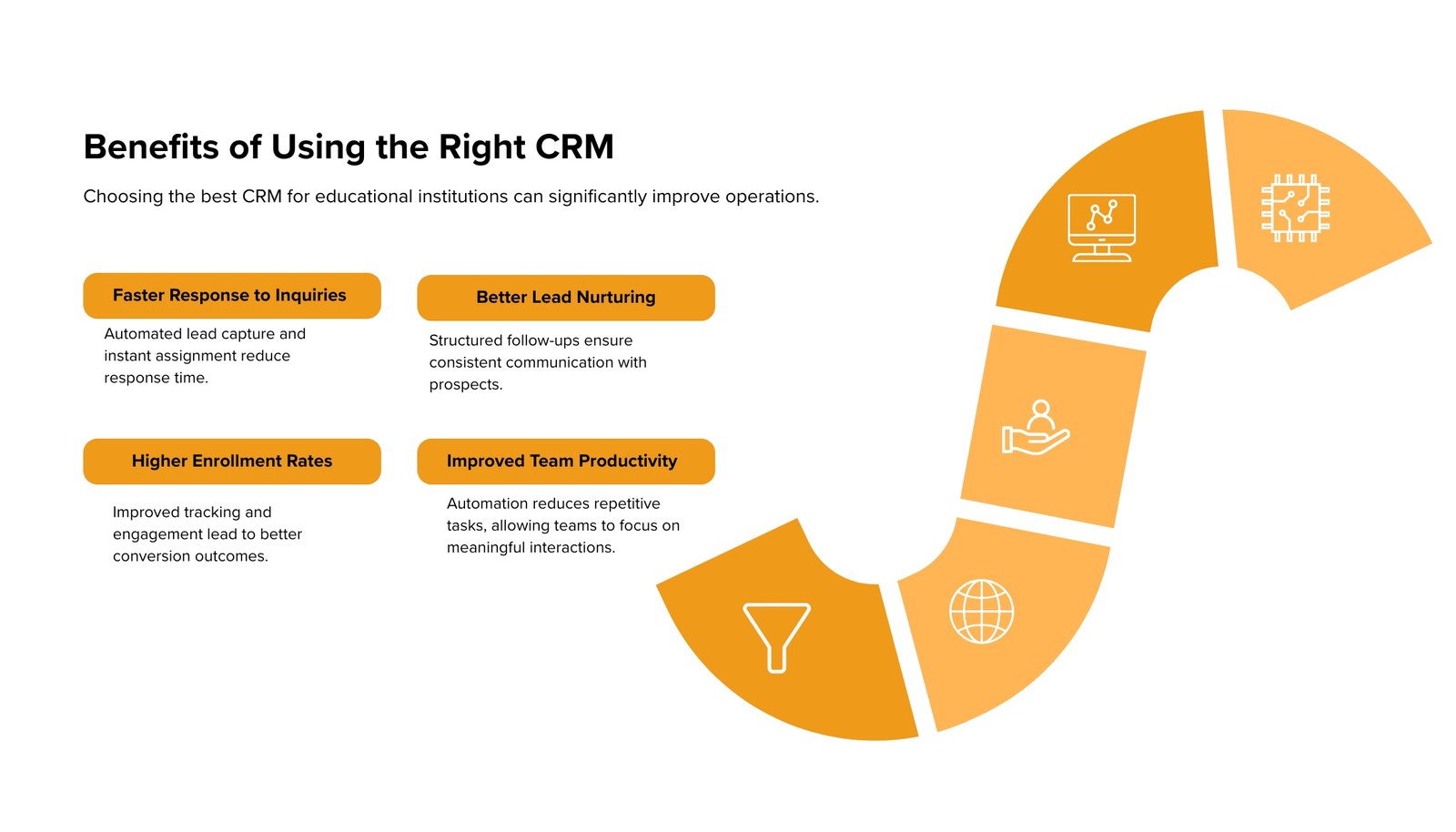
Benefits of Using the Best CRM for Educational Institutions in India

Benefits of Using the Right CRM

Educational institutions in India can provide faster responses, personalized updates, automated reminders, and consistent communication to both students and parents throughout the admission journey.

 1. Faster Response to Inquiries 

Automated lead capture and instant assignment reduce response time. 

 2. Better Lead Nurturing 

Structured follow-ups ensure consistent communication with prospects. 

 3. Higher Enrollment Rates 

Improved tracking and engagement lead to better conversion outcomes. 

Some institutions report 15–25% increase in enrollments after implementing CRM systems properly. 

 4. Improved Team Productivity 

Automation reduces repetitive tasks, allowing teams to focus on meaningful interactions. 

How CRM Improves Admission Process

An AI-powered Education CRM in India brings structure and automation to every stage of the admission process.

 1. Organized Lead Funnel 

Leads are categorized clearly, making it easier to track progress. 

2.  Automated Follow-ups 

No need to rely on memory or manual tracking. 

 3. Better Counselor Performance Tracking 

Managers can monitor: 

  • Response times 

  • Conversion rates 

  • Engagement levels 

4. Data-Driven Decisions 

Instead of assumptions, decisions are based on actual data. 

This improves planning and resource allocation over time. 

Who Should Use a CRM

A CRM for Educational Institutions in India is suitable for:

  • Colleges and Universities : Large volumes of inquiries and multiple departments make CRM essential. 
  • Coaching Institutes : High competition and frequent intake cycles require efficient lead management. 
  • Private Schools : Managing parent inquiries and follow-ups becomes easier with structured systems.
  • EdTech and Training Institutes : Digital-first operations benefit from automation and centralized data. 

Final Checklist Before You Decide

Before selecting a CRM, it helps to evaluate a few key points: 

  • Does it support your admission workflow? 

  • Can it scale with your institution? 

  • Does it offer strong CRM lead management

  • Is it easy for your team to adopt? 

If the answer to most of these is yes, the system is likely a good fit. 

Choosing The right Education CRM

Choosing the right CRM for Educational Institutions in India requires balancing usability, automation, scalability, and long-term value.

An AI-powered Education CRM helps colleges, universities, schools, coaching institutes, and EdTech organizations centralize admissions, automate follow-ups, improve communication, and increase student enrollments.

As competition in India’s education sector continues to grow, institutions that adopt modern admission management technology will be better positioned to deliver better student experiences and achieve sustainable enrollment growth.

Whether you’re managing admissions for a single campus or multiple institutions across India, investing in the right Education CRM in India can help your team reduce lead loss, improve counselor productivity, and convert more student inquiries into successful admissions.

Book a demo or get in touch to explore how a structured CRM system can support your institution’s growth. 

Logo

Choose the Right Education CRM with Confidence

Capture Inquiries

From all sources in one place

Automate Follow-ups

Timely reminders & communication

Monitor Performance

Track counselors & team activity

Increase Enrollments

Convert more inquiries into admissions

Frequently Asked Questions

Q: What is a CRM for educational institutions?

It is a software system designed to manage student inquiries, track leads, and streamline admissions processes.

Q: How does CRM improve admissions?

It organizes leads, automates follow-ups, and provides insights that help improve conversion rates.

Q: Is CRM useful for small institutions?

Yes, even smaller institutions benefit from better organization and faster response times.

Q: What features should I prioritize?

Lead management, automation, communication integration, and reporting are key features.

Q: How long does it take to implement a CRM?

Implementation can take a few days to a few weeks, depending on complexity and customization.


Categories
Lead management

Managing Admission Leads Across WhatsApp, Calls & Email Using an Education CRM 

Admission teams across colleges, universities, schools, coaching institutes, and educational institutions in India are no longer struggling to generate student inquiries they’re struggling to manage them efficiently.

A WhatsApp message arrives from a prospective student. A parent calls to ask about admissions. A student submits a website inquiry, while another responds to an email campaign.

The real challenge isn’t generating leads it’s ensuring that every student inquiry receives a timely and personalized follow-up.

Without a structured Admission Lead Management Software in India, institutions often face scattered communication, delayed responses, duplicate follow-ups, and missed admission opportunities.

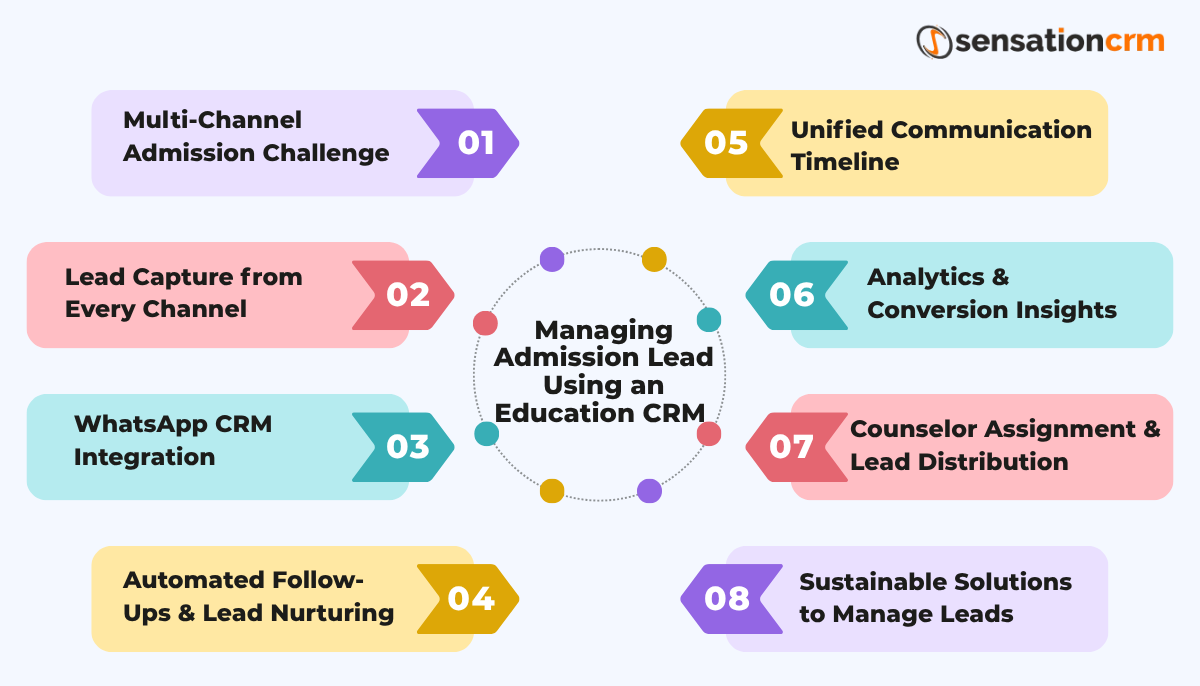
A modern Education CRM in India with WhatsApp CRM integration and an intelligent Lead Tracking CRM for Education centralizes every inquiry into one platform, enabling admission teams to respond faster, automate follow-ups, and improve enrollment conversions.

The Multi-Channel Admission Challenge in India

Multi-Channel Admission Challenge

Today’s students and parents in India communicate through multiple channels, including WhatsApp, websites, phone calls, social media, email, and education portals.

While this creates convenience for students, it makes admission management increasingly complex for educational institutions that rely on manual processes.

Without a centralized Admission CRM in India, admission teams spend more time searching for information than engaging with prospective students.

Common Challenges Institutions Face:

  • Student inquiries scattered across WhatsApp, websites, calls, emails, and education portals
  • Manual lead tracking using Excel spreadsheets
  • Delayed or missed follow-ups
  • Limited visibility into the admission pipeline
  • Duplicate communication from multiple counselors
  • Difficulty measuring admission campaign performance

Centralized Lead Capture from Every Channel

A modern Lead Tracking CRM for Education in India automatically captures student inquiries from every admission channel into a centralized dashboard.

What Gets Centralized? 

ChannelWhat the CRM DoesBenefit
WhatsAppCaptures chats automaticallyNo lost conversations
Phone CallsLogs inbound & outbound callsComplete call tracking
EmailsStores email threadsOrganized communication
Website FormsAuto-creates leadsInstant lead capture

This ensures no inquiry is ignored. 

WhatsApp CRM Integration for Educational Institutions

Students prefer messaging over calling. 

With WhatsApp CRM integration, institutions can: 

  • Capture WhatsApp inquiries automatically 
  • Store full chat history in CRM timeline 
  • Send quick replies using templates 
  • Enable auto-acknowledgment messages 
  • Track response time 

Instead of using personal devices, everything is managed professionally.  And that improves response consistency. 

Logo

Connect Every Lead with Smarter CRM Automation

Capture Inquiries

From all sources in one place

Automate Follow-ups

Timely reminders & communication

Monitor Performance

Track counselors & team activity

Increase Enrollments

Convert more inquiries into admissions

Smart Lead Tracking CRM for Education

Once a student inquiry enters the CRM, every interaction is automatically tracked throughout the admission journey.

A modern Admission CRM in India provides complete visibility into every stage of the admission funnel:

Inquiry → Contacted → Interested → Applied → Document Verification → Admitted → Enrolled

This structured approach helps admission teams prioritize follow-ups and improve enrollment outcomes.

Admission Funnel Visibility

Lead StageWhat It MeansAction Required
NewFresh inquiry receivedImmediate response
ContactedCounselor connectedQualification
InterestedStudent exploringFollow-up & nurturing
AppliedApplication submittedAdmission processing
EnrolledFee paid & confirmedConversion achieved

This structured tracking eliminates guesswork.

Management can instantly see: 

  • How many fresh leads today?
  • Which stage has the highest drop-off?
  • Which counselor is converting best?

Automated Follow-Ups & Lead Nurturing

Manual follow-ups become difficult as admission inquiries increase.

An AI-powered Admission Lead Management Software in India automates repetitive tasks while ensuring every prospective student receives timely communication.

  • Instant WhatsApp replies
  • Automated email sequences
  • Counselor reminders
  • Follow-up task notifications
  • Personalized communication based on course interest
  • Automated brochure sharing

Automation ensures: 

  • Faster responses
  • Consistent communication
  • Reduced manual workload
  • Higher student engagement
  • Improved admission conversions

Counselor Assignment & Lead Distribution 

Educational institutions app  in India often receive thousands of admission inquiries during peak admission seasons.

 An advanced CRM allows: 

  • Automatic lead assignment by course
  • Location-based distribution
  • Balanced workload sharing
  • Performance tracking

Management can monitor: 

  • Response time
  • Follow-up frequency
  • Conversion ratios
  • This increases accountability and improves team efficiency.

Unified Communication Timeline

One of the most valuable features of a Lead Tracking CRM for Education in India is the unified communication timeline.

Counselors can view: 

  • WhatsApp chats
  • Call logs
  • Email threads
  • Follow-up notes
  • All in one dashboard.

Before calling a student, they know: 

  • What was discussed earlier
  • Which course the student prefers
  • What concerns were raised
  • This leads to personalized conversations and better conversions.

Analytics & Conversion Insights

A modern Education CRM in India provides real-time dashboards that help institutions monitor admission performance.

A structured CRM provides: 

  • Inquiry source performance
  • WhatsApp response time
  • Counselor productivity
  • Admission conversion rates
  • Campaign performance
  • Enrollment forecasting

Before and After Using an Education CRM in India

Without CRMWith Education CRM
Scattered WhatsApp chatsCentralized communication
Manual Excel trackingAutomated lead capture
Missed follow-upsTask reminders
No funnel visibilityReal-time admission dashboard
Unbalanced counselor workloadSmart lead distribution

The difference is operational clarity. 

Why Educational Institutions in India Are Adopting AI-Powered Admission CRMs

With increasing competition among colleges, universities, schools, coaching institutes, and EdTech organizations, admission teams need faster and more efficient ways to engage prospective students.

AI-powered Education CRMs help institutions automate repetitive tasks, centralize communication, improve counselor productivity, and deliver a better admission experience.

By reducing manual work and providing complete visibility into the admission pipeline, institutions can focus more on building relationships with students and increasing enrollments.

Conclusion 

Managing student inquiries across WhatsApp, phone calls, websites, emails, and social media manually is no longer practical for educational institutions in India.

A modern Admission Lead Management Software in India, combined with WhatsApp CRM integration and an intelligent Lead Tracking CRM for Education, helps institutions centralize communication, automate admission workflows, improve counselor productivity, and increase enrollment conversions.

Whether you’re managing admissions for a college, university, private school, coaching institute, or EdTech organization, an AI-powered Education CRM in India enables your team to:

  • Capture every student inquiry automatically
  • Respond faster across every communication channel
  • Track admission progress in real time
  • Automate follow-ups and reminders
  • Monitor counselor performance
  • Improve student engagement
  • Increase admission conversion rates

As India’s education sector becomes increasingly competitive, institutions that invest in modern admission management technology will be better positioned to deliver exceptional student experiences while achieving sustainable enrollment growth.


Logo

Manage Every Admission Lead in One Place

Track WhatsApp, calls, and emails from a single Education CRM to improve follow-ups and conversions

Frequently Asked Questions

Q: What is Admission lead management software?

Admission lead management software is a CRM system designed specifically for educational institutions to capture, track, nurture, and convert student inquiries from multiple channels. 

Q: How does WhatsApp CRM integration help institutions?

WhatsApp CRM integration automatically captures WhatsApp inquiries, stores chat history, enables auto-replies, and tracks counselor response time, ensuring no student inquiry is missed. 

Q: What is a Lead tracking CRM for education?

A Lead tracking CRM for education monitors every stage of the admission journey — from new inquiry to final enrollment,  providing structured funnel visibility and performance insights. 

Q: Can an Education CRM reduce missed follow-ups?

Yes. Automated reminders, task assignments, and centralized dashboards ensure counselors follow up on time and consistently. 

Q: Does CRM improve admission conversion rates?

Yes. Faster response time, structured nurturing, and data-driven insights significantly improve lead-to-enrollment conversion rates. 


Categories
Education CRM

How an Education CRM Helps Prevent Lead Loss during Admission Season 

Admission season is one of the busiest and most competitive periods for colleges, universities, schools, coaching institutes, and educational institutions across India. Marketing campaigns generate thousands of student inquiries from websites, Google Ads, social media, WhatsApp, education portals, phone calls, and walk-ins. While attracting inquiries is important, converting them into enrollments is often the bigger challenge.

During peak admission periods, even a single missed follow-up or delayed response can result in a prospective student choosing another institution. As inquiry volumes increase, manual processes become difficult to manage, creating operational gaps that directly affect enrollment outcomes.

This is where an Education CRM in India becomes essential. A modern CRM for Educational Institutions centralizes student inquiries, automates follow-ups, tracks counselor activities, and streamlines the complete admission journey. Instead of relying on spreadsheets and disconnected communication channels, institutions gain a structured, data-driven admission process that improves efficiency and increases student enrollments.

Admission Season and the Risk of Lead Loss in India

Admission season across India often brings inquiry volumes that are two to four times higher than normal. Educational institutions receive student inquiries from multiple online and offline channels, making centralized lead management essential for maintaining fast response times and improving admission conversions.

  • Website inquiry forms
  • Google Search
  • Google Ads
  • WhatsApp Business
  • Facebook & Instagram Ads
  • Education portals
  • Walk-ins
  • Phone calls
  • Email campaigns
  • Education fairs

On the surface, this surge signals demand. But internally, managing that volume without structured systems becomes difficult. 

Industry research across service sectors shows that businesses can lose 10-25% of potential leads due to delayed response and poor tracking. In education, where decision timelines are limited, slow follow-ups can directly impact enrollment targets. 


If a student submits an inquiry and does not hear back within 24-48 hours, they often move on. Students today compare several institutions before making a decision. As a result, response speed plays a significant role in shaping their perception of an institution.

Without CRM Education systems, admission teams rely heavily on manual coordination. That’s where breakdowns happen. 


Logo

Stop Losing Admission Leads This Season

Capture every student inquiry, automate follow-ups, and improve enrollment conversions with Sensation CRM

Understanding Lead Loss in Education Admissions 

Student lead loss rarely happens because of a lack of interest. In most cases, it happens because educational institutions cannot respond quickly, assign counselors efficiently, or track every inquiry consistently.

Across India, admission teams often manage thousands of inquiries within a short period, making manual tracking unreliable.

1. Common Causes 

  • Inquiries coming from multiple channels with no central system 
  • Manual data entry errors 
  • Duplicate records 
  • Delayed follow-ups 
  • No clarity on counselor ownership 
  • Lack of structured reminders

For example, a counselor may intend to call a student back after checking course eligibility. Without a reminder system, that follow-up may never happen. During peak season, memory alone is unreliable. 

2. Impact of Delayed Responses 

Studies show that responding within the first hour significantly increases engagement probability. While education decisions are more complex, early response still builds trust. 

When institutions delay communication: 

  • Student interest weakens 
  • Competing institutions step in 
  • Conversion probability decreases 

Manual tracking systems simply cannot handle high volumes efficiently. 

3. Challenges During Peak Admission Period 

During admission rush: 

  • Daily inquiries may increase by 30–50% 
  • Counselors manage hundreds of active leads 
  • Reporting becomes inconsistent 
  • Funnel visibility reduces 

Without CRM for educational institutions, teams work harder but not always effectively. 

What Is an Education CRM? 

An Education CRM App in India is a specialized admission management platform designed to manage the complete student lifecycle from the first inquiry to enrollment and beyond.

Unlike generic CRM software, a CRM for Colleges and Universities in India is built specifically for admission workflows, helping institutions automate lead management, improve counselor productivity, and deliver a better admission experience.

Core functions include: 

  • Lead capture from multiple channels 
  • Automated lead assignment 
  • Follow-up scheduling 
  • Communication tracking
  •  Funnel stage monitoring 
  • Performance reporting 

Its purpose is simple: ensure no inquiry is ignored. 

Automation reduces dependency on memory. Structured workflows replace manual guesswork. 

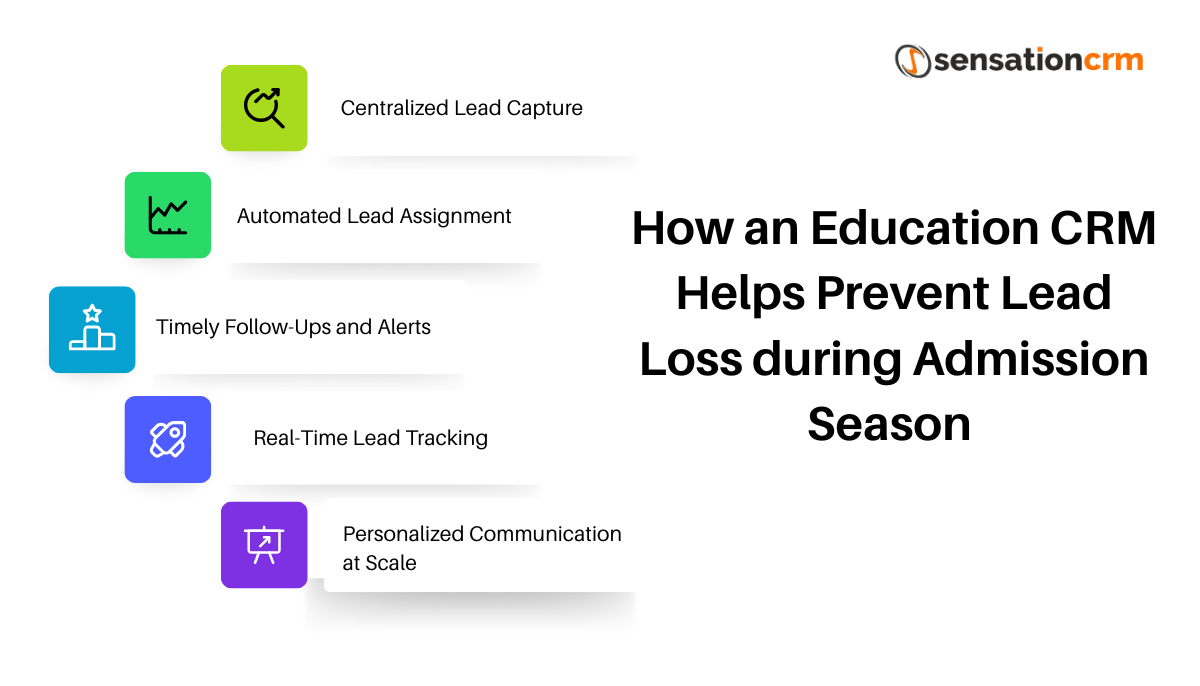
Key Ways an Education CRM Prevents Lead Loss 

1. Centralized Lead Capture 

A modern CRM for Higher Educational Institutions in India automatically captures student inquiries from every admission channel into one centralized dashboard.

  • Website forms
  • Landing pages
  • Google Ads
  • Meta Ads
  • WhatsApp Business
  • Phone calls
  • Email campaigns
  • Education portals
  • Offline events 

All inquiries feed into one centralized dashboard. This prevents duplication and ensures no source is overlooked. Institutions gain full visibility into inquiry volumes and sources.Centralization alone can significantly reduce leakage. 

2. Automated Lead Assignment 

Educational institutions across India often struggle with assigning inquiries quickly during admission season.

An AI-powered Education CRM automatically distributes student inquiries based on:

  • Course preference 
  • Geographic location 
  • Counselor specialization 
  • Workload distribution 

Assignment happens instantly. Counselors receive immediate notifications.There is no confusion about who is responsible. 

3. Timely Follow-Ups and Alerts 

A modern Admission CRM in India automates follow-ups through:

  • WhatsApp reminders
  • Email campaigns
  • SMS notifications
  • Counselor task reminders
  • Application deadline alerts
  • Automated nurturing workflows

 If a lead remains untouched for a defined period, the system flags it. Even during heavy workloads, follow-up discipline remains intact. 

4. Real-Time Lead Tracking 

A Higher Education CRM in India provides complete visibility into every stage of the admission funnel.

Student Journey:

Inquiry → Contacted → Interested → Application Started → Documents Submitted → Admitted → Enrolled

This enables admission teams to identify bottlenecks and improve conversion rates.

Leadership can monitor: 

  • Conversion ratios 
  • Stage drop-offs 
  • Counselor performance 
  • Daily inquiry numbers 

If 2,000 inquiries were received but only 1,500 contacted, the gap becomes visible immediately. Real-time dashboards enable faster corrective action. 

 5. Personalized Communication at Scale 

Instead of generic communication, an Education CRM in India allows institutions to personalize interactions based on:

  • Course preference
  • Student location
  • Academic background
  • Communication history
  • Engagement level

Personalized communication helps improve student engagement and admission conversions.

Benefits of Using an Education CRM During Admission Season in India

1. Reduced Lead Leakage:Educational institutions in India can keep both students and parents informed through automated WhatsApp messages, email updates, admission reminders, and personalized communication, improving trust throughout the admission journey.

2. Faster Response Time: Instant lead routing shortens response cycles.Students feel acknowledged quickly. 

3. Improved Counselor Productivity: Automation reduces repetitive tasks. Counselors focus more on meaningful conversations rather than manual tracking. 

4. Higher Conversion Rates: Consistent follow-ups and structured nurturing improve overall enrollment ratios.CRM does not guarantee admission success. But it ensures that opportunity is not lost due to internal inefficiency. 

Use Case: Managing High Inquiry Volume 

Imagine a college or university in India receiving more than 4,000 student inquiries during a six-week admission cycle.

Without an Education CRM, counselors struggle to prioritize inquiries, monitor follow-ups, and manage applications efficiently.

A centralized CRM automatically captures inquiries, assigns counselors, schedules follow-ups, and provides real-time admission dashboards, ensuring every inquiry receives timely attention.

Logo

Turn Every Student Inquiry into an Enrollment

Centralized Lead Management

Automated Follow-ups

Real-time Reports & Analytics

Secure & Reliable

Essential Features to Look for in an Education CRM in India

Institutions should prioritize: 

  • Multi-channel lead capture 
  • Automation workflows 
  • Lead scoring
  • Segmentation 
  • Reporting dashboards
  • Counselor performance tracking  

Without reporting and automation, CRM becomes just another database. 

Best Practices to Maximize Lead Retention 

Technology alone is not enough

1. Standardize Follow-Up Timelines 

Define clear rules for response and follow-up intervals

2. Train Admission Teams 

Regular training ensures proper CRM usage. 

3. Monitor Metrics Weekly 

Track response time, conversion rates, and drop-offs. 

Data-driven adjustments improve outcomes. 

Why Educational Institutions in India Are Moving to AI-Powered Admission CRMs

With rising competition in India’s education sector, colleges, universities, schools, and coaching institutes need more than manual admission management.

AI-powered Education CRMs automate repetitive tasks, improve counselor productivity, centralize communication, and provide real-time insights that help institutions respond faster and convert more student inquiries into enrollments.

What happens without CRM 

Admission season creates significant pressure for educational institutions across India. As inquiry volumes grow and competition increases, managing admissions through spreadsheets and manual follow-ups is no longer sustainable.

Without structured systems, institutions risk losing valuable prospects due to operational gaps. Sensation CRM for higher education brings centralization, automation, and visibility. It ensures every inquiry is captured, assigned, nurtured, and tracked. Contact US to streamline your admission workflows and prevent lead loss during peak seasons.  

In today’s competitive education landscape, institutions need a structured admission process that combines speed, consistency, and personalized communication. Even small improvements in these areas can lead to better enrollment outcomes.

Frequently Asked Questions 

Q: What is an Education CRM?

A system designed to manage student inquiries, automate follow-ups, and track admission funnel progress.

Q: How does CRM reduce lead loss?

It centralizes data, assigns ownership automatically, and schedules reminders to ensure no inquiry is missed.

Q: Can CRM improve response time?

Yes. Automated routing and alerts significantly reduce delays.

Q: Is CRM suitable for small institutions?

Yes. Even moderate inquiry volumes benefit from structured tracking.

Q: What metrics should institutions monitor?

Response time, conversion rate, lead aging, stage drop-offs, and counselor productivity.

Categories
Lead management

How Lead Management Software Improves Sales Accuracy in Data-Driven Teams 

Sales teams across India are not losing deals because they lack effort—they’re losing them because important information slips through the cracks. Leads get missed, follow-ups happen too late, customer data is scattered across multiple platforms, and sales decisions are often based on incomplete information.

As businesses in India receive inquiries from websites, Google Ads, WhatsApp, social media, phone calls, and email campaigns, managing leads manually becomes increasingly difficult.

This is where Lead Management CRM in India becomes essential. A modern lead management system centralizes customer data, automates lead tracking, improves follow-up consistency, and helps sales teams make faster, data-driven decisions.

Instead of replacing your sales process, it strengthens it by ensuring every lead is captured, qualified, and nurtured efficiently.

Logo

Improve Sales Accuracy with with Smarter Lead Management

Centralized Lead Management

Automated Follow-ups

Real-time Reports & Analytics

Secure & Reliable

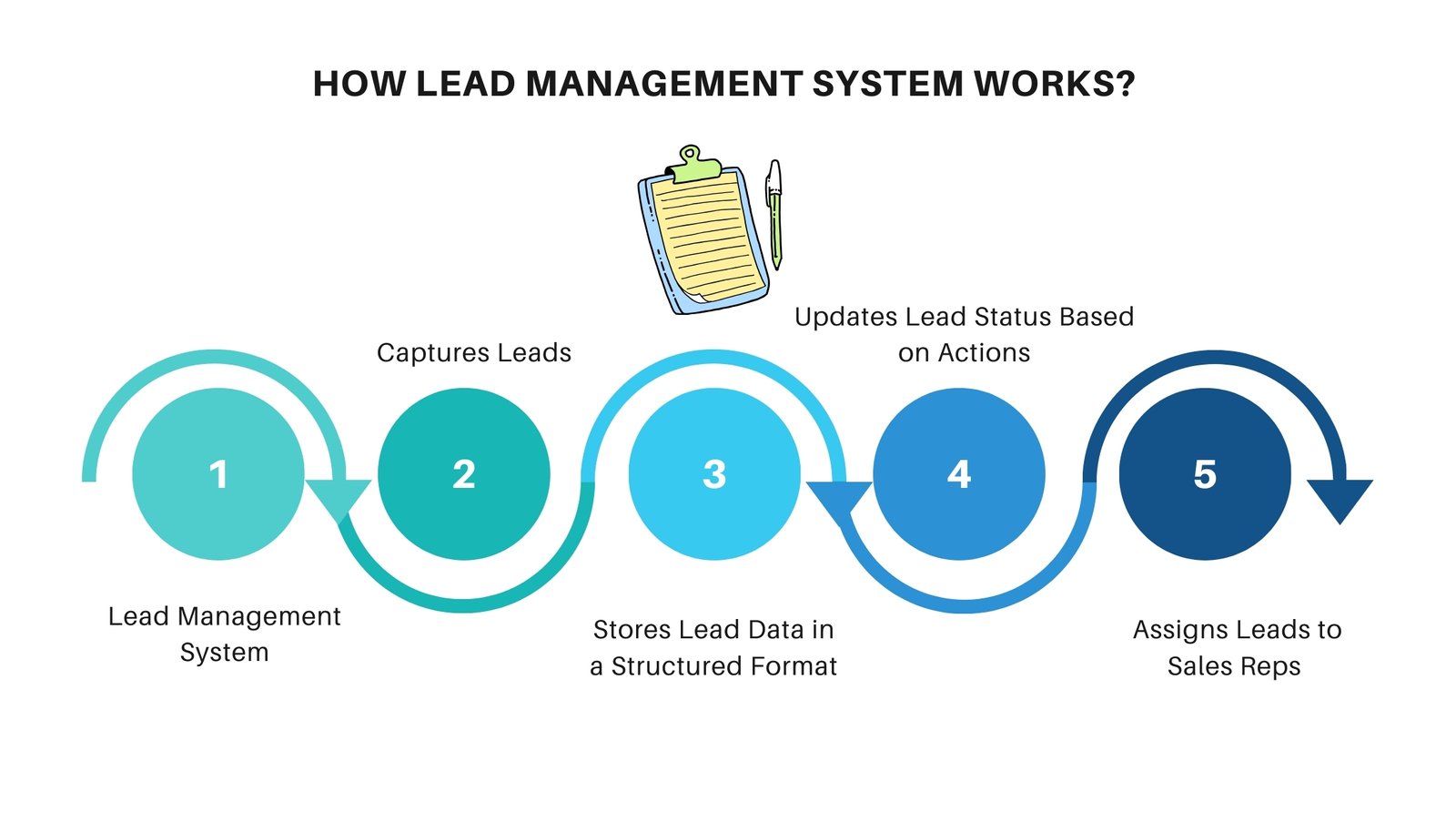
What Is a Lead Management System and How Does It Work in India?

Lead Management System Works?

A Lead Management System in India is a centralized sales platform that captures leads from multiple online and offline channels, organizes customer information, tracks every interaction, and guides prospects through the sales pipeline.

Whether you’re a startup, SME, enterprise, real estate company, educational institution, healthcare provider, or service business, lead management software helps create a structured sales process that improves productivity and conversion rates.

Lead Management Software vs Traditional Lead Tracking Methods 

Many growing businesses across India still manage customer inquiries through Excel spreadsheets, shared inboxes, or basic CRM systems.

While these methods may work for small teams, they quickly become inefficient as lead volumes increase.

A structured Lead Management System in India automates data collection, standardizes sales workflows, and provides complete visibility into the customer journey.

Essential Features Every Lead Management App in India Should Offer

A modern Lead Management App should help sales teams manage customer inquiries anytime and anywhere.

Essential features include:

  • Centralized lead inbox
  • WhatsApp integration
  • Mobile CRM access
  • Automated follow-ups
  • Lead scoring
  • Sales pipeline management
  • Task reminders
  • Real-time dashboards
  • AI-powered reporting


These features help businesses respond faster while maintaining accurate customer records.

How Lead Management Software Helps Indian Sales Teams Qualify Better Leads

For businesses in India, qualifying leads accurately is just as important as generating them.

A modern Lead Management Software uses customer behavior, engagement history, communication records, and sales activity to help teams identify high-intent prospects more effectively.

This enables sales representatives to prioritize valuable opportunities and improve conversion rates.

Instead of relying on gut feel, teams see patterns: 

  • Pages visited 
  • Emails opened 
  • Response time 
  • Engagement frequency 


This data helps sales reps ask better questions. They don’t start cold. They start informed. 

Teams using lead-based qualification models often see: 

  • 15–25% higher close rates 
  • Shorter sales cycles by 10–20% 
  • Fewer unproductive calls 


It’s not about filtering aggressively. It’s about focusing attention where it actually matters. 

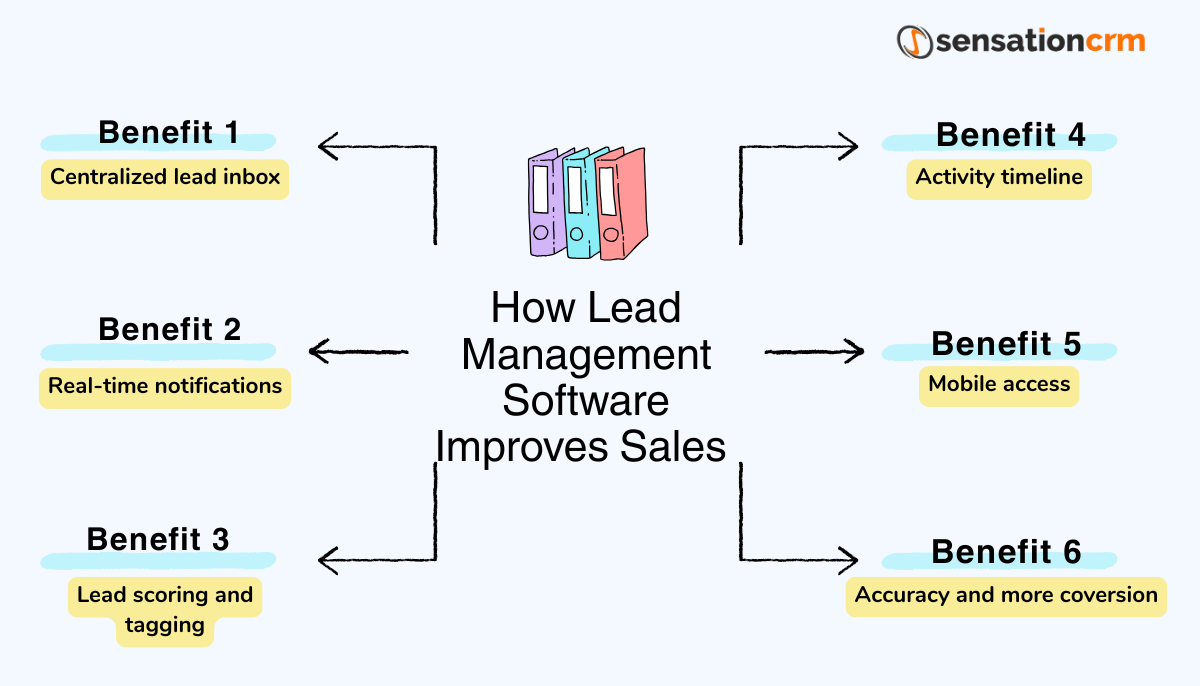
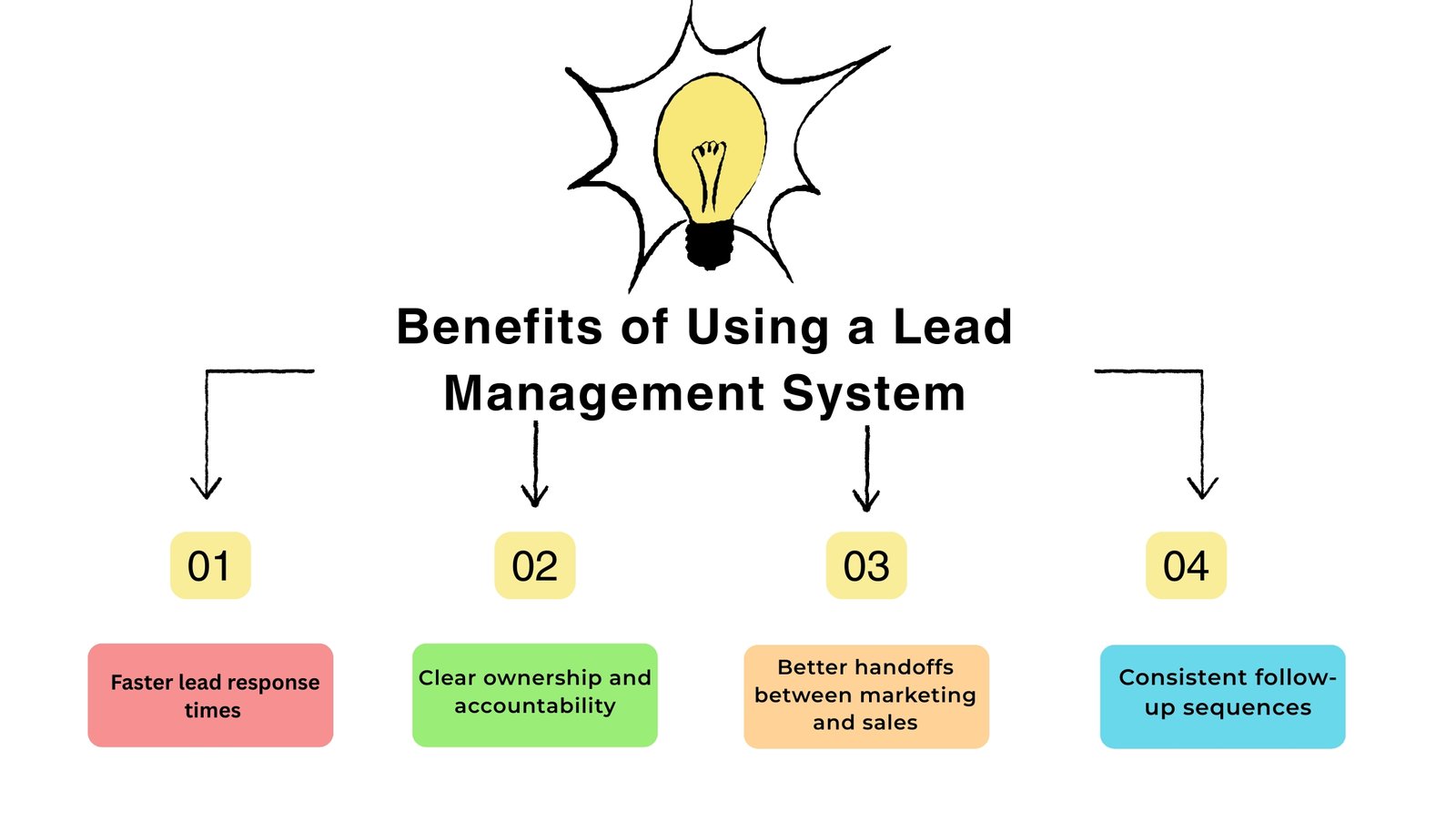
Benefits of Using Lead Management Software in India

Businesses across India are adopting lead management software to improve sales efficiency, customer engagement, and revenue growth.

Key benefits include:

  • Faster lead response
  • Improved sales productivity
  • Better lead qualification
  • Automated follow-ups
  • Increased customer engagement
  • Higher conversion rates
  • Accurate sales forecasting

Benefits of Using a Lead Management System

Choosing the Right Lead Management Software in India

Not all lead management software fits every team. The “best” system is the one your team actually uses. 

When evaluating options, consider: 

  • Volume of leads per month 
  • Number of sales reps 
  • Complexity of your sales cycle 
  • Integration needs (email, ads, CRM, telephony) 
  • Reporting depth required 


Avoid overbuying features you won’t use. Complexity hurts adoption. A simple system focused on Essential Education CRM Features 2026 and used daily will always outperform a powerful platform that teams rarely touch. 

Ask practical questions: 

  • Can new reps learn this in a week? 
  • Does it reduce manual work or add to it? 
  • Does it show me what to do next, clearly? 


Accuracy improves when systems feel supportive, not heavy. 

Why Data-Driven Businesses in India Rely on Lead Management Software

Modern businesses across India increasingly rely on data to improve sales performance.

A structured Lead Management System provides accurate customer data, real-time sales insights, and complete visibility into every stage of the sales pipeline.

Instead of relying on assumptions, businesses can make informed decisions that improve lead quality and revenue growth.


Logo

Make Every Sales Decision Data-Driven

Use Sensation CRM to organize leads, monitor team performance, and improve sales forecasting with accurate data

Why AI-Powered Lead Management Software Is Becoming Essential

As customer expectations continue to evolve, businesses need more than manual lead tracking.

AI-powered Lead Management Software helps organizations:

  • Automate repetitive sales tasks
  • Prioritize high-quality leads
  • Predict buying intent
  • Improve response times
  • Increase sales productivity
  • Deliver personalized customer experiences

This enables sales teams to spend more time building relationships and less time managing administrative work.

Update Common Mistakes

Without a structured Lead Management System, businesses commonly face:

  • Duplicate customer records
  • Missed follow-ups
  • Poor lead qualification
  • Inaccurate sales forecasting
  • Lost communication history
  • Limited pipeline visibility

These operational challenges reduce sales efficiency and directly impact revenue growth.  Contact us to identify and resolve these challenges before they impact your growth.A lead management system doesn’t remove all problems. But it makes problems visible early, when they’re easier to fix. 

The Impact of Lead Management Software on Sales Accuracy

Sales accuracy is not just about closing more deals—it’s about having reliable customer data that supports better business decisions.

A modern Lead Management Software in India helps businesses maintain accurate pipelines, improve forecasting, and align sales and marketing teams around trusted data.

Lead Management Software Can replace 

Lead management software doesn’t replace good salespeople. It supports them. It removes noise, reduces manual effort, and brings structure to fast-moving pipelines. 

For data-driven teams, accuracy isn’t optional. It’s how decisions get made, resources get allocated, and growth stays predictable. 

A well-implemented lead management system becomes part of daily workflow, quietly improving how teams qualify, follow up, and convert leads. 

Platforms like Sensation CRM are designed with this reality in mind, helping sales teams maintain accuracy as lead volumes grow and processes mature. 

Frequently Asked Questions

Q: What is lead management software used for?

It’s used to capture, track, qualify, and convert leads in a structured way.

Q: Is a lead management app different from a CRM?

A lead management app focuses more on early-stage lead handling and follow-ups.

Q: Can small teams benefit from lead software?

Yes. Small teams often see faster gains because inefficiencies are easier to spot.

Q: Does lead management software improve conversions?

Indirectly, yes. Better data leads to better decisions and faster response.

Q: How long does it take to see results?

Most teams notice workflow improvements within 30–60 days.

Categories
Education CRM

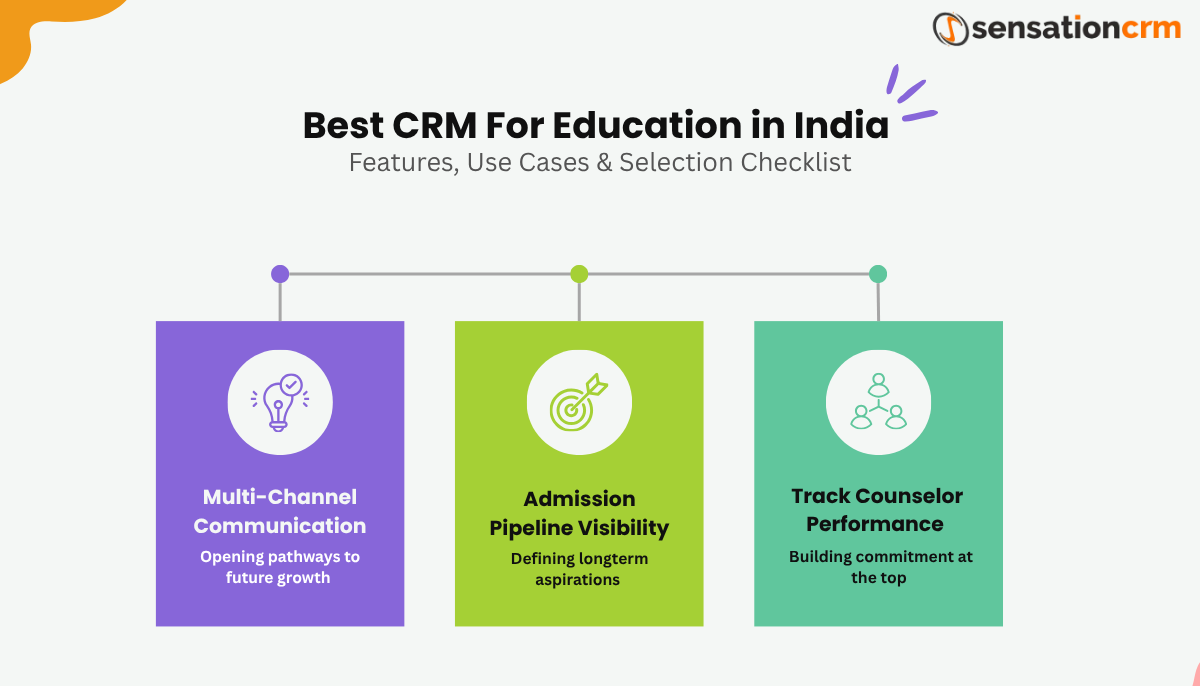
Best CRM for Education in India: Features, Use Cases & Selection Checklist

Education in India has changed fast. Schools, colleges, coaching institutes, edtech startups, and training centers now operate more like service businesses than traditional institutions. Leads come from websites, WhatsApp, ads, walk-ins, referrals, and counsellors handle dozens of conversations every day. Without a system, things fall apart quickly. That’s where an education-focused CRM comes in.

But not every CRM fits Indian education workflows. Some are built for generic sales teams. Others look good in demos but break when real admissions pressure starts. This guide breaks down what the best CRM for education in India actually needs to do, how different institutions use it, and how to choose one without overthinking. No buzzwords. Just how it works in real life.

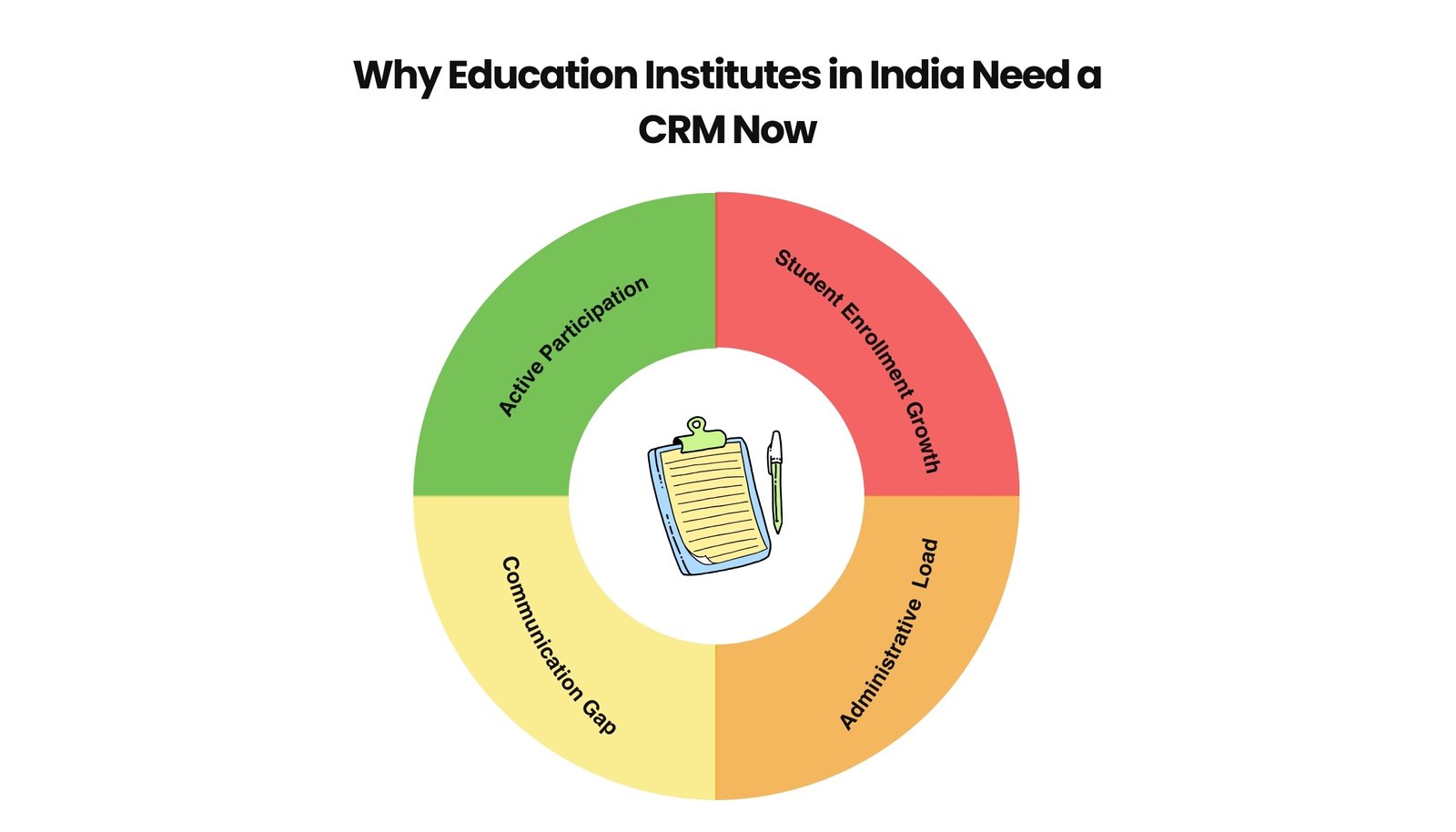
Why Education Institutes in India Need a CRM Now

Ten years ago, Excel sheets and phone registers were enough. Today, they’re not.

Here’s what most education teams deal with daily:

  • Hundreds of leads from multiple sources
  • Parents calling during working hours, students messaging late nights
  • Counselors juggling follow-ups, walk-ins, and fee discussions
  • Admission heads needing daily performance clarity
  • Marketing teams wanting ROI answers


Without a CRM, lead leakage becomes normal. Follow-ups are missed. Enquiries go cold. Teams blame marketing. Marketing blames counselors. It becomes messy.

A CRM doesn’t solve everything. But it gives structure. And structure matters when volumes increase.

Why Education Institutes in India Need a CRM Now

What Makes The Best CRM for Education Different From Regular CRMs

Education is not standard sales. The buying cycle is emotional, slow, and involves multiple decision-makers. A parent might enquire today and decide after two months. Or never reply again. Or suddenly show up at the center.

A good education CRM understands this behavior.

Key differences:

  • Lead stages are admission-focused, not sales-focused
  • Follow-ups are time-sensitive and repetitive
  • Communication is multi-channel (calls, WhatsApp, SMS, email)
  • Data needs to be simple for counselors, not complex dashboards


Generic CRMs often feel heavy. Education teams need speed, not complexity.


Logo

Choose the Best Education CRM for Your Institution

Compare essential features, streamline admissions, and improve student engagement with Sensation CRM

Core Features Every Education CRM Must Have

Let’s break this down properly. Not feature lists for marketing pages, but features that actually get used.

1. Lead Capture From All Sources

The best CRM for education in India must pull leads from:

  • Website forms
  • Facebook and Google Ads
  • WhatsApp enquiries
  • Walk-ins (manual entry)
  • Referral leads

If counselors still manually copy leads from emails, that’s already a red flag.

Platforms like Sensation CRM focus heavily on centralized lead capture because that’s where most education teams struggle first.

2. Lead Distribution and Ownership

Once a lead enters the system, someone must own it.

The CRM should:

  • Auto-assign leads to counselors
  • Balance lead load fairly
  • Track who contacted the lead and when

Without ownership, follow-ups become optional. That’s when conversion drops.

3. Follow-Up Management That Actually Works

This is where most CRMs fail in real use.

A good education CRM should:

  • Allow quick follow-up creation
  • Show overdue follow-ups clearly
  • Support daily calling workflows
  • Send reminders that don’t get ignored

Counselors don’t want fancy calendars. They want to know who to call next. CRM for Educational Institutions proves that simple follow-up systems consistently outperform complex ones.

4. Multi-Channel Communication

In India, admissions don’t happen only on email.

The CRM must support:

  • Click-to-call
  • WhatsApp messaging (official or integrated)
  • SMS alerts
  • Email (secondary, but still useful)

Conversation history matters. When a parent calls after two weeks, the counselor should see past notes instantly.

5. Admission Pipeline Visibility

Education CRMs need custom stages like:

  • New enquiry
  • Contacted
  • Interested
  • Visit scheduled
  • Admission confirmed
  • Not interested / Lost

The ability to customize stages is critical. Each institute works slightly differently. The best CRM adapts to the institute, not the other way around.

6. Counselor Performance Tracking

This part is uncomfortable but necessary.

CRM should show:

  • Calls made per counselor
  • Follow-ups completed
  • Conversions achieved
  • Drop-off points

Not for micromanagement, but for clarity. Without data, performance discussions become emotional. Sensation CRM handles this well by keeping reports readable, not overwhelming.

7. Admission and Fee Tracking (Basic Level)

Not every CRM needs full ERP-level finance features. But basic tracking helps:

  • Admission status
  • Course selected
  • Fee committed vs paid
  • Admission date

This avoids confusion later and helps lead management forecast revenue accurately.

Core Features Every Education CRM

Common Use Cases of CRM in Indian Education

Let’s look at how different education segments use CRM daily.

1. Coaching Institutes (NEET, JEE, UPSC, CAT)

High enquiry volume, seasonal spikes, intense follow-ups.

CRM helps with:

  • Managing campaign leads during peak months
  • Assigning leads quickly
  • Tracking conversion per counselor
  • Re-engaging cold leads

Without CRM, most coaching institutes lose leads simply due to delay.

2. Schools (Private, CBSE, ICSE, International)

Decision cycles are longer. Parents ask more questions.

CRM is used for:

  • Enquiry tracking across academic years
  • Visit and demo scheduling
  • Parent communication history
  • Admission funnel reporting

Schools benefit most from structured follow-ups and visit tracking.

3. Colleges and Universities

Larger teams, more layers.

CRM supports:

  • Department-wise lead handling
  • Course-based segmentation
  • Central admission visibility
  • Long-term enquiry nurturing

Here, scalability and role-based access matters.

4. EdTech and Online Training Platforms

Speed is everything.

CRM is used to:

  • Instantly contact leads
  • Automate reminders
  • Track ad ROI
  • Convert trials to paid users

Fast response equals higher conversion.

Mistakes Institutes Make While Choosing a CRM

This is important. Many teams choose wrong and regret later.

1. Choosing Based on Brand Name Alone

Big CRM brands don’t always mean better education workflows.

2. Overbuying Features

If your team won’t use automation rules, don’t pay for them.

3. Ignoring Counselor Feedback

If counselors hate using it, CRM adoption fails. Simple.

4. Not Checking Support Quality

Indian institutes need quick support, not ticket delays.

Sensation CRM gained popularity largely because it focused on education-specific needs instead of generic sales logic.

Selection Checklist: How to Choose The Best CRM for Education in India

Use this checklist before finalizing.

1. Lead Management

  • Does it capture leads automatically?
  • Can it handle high lead volume?
  • Can leads be reassigned easily?

2. Follow-Ups

  • Are reminders simple and visible?
  • Can counselors update follow-ups quickly?

3. Communication

  • Call, WhatsApp, SMS integration?
  • Can history be seen instantly?

4. Reporting

  • Daily counselor activity reports?
  • Source-wise lead performance?
  • Conversion tracking?

5. Ease of Use

  • Can a new counselor learn it in 1–2 days?
  • Is mobile usage smooth?

6. Support

  • Indian support team?
  • Fast response?
  • Training provided?

If a CRM checks most of these boxes, you’re on the right track.

Why Many Institutes Prefer Sensation CRM

Sensation CRM is built specifically for Indian education workflows. Not adapted later. Built with them in mind.

Institutes choose it because:

  • Lead handling is fast
  • Follow-ups don’t get lost
  • Counselors find it easy
  • Reporting is practical

It doesn’t try to be everything. It focuses on what admissions teams actually need day to day. That focus matters more than feature count. Contact us to see how the right CRM can simplify admissions, improve follow-ups, and support your team with clarity and consistency.

Logo

Ready to Upgrade Your Admissions Process?

Capture Inquiries

From all sources in one place

Automate Follow-ups

Timely reminders & communication

Monitor Performance

Track counselors & team activity

Increase Enrollments

Convert more inquiries into admissions

CRM Implementation: What to Expect in The First 30 Days

Let’s be honest. CRM adoption takes time.

Week 1:

  • Data setup
  • Lead source integration
  • Basic training


Week 2:

  • Counselor usage begins
  • Initial resistance (normal)


Week 3:

  • Follow-ups improve
  • Missed leads reduce


Week 4:

  • Clearer reporting
  • Better team coordination


If implementation feels perfect from day one, something is probably being ignored.

CRM Is a Tool, Not a Magic Fix

This needs saying.

A CRM won’t:

  • Fix bad counselors
  • Improve weak marketing
  • Replace training


But it will:

  • Reduce chaos
  • Improve visibility
  • Increase consistency


And consistency is what improves admissions numbers over time.

Choosing The best CRM for education

Choosing the best CRM for education isn’t about buying the most expensive software. It’s about choosing a system your team will actually use.

Indian education institutes work under pressure. Admissions are time-sensitive. Follow-ups matter. Data clarity matters.

A CRM like Sensation CRM, built with education workflows in mind, helps bring order to that pressure. Not by promising miracles, but by making daily work manageable.

And that, honestly, is what most teams need.

Frequently Asked Question

Q: Which is the best CRM for education in India?

The best CRM depends on your institute size and workflow. Education-focused platforms like Sensation CRM are designed specifically for Indian admissions teams.

Q: Is CRM useful for small coaching institutes?

Yes. Even small teams benefit from lead tracking and follow-up reminders.

Q: How long does CRM implementation take?

Basic setup usually takes 1-2 weeks. Full adoption may take a month.

Q: Can CRM integrate with WhatsApp?

Most modern education CRMs support WhatsApp integration directly or via approved APIs.

Q: Is training required for counselors?

Yes, but if the CRM is simple, counselors adapt quickly.

Q: Does CRM help improve conversions?

Indirectly, yes. Faster follow-ups and better tracking improve conversion rates.

Categories
Education CRM

Top Features Every Education CRM Must Have in 2026 

Education across India is evolving rapidly. While admission teams are not necessarily performing different roles than before, they are managing significantly higher inquiry volumes, multiple communication channels, and increasing expectations from students and parents.

As educational institutions receive inquiries from websites, Google Ads, WhatsApp, phone calls, social media, education portals, and offline events, traditional tools like spreadsheets and disconnected software can no longer support efficient admission management.

This is where Education CRM Software in India becomes essential not as an additional tool, but as the foundation of a modern admission process.

Many institutions still rely on generic CRM platforms originally designed for sales teams. Although these systems can be customized, they rarely match the admission workflows of schools, colleges, universities, coaching institutes, and EdTech organizations.

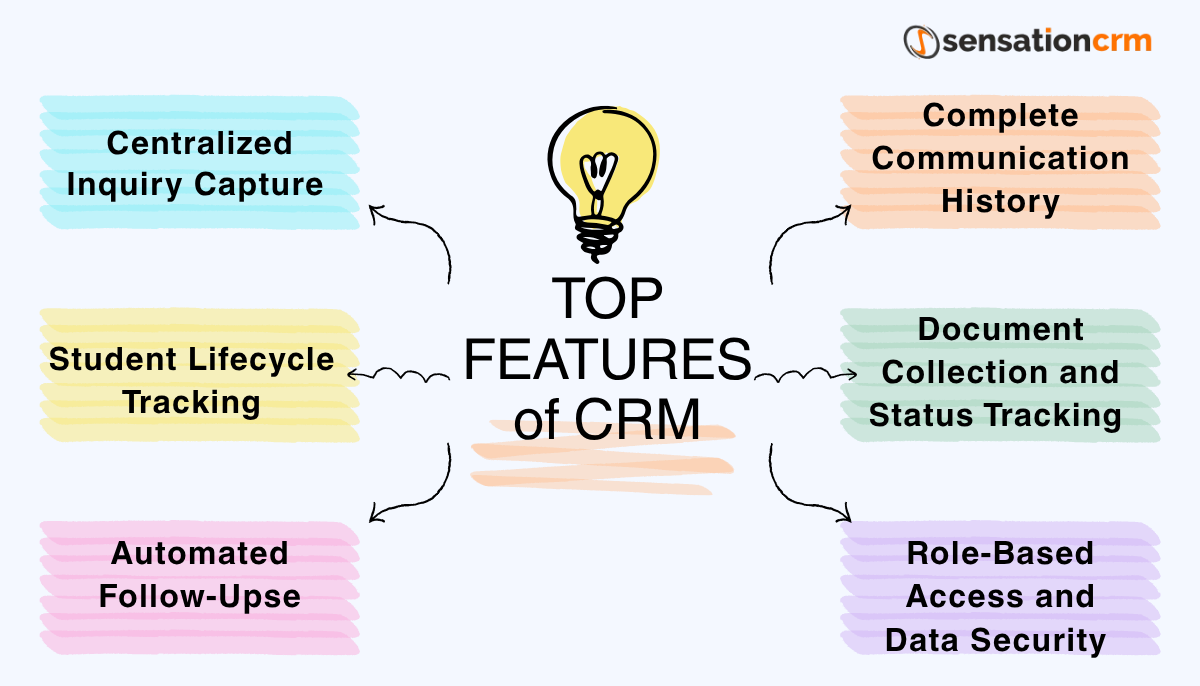
This guide explains the essential Education CRM features for 2026 that educational institutions in India should look for to improve student engagement, automate admissions, and increase enrollment efficiency.


Logo

Ready to Upgrade Your Education CRM?

Manage admissions, automate workflows, and improve student engagement with a feature-rich CRM designed for educational institutions

Why Education CRM Software in India Is No Longer Optional

Student admission journeys across India have become longer and more competitive. Students and parents compare multiple institutions, ask detailed questions, and communicate across WhatsApp, phone calls, websites, social media, email, and education portals before making an admission decision.

Without a centralized lead management CRM in India, admission teams often struggle with missed follow-ups, scattered student data, inconsistent communication, and limited visibility into admission performance.

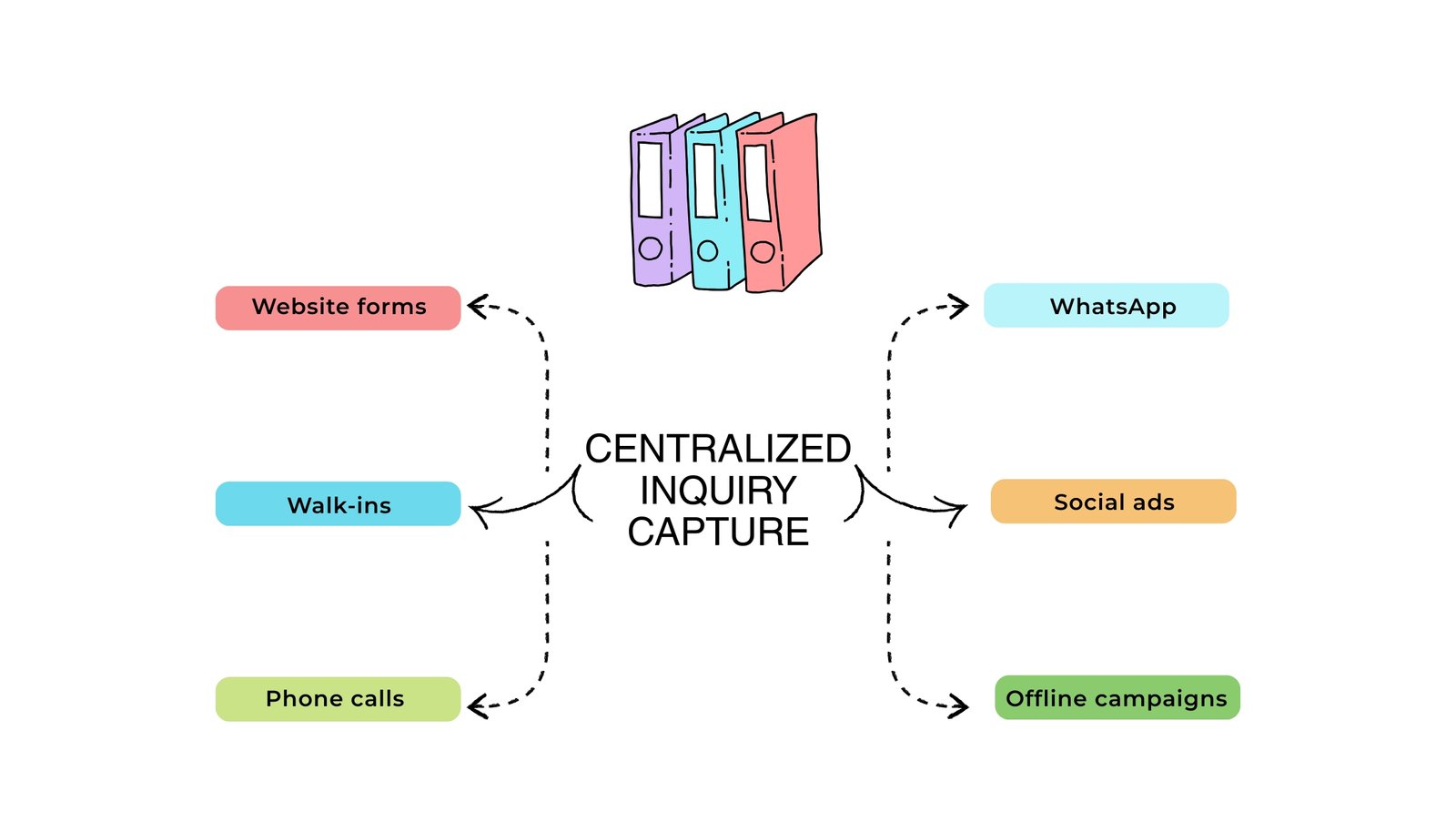
Centralized Inquiry Capture (From Everywhere) 

Centralized Inquiry Capture

This sounds obvious, but many systems still fail here. An education CRM must capture inquiries from: 

  • Website forms 
  • Walk-ins 
  • Phone calls 
  • WhatsApp 
  • Social ads 
  • Offline campaigns 

Every inquiry should appear instantly in a centralized dashboard with complete source tracking, ensuring no prospective student is overlooked.

Student Lifecycle Tracking, Not Just Lead Stages 

Unlike traditional sales CRMs, an Education CRM in India should manage the complete student admission journey instead of only tracking leads.

A structured student lifecycle includes:

  • Student Inquiry
  • Counseling
  • Documents Submitted
  • Eligibility Verification
  • Fee Discussion
  • Admission Confirmation
  • Enrollment
  • Post-Admission Engagement

This provides complete visibility into every student’s admission progress.

Automated Follow-Ups That Improve Student Engagement

Follow-ups fail because people are busy, not careless. 

CRM for Educational Institutions in 2026 must strengthen Follow-Ups & Conversions by:

Automation should include:

  • WhatsApp reminders
  • Email scheduling
  • SMS notifications
  • Counselor task reminders
  • Follow-up alerts
  • Application deadline reminders

Automation supports counselors without replacing the personal interactions that students and parents value.

Counsellor Assignment Logic That Actually Makes Sense 

Educational institutions with multiple campuses or departments require intelligent lead distribution.

A modern CRM for Educational Institutions in India should automatically assign student inquiries based on:\

  • Preferred course
  • Campus
  • Student location
  • Language preference
  • Counselor expertise
  • Current workload

This improves accountability while balancing counselor workloads.

Complete Communication History in One View 

Students don’t repeat their story neatly. They expect continuity. 

A modern Education CRM App in India should provide a unified view of:

  • Call logs 
  • Email threads 
  • Messages 
  • Notes added by counsellors 
  • Status updates 

All in one timeline. If a counsellor leaves or a student speaks to someone new, context remains. That matters more than people realize. 

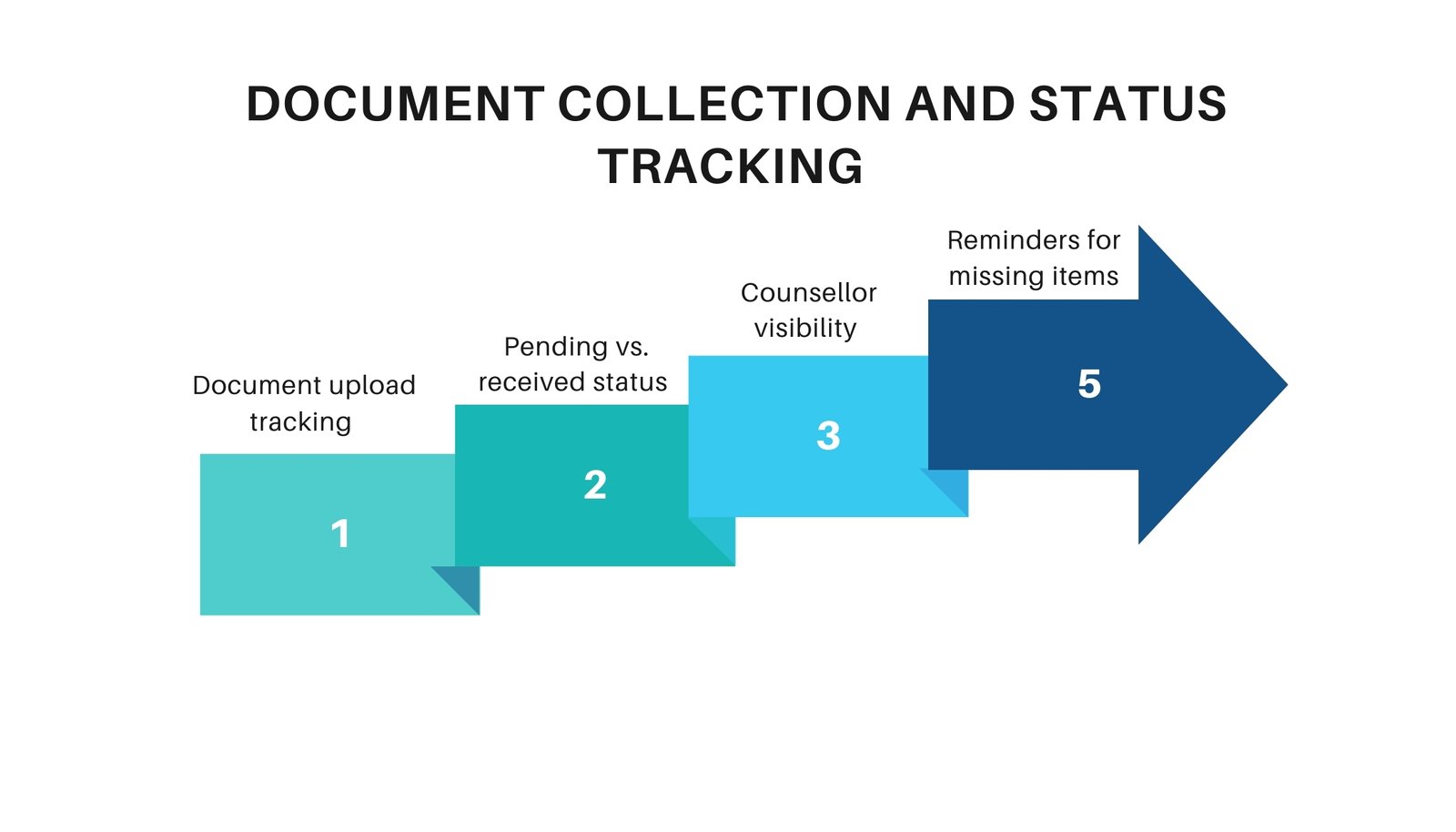
Document Collection and Status Tracking 

Document Collection and Status Tracking

Managing admission documents remains one of the biggest operational challenges for educational institutions in India.

Education CRM software must support: 

  • Track uploaded documents
  • Identify pending documents
  • Send automatic reminders
  • Monitor document verification status

This reduces manual follow-ups and accelerates the admission process.

Program-Wise and Campus-Wise Visibility 

Educational institutions across India often operate multiple campuses, departments, and academic programs.

A modern Higher Education CRM in India should provide insights such as:

  • Multiple programs 
  • Multiple campuses 
  • Different intake cycles 

An education CRM must break data down cleanly: 

  • Program demand 
  • Conversion rates per course 
  • Counsellor performance by department 
  • Enrollment trends over time 

This helps leadership plan realistically, not react emotionally. 

Built-In Reporting That Non-Technical Teams Can Read 

Reports shouldn’t require training sessions. 

By 2026, CRM reports should: 

  • Be easy to understand 
  • Show trends clearly 
  • Update in real time 
  • Export cleanly when needed

Admissions heads need to know:

  • What’s working
  • What’s stuck
  • Where leads drop off

Strong reporting and analytics replace assumptions with facts.
They turn raw CRM data into clear insights, highlight trends over time, and make decision-making faster and more confident.

Simple as that.

Role-Based Access and Data Security 

Education handles sensitive data. 

A CRM must control: 

  • Who can see what 
  • Who can edit records 
  • Who can export data 

Role-based access protects institutions and builds trust with parents and students. 

Security isn’t optional anymore. It’s expected. 

Integration with Daily Tools 

CRMs shouldn’t feel like extra work. 

Education CRM software in 2026 must integrate with: 

  • Email platforms 
  • Telephony systems 
  • WhatsApp 
  • Payment gateways 
  • Learning systems (where relevant) 

If teams constantly switch tabs, adoption drops. 

The best systems feel invisible. They sit quietly behind daily work. 

Mobile Accessibility for On-the-Move Teams 

Counsellors don’t always sit at desks. 

A modern education CRM needs:

  • Mobile access 
  • Clean UI on smaller screens 
  • Quick updates without lag 

Especially for walk-ins, events, or field counsellors, mobile access matters more than people admit. 

Customization without Heavy Development 

Every institution works slightly differently.

CRMs should allow: 

  • Custom fields 
  • Workflow tweaks 
  • Status changes 
  • Form edits 

Without weeks of development or extra cost. 

Rigid systems break trust fast. 

Scalability without Losing Control 

Growth shouldn’t create chaos. 

Education CRM software must scale with: 

  • More inquiries 
  • More counsellors 
  • More programs 

While keeping structure intact. 

If growth leads to confusion, the system has failed. 

Why Education-Specific CRM Matters More Than Ever 

Generic CRMs can be customized, yes. But customization isn’t the same as design. 

Education CRMs are built around: 

  • Longer decision cycles 
  • Multiple stakeholders 
  • Emotional choices 
  • Compliance needs 

That difference shows in daily use. 

By 2026, institutions using generic tools will feel the strain clearly. 

Why AI-Powered Education CRM Software Is the Future of Admissions

Educational institutions across India are increasingly adopting AI-powered CRM platforms to improve admission efficiency.

AI helps institutions:

  • Prioritize high-intent student inquiries
  • Automate routine communication
  • Predict enrollment trends
  • Improve counselor productivity
  • Personalize student engagement
  • Reduce manual administrative work

This enables admission teams to focus more on guiding prospective students instead of managing repetitive tasks.

Logo

Get an Education CRM Built for 2026

Centralized Lead Management

Automated Follow-ups

Real-time Reports & Analytics

Secure & Reliable

Where Sensation CRM Fits In 

Sensation CRM is designed specifically for education workflows not adapted from sales software. 

It focuses on: 

  • Clear admissions pipelines 
  • Counselor accountability
  • Communication continuity 
  • Practical reporting

Institutions using Sensation CRM don’t have to fight the system to make it work. It fits naturally into admissions operations and scales without adding noise. 

That clarity is why education teams stick with it. Contact Us to see how Sensation CRM can support your admissions team.

Conclusion

Educational institutions across India are experiencing higher student inquiry volumes, increasing competition, and growing expectations from students and parents.

A modern Education CRM Software in India helps admission teams centralize communication, automate repetitive tasks, improve counselor productivity, and deliver a better student admission experience.

Whether you’re managing admissions for a school, college, university, coaching institute, or EdTech organization, choosing an AI-powered Education CRM will help your institution reduce manual work, improve follow-up consistency, increase enrollment conversions, and scale admission operations efficiently.

As the education sector continues to evolve, institutions that invest in purpose-built Education CRM Software in India will be better positioned to deliver exceptional admission experiences and achieve sustainable enrollment growth.

Frequently Asked Questions

Q: What is education CRM software? 

It’s a system designed to manage student inquiries, admissions, communication, and enrollment workflows in one place.

Q: Is education CRM different from sales CRM? 

A CRM centralizes student interactions, tracks admissions stages, automates follow-ups, and provides visibility into conversion trends to improve enrollment performance.

Q: Can small institutes use education CRM software? 

Yes, and they often benefit faster because manual work reduces immediately. 

Q: How long does CRM implementation take?

Usually a few weeks, depending on data and process complexity. 

Q: Does an education CRM replace counselors?

No. It supports counselors by organizing work and reducing manual effort. 

Q: Why choose Sensation CRM?

Because it’s built specifically for education institutions and aligns with real admissions processes, not sales models. 

Categories
CRM Automation CRM for Higher Education

CRM for Higher Education: Solving Admission & Enrollment Challenges in Colleges & Universities

Colleges and universities across India are facing increasing pressure to modernize their admission and enrollment processes. Student expectations continue to evolve, competition among higher education institutions is growing, and admission cycles are becoming longer and more complex.

A single admission cycle may involve thousands of student inquiries from websites, Google Ads, education portals, WhatsApp, phone calls, campus events, and referrals. Admission teams must also manage entrance exams, counseling sessions, document verification, financial discussions, interviews, and extended follow-ups before a student finally enrolls.

Many colleges and universities in India still rely on spreadsheets, emails, and disconnected software to manage these processes. While this may work for smaller institutions, it quickly becomes inefficient as inquiry volumes increase. Student information gets scattered, follow-ups are delayed, and institutional leaders struggle to gain accurate visibility into enrollment performance.

A modern CRM for Higher Education in India helps institutions centralize admission management, automate follow-ups, improve collaboration across departments, and make data-driven enrollment decisions. Rather than functioning as a sales tool, it serves as a strategic admission management platform designed specifically for colleges and universities.

What Does CRM Mean in Higher Education in India?

Within India’s higher education sector, CRM is less about customer management and more about building long-term relationships with prospective students and their families throughout the admission journey.

A modern Higher Education CRM in India helps institutions manage student inquiries, automate admission workflows, improve communication, and provide a seamless enrollment experience.

Core functions typically include: 

  • Capturing and organizing student inquiries
  • Managing multi-stage admission workflows
  • Tracking communication across calls, emails, and messages
  • Coordinating counselors, departments, and campuses
  • Providing enrollment visibility and reporting

The emphasis is on process control and data clarity rather than aggressive automation.

Admission and Enrollment Challenges for Colleges and Universities in India

Colleges and universities across India experience several operational challenges during admission season. As inquiry volumes increase and student decision-making becomes more complex, managing admissions manually often leads to inefficiencies, delayed responses, and reduced enrollment conversions.

1. High Inquiry Volume With Long Decision Timelines

Universities in India often receive thousands of student inquiries months before admissions close.

Students typically compare multiple colleges, entrance exam scores, scholarships, fee structures, campus facilities, and placement opportunities before making a final decision.

A modern Education CRM in India helps institutions maintain continuous engagement throughout this extended admission journey.

2. Multiple Programs, Criteria, and Deadlines

Higher education institutions offer diverse programs with different:

  • Capturing and organizing student inquiries
  • Managing multi-stage admission workflows
  • Tracking communication across calls, emails, and messages
  • Coordinating counselors, departments, and campuses
  • Providing enrollment visibility and reporting

Managing this complexity manually increases the risk of errors, missed deadlines, and student frustration.

3. Siloed Departments and Information Gaps

Admissions teams, academic departments, finance offices, and marketing teams often operate on separate systems. When information is not shared effectively, students receive inconsistent answers and internal coordination suffers.

4. Limited Enrollment Predictability

Leadership teams often struggle to forecast enrollment accurately due to gaps in lead management. Questions such as how many applicants are likely to convert or which programs may fall short often remain unanswered until late in the cycle.

Logo

Simplify Admissions for Colleges & Universities

Capture Inquiries

From all sources in one place

Automate Follow-ups

Timely reminders & communication

Monitor Performance

Track counselors & team activity

Increase Enrollments

Convert more inquiries into admissions

How CRM Supports the Higher Education Admission Process

1. Centralized Prospect and Applicant Data

A modern CRM for Universities in India captures student inquiries from every admission channel into one centralized platform.

  • Institutional websites
  • Education portals
  • Campus events and fairs
  • Walk-ins and referrals

Each prospect profile stores complete interaction history, program interest, eligibility notes, and current admission status. This centralized view eliminates duplication and ensures continuity across departments.

2. Structured Admission Pipelines

An Admission CRM in India enables colleges and universities to create structured admission workflows that align with institutional processes.

Typical admission stages include:

Inquiry → Counseling → Eligibility Review → Application Submitted → Entrance Exam → Interview → Offer Letter → Fee Payment → Enrollment

This structured pipeline helps admission teams monitor student progress and improve enrollment efficiency.

Managing Follow-Ups Over Extended Admission Cycles

Managing Follow ups

Follow-ups in higher education require patience, consistency, and relevance.

1. Automated Reminders and Task Management

CRMs generate reminders for scheduled calls, emails, document checks, and meetings. Counsellors no longer depend on memory or personal tracking methods.

2. Complete Communication Context

All interactions are logged within the CRM. If a student reconnects after weeks or months, staff can continue the conversation without repetition or confusion.

3. Program-Specific and Stage-Based Communication

CRMs enable targeted messaging based on:

  • Program interest
  • Admission stage
  • Exam or interview outcomes

This ensures students receive relevant information at the right time.

Improving Enrollment Conversion Rates

Enrollment challenges often arise due to uncertainty rather than lack of interest.

1. Reduced Drop-Offs Through Process Clarity

When students clearly understand next steps, documentation requirements, and timelines, they are less likely to disengage.

2. Early Identification of At-Risk Applicants

CRMs highlight stalled applications and inactive prospects, allowing teams to intervene before students drop out of the process.

3. Source and Program-Level Insights

Institutions gain visibility into which inquiry sources and programs generate the most enrollments, enabling better planning and outreach.


Logo

Ready to Improve Student Enrollment?

Streamline admission workflows, empower your admissions team, and convert more applicants with an AI-powered Education CRM
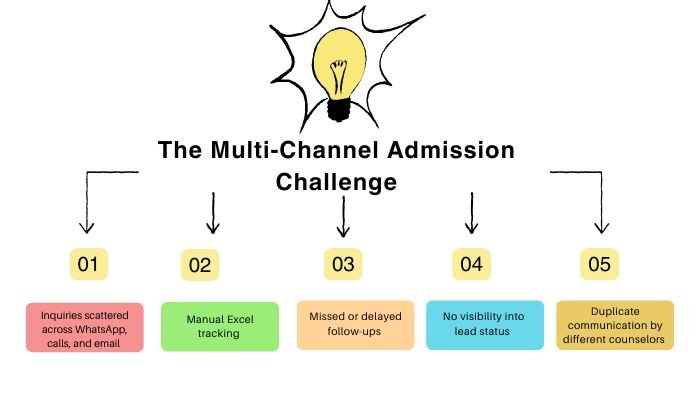
Data Visibility for Academic and Administrative Leadership

A modern CRM for Higher Education in India provides real-time dashboards that help institutional leaders monitor:

CRM dashboards provide insights into:

  • Inquiry-to-application ratios
  • Application-to-enrollment conversion rates
  • Program-wise demand trends
  • Counselor workload and productivity

These insights support informed decisions around capacity planning, staffing, and marketing investments.

Cross-Department Collaboration and Accountability

Admissions in Indian colleges and universities require collaboration between admission counselors, academic departments, finance teams, scholarship offices, and marketing teams.

A centralized Education CRM enables every department to work from the same student record, improving coordination and reducing communication gaps.

A CRM supports collaboration by:

  • Providing shared access to applicant information
  • Defining ownership at each stage of the process
  • Creating transparent handoffs between departments

This reduces miscommunication and improves the applicant experience.

CRM Use Cases Across Higher Education Institutions in India

1. Undergraduate Admissions: Managing high volumes, entrance exams, counseling schedules, and parent communication.

2. Postgraduate and Research Programs: Tracking eligibility reviews, interviews, recommendations, and documentation across longer timelines.

3. Professional and Executive Education: Handling working professionals, flexible timelines, cohort-based enrollments, and batch planning.

Comparison Table: Higher Education Admissions With and Without CRM


Area Without CRM With CRM
Prospect Tracking Fragmented systems Centralized database
Follow-Ups Manual and inconsistent System-driven and timely
Admission Visibility Limited Real-time pipeline
Department Coordination Disconnected Structured collaboration
Enrollment Forecasting Assumption-based Data-backed

Why Indian Colleges and Universities Are Adopting AI-Powered Education CRMs

As competition for student enrollments increases across India, educational institutions are adopting AI-powered CRM platforms to automate repetitive tasks, improve counselor productivity, personalize communication, and provide a better admission experience.

AI-powered Education CRMs help institutions reduce manual work while improving enrollment forecasting and operational efficiency.

Common Misconceptions About CRM for Higher Education in India

  • CRM is only for private institutions. Public universities benefit equally from process visibility and accountability.
  • CRM interferes with academic autonomy. CRM supports administration, not academic evaluation.
  • CRM implementation is disruptive. Modern systems allow phased adoption without interrupting admission cycles.

Best Practices for Implementing a Higher Education CRM in India

A CRM delivers value only when aligned with institutional workflows.

Key considerations include:

  • Mapping current admission processes accurately
  • Defining realistic pipeline stages
  • Training staff with real scenarios
  • Reviewing data regularly during the admission cycle

Simplicity and consistency matter more than feature depth.

CRM for Higher Education Brings Leads

Lead Management Flow

A CRM for higher education brings order to admissions and enrollment without compromising academic values. It allows colleges and universities to manage scale, complexity, and long decision cycles with clarity and consistency.

For institutions seeking a CRM aligned with higher education workflows, Sensation CRMs offers solutions built specifically for colleges and universities. The platform supports inquiry management, admission tracking, structured follow-ups, and enrollment visibility while remaining practical and easy to adopt.

When implemented thoughtfully, a CRM becomes a reliable operational foundation for modern higher education admissions.

Frequently Asked Questions

Q: What challenges do colleges face in admissions?

Higher education institutions often struggle with managing large inquiry volumes, long decision timelines, complex program options, and consistent follow-ups.

Q: How does a CRM help colleges improve admissions?

A CRM centralizes student interactions, tracks admissions stages, automates follow-ups, and provides visibility into conversion trends to improve enrollment performance.

Q: Does CRM improve communication with prospective students?

Yes. It logs all interactions email, calls, messages and ensures counselors always have context for each conversation. 

Q: Is CRM only useful during admissions?

No. A CRM supports engagement from inquiry through enrollment and can also assist with retention, communication, and alumni tracking.

Q: How does CRM reduce manual workload for admissions staff?

CRMs automate reminders, track tasks, and reduce repetitive data entry, freeing staff to focus on higher-value student engagement.

Categories
Education CRM Educational Institutions

How to Choose the Right CRM for Educational Institutions (Without Overpaying)

Choosing the right CRM for Educational Institutions in India has become one of the most important technology decisions for schools, colleges, universities, coaching institutes, and EdTech organizations. As student inquiries increase across websites, WhatsApp, Google Ads, social media, education portals, and phone calls, institutions need a centralized system to manage admissions efficiently.

With so many CRM platforms available, it’s easy to choose software that looks impressive but doesn’t actually solve day-to-day admission challenges. Many institutions in India end up paying for features they rarely use because the CRM is designed for business sales instead of education workflows.

This guide explains how to choose an Education CRM in India that aligns with your admission process, supports long-term growth, improves student engagement, and helps you avoid unnecessary software costs.

Why Educational Institutions in India Often Overpay for CRM Software

Many educational institutions across India invest in CRM software expecting better admissions, improved communication, and higher enrollments.

However, overpaying rarely happens because of poor budgeting. It usually happens because institutions purchase generic CRM systems that require expensive customization before they can support student admissions effectively.

Admission processes in India are very different from traditional business sales. Student decisions often involve parents, counselors, entrance examinations, scholarship discussions, fee planning, and multiple follow-ups over several weeks or months.

A generic sales CRM rarely supports these workflows without significant customization, increasing implementation costs over time.

Logo

Choose the Right Education CRM Without Overpaying

Capture Inquiries

From all sources in one place

Automate Follow-ups

Timely reminders & communication

Monitor Performance

Track counselors & team activity

Increase Enrollments

Convert more inquiries into admissions

Why Education Requires a Specialized CRM in India

A CRM designed for education needs to understand how students move through the system. This includes inquiry, counseling, documentation, fee discussion, enrollment, and post-admission communication.

In many institutions, the same student interacts with multiple staff members over weeks or months. A proper CRM for educational institutions keeps that entire history visible and accessible. Generic CRMs usually don’t do this well without heavy modification.

If a system treats students like short-term sales leads, it’s not a good match.

Start With Your Actual Admission Process

Before comparing CRM software, educational institutions should carefully evaluate how admissions currently work.

Questions to consider include:

  • How do inquiries arrive?
  • Through website forms, phone calls, walk-ins, or social media?
  • Who responds first?
  • How are follow-ups tracked?
  • Where do delays happen?

The best Education CRM should improve your existing workflow rather than forcing your admission team to change how they work.

Don’t Pay for Features Your Institution Doesn’t Need

Many CRM vendors bundle features like:

  • Advanced sales forecasting
  • Revenue pipelines
  • AI deal scoring
  • Complex automation chains

Most schools, colleges, universities, and coaching institutes in India benefit far more from reliable admission tracking, automated follow-ups, counselor management, and student communication.

Ease of Use Is More Important Than Feature Volume

Even the most advanced CRM fails if staff don’t use it properly. Admissions teams are busy. If a CRM requires too many steps to log a call or update a status, people will avoid it. Data becomes incomplete. Reports become unreliable.

The best CRM for Higher education feels intuitive. Staff should be able to learn it quickly, without long training sessions. When the system feels simple, consistency follows.

Customization Should Support, Not Complicate

The best CRM for Colleges and Schools in India should already include admission-specific workflows.

Excessive customization often indicates the CRM wasn’t originally built for education.

Institutions should prioritize platforms that work effectively with minimal configuration.

  • Extra setup costs
  • Consultants
  • Long implementation timelines
  • Ongoing dependency

If a CRM needs constant changes to function properly, it’s probably not designed for education in the first place.

Admission Reports Should Help Decision-Making

Reports should answer real questions, not just display numbers. Institutions typically want to know how many inquiries are active, where students drop off, which programs perform well, and how counselors are managing follow-ups.

A good CRM for educational institutions presents this information in simple language. If reports require interpretation or technical knowledge, they won’t be used consistently.

Integration Should Feel Natural

Educational institutions in India already use multiple platforms such as websites, WhatsApp Business, email, SMS, payment gateways, and Learning Management Systems.

A modern Education CRM in India should integrate seamlessly with these tools instead of replacing them.

Data Security Is Non-Negotiable

Student and parent data must be protected. Any CRM solution should include secure hosting, strong access controls, detailed activity logs, and regular backups to ensure data privacy and compliance.

Security shouldn’t be treated as an optional feature. It should be standard. Institutions that ignore this risk not just operational issues, but trust as well.

Pricing Transparency Prevents Long-Term Cost Surprises

The lowest-priced CRM isn’t always the most affordable in the long run.

When comparing Education CRM software in India, evaluate:

  • User limits
  • Storage caps
  • Feature upgrades
  • Support fees

Clear, predictable pricing is safer than aggressive discounts. Over time, transparency saves more money than cheap entry plans.

Support and Onboarding Matter More Than Demos

CRM success depends on implementation. Strong onboarding, workflow setup, and ongoing support are essential.

Vendors who disappear after the sale leave institutions struggling to adapt. Education institutions should value long-term partnership over flashy demos. Support quality often determines whether a CRM succeeds or fails.

Choosing a CRM That Grows With You

Institutions grow gradually. New programs. More counselors. Higher inquiry volume.

A CRM should scale smoothly without forcing system changes every year. Scalability doesn’t mean complexity. It means stability under growth.

Why Education-Focused CRM Platforms Make Sense

Education CRMs are built with real institutional workflows in mind.

They understand:

  • Admission seasons
  • Multiple stakeholders
  • Long decision cycles
  • Counselor accountability
  • Parent communication

This reduces friction. Less friction means better outcomes.

Why AI-Powered Education CRMs Are Becoming Popular in India

Educational institutions are increasingly adopting AI-powered CRM platforms to improve operational efficiency.

Modern AI-enabled Education CRMs help institutions:

  • Automate repetitive tasks
  • Prioritize student inquiries
  • Personalize communication
  • Improve counselor productivity
  • Generate admission insights
  • Increase enrollment forecasting accuracy

This allows admission teams to focus more on student engagement and less on administrative work.

Sensation CRM: Designed for Education, Not Sales Pipelines

For institutions seeking a practical and education-focused solution, Sensation CRM is built around actual academic workflows. It supports inquiry management, admissions tracking, counselor coordination, and reporting without unnecessary complexity.

Instead of adapting sales tools for education, Sensation CRM provides structure that fits schools, colleges, and coaching institutes helping teams stay organized, accountable, and scalable without overpaying for features they don’t need.


Logo

Looking for a Cost-Effective Education CRM?

From inquiry capture to enrollment, manage everything
in one place and never miss a potential student.

Choosing The Right CRM

Choosing the right CRM for educational institutions isn’t about buying the most advanced software. It’s about selecting a system that matches how education actually operates.

Institutions that prioritize usability, clarity, and education-specific design avoid wasted spending and operational stress. A good CRM supports people, processes, and growth without getting in the way, while making it easy for prospects to contact us and receive timely responses.

Conclusion

Choosing the right CRM for Educational Institutions in India isn’t about selecting the platform with the longest feature list. It’s about investing in a solution that supports the way educational institutions actually manage admissions.

A modern Education CRM in India helps schools, colleges, universities, coaching institutes, and EdTech organizations centralize student inquiries, automate admission workflows, improve counselor collaboration, and deliver a better enrollment experience.

By focusing on usability, transparency, security, scalability, and education-specific functionality, institutions can reduce unnecessary software costs while improving operational efficiency and student engagement.

As competition in India’s education sector continues to grow, adopting an AI-powered Education CRM will help institutions manage admissions more effectively and achieve sustainable enrollment growth.
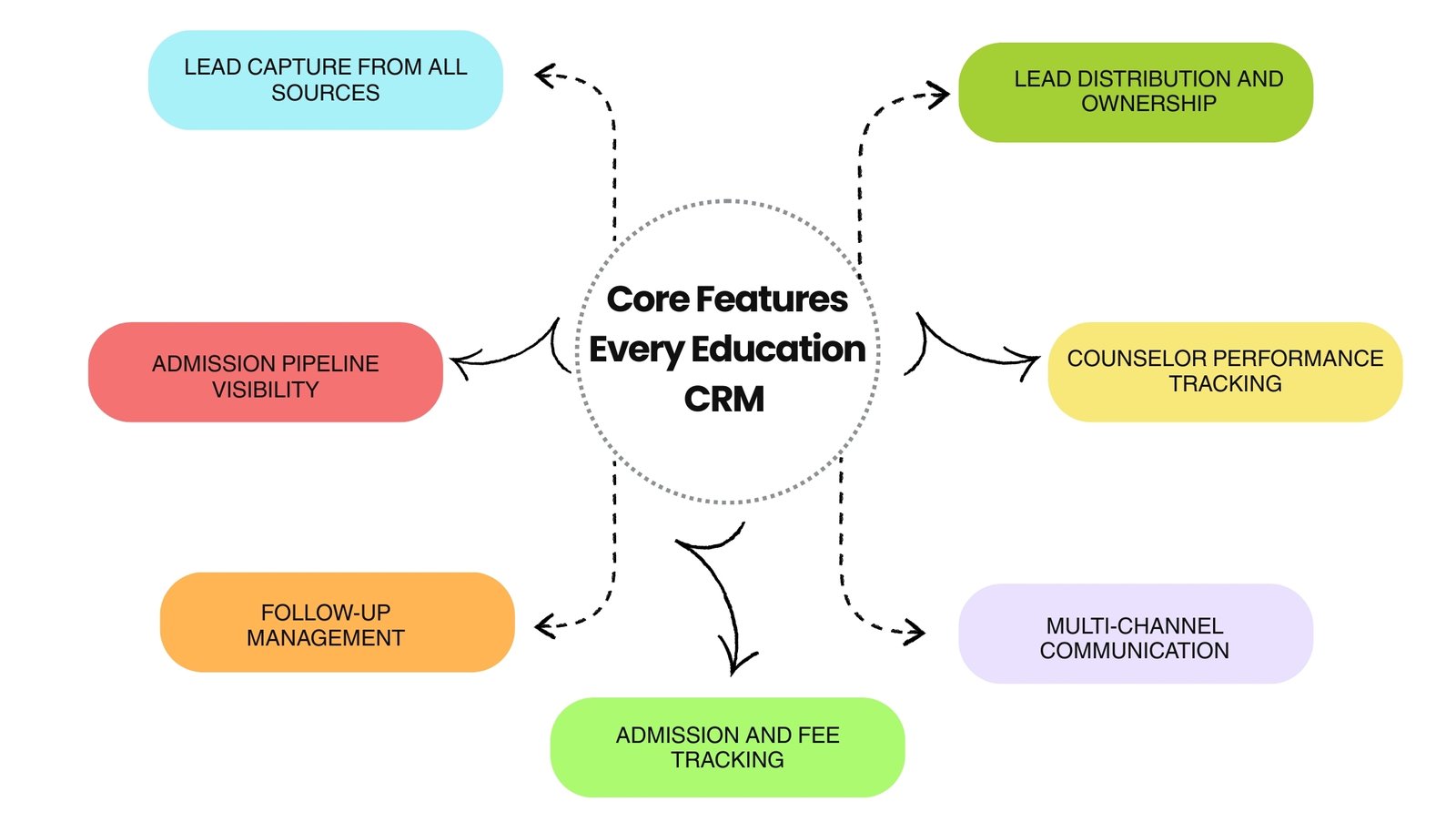
Frequently Asked Questions

Q: What is a CRM for educational institutions?

A CRM for educational institutions is software designed to manage student inquiries, communication history, admissions workflows, and engagement across the student lifecycle.

Q: How is education CRM different from sales CRM?

Education CRMs focus on inquiries, counselingenrollment, and student communication, whereas sales CRMs are built around short sales cycles and revenue pipelines.

Q: Why shouldn’t schools use generic CRM systems?

Generic CRMs require heavy customization, don’t follow education workflows out of the box, and often force institutions to overpay for features they will not use.

Q: What should schools look for when choosing a CRM?

Schools should look for ease of use, built-in education workflows, simple reporting, secure data handling, predictable pricing, and support tailored to admissions teams.

Q: Can a CRM integrate with existing systems like Whatsapp or Facebook?

Yes. Many education-focused CRMs can integrate with these platforms, inquiry forms, and communication tools to streamline information flow.

Categories
Admissions

CRM for Educational Institutions: How It Improves Admissions, Follow-Ups & Conversions

Educational institutions across India now manage much more than academics. Schools, colleges, universities, coaching institutes, and EdTech organizations handle thousands of student inquiries every admission season through websites, Google Ads, WhatsApp, phone calls, social media, education portals, and walk-in inquiries.

Managing these interactions manually using spreadsheets, notebooks, or disconnected communication tools often leads to delayed follow-ups, duplicate records, and missed admission opportunities.

A CRM for educational institutions brings structure to this complexity through effective CRM lead management. It centralizes student data, organizes follow-ups, and helps teams move prospects smoothly from inquiry to enrollment. This article explains how a CRM works in an education context, how it improves admissions and conversions, and what institutions should realistically expect from it.

This guide explains how an Education CRM in India works, how it improves admissions and conversions, and what educational institutions should realistically expect when implementing one.

What Does a CRM Mean for Educational Institutions in India?

In India’s education sector, Customer Relationship Management (CRM) focuses on building long-term relationships with prospective students and parents rather than managing traditional customers.

A modern Education CRM in India helps institutions capture inquiries, organize communication, automate follow-ups, and provide a consistent admission experience from the first inquiry through enrollment.

A CRM for educational institutions typically manages:

  • Communication history (calls, emails, messages)
  • Follow-up schedules and reminders
  • Counselor assignments and performance
  • Conversion tracking from inquiry to admissionStudent inquiries from all sources

Instead of reacting to scattered information, teams work from one shared system.

Common Admission Challenges Without an Education CRM

Before understanding the benefits, it helps to look at common problems institutions face without a CRM.

1. Fragmented Data: Leads come from websites, social media, education portals, phone calls, walk-ins, and referrals. When each source is tracked separately, there is no complete view of a student’s journey.

2. Missed Follow-Ups: Counsellors rely on memory, notes, or personal calendars. Busy days lead to forgotten calls, delayed responses, and lost interest from students.

3. No Clear Admission Pipeline: Without defined stages, it is difficult to know:

  • How many active prospects exist
  • Where students drop off
  • Which counsellors are overloaded

Limited Accountability: When outcomes are poor, it is hard to tell whether the issue is lead quality, follow-up discipline, or process gaps.

How CRM Improves the Admissions Process

CRM Admission Process

Centralized Inquiry Management

A modern CRM for Colleges, Schools, and Universities in India automatically captures inquiries from every communication channel into one centralized platform.

This eliminates duplication and confusion. Anyone on the team can see what has already been discussed and what needs to happen next.

Structured Admission Stages

An Admission CRM in India allows institutions to define clear admission stages such as:

Inquiry → Counseling → Eligibility Verification → Application Submitted → Document Verification → Fee Discussion → Admission Confirmed → Enrollment

This structured workflow improves visibility and reduces admission delays.

Faster Response Times

Educational institutions using an Education CRM in India can respond to student inquiries much faster through:

  • Instant lead assignment
  • Automated alerts for new inquiries
  • Templates for common responses

Students receive timely information, which builds trust and keeps engagement high.

Logo

Improve Admissions with a Smarter Education CRM

Centralized Lead Management

Automated Follow-ups

Real-time Reports & Analytics

Secure & Reliable

Better Follow-Ups Through Education CRM

Follow-up discipline is one of the strongest predictors of conversion. A CRM solution supports this in practical ways by keeping communication organized and timely.

Automated Reminders

A modern Education CRM App automatically reminds admission counselors about pending follow-ups, document submissions, counseling sessions, interviews, and fee reminders.

This helps institutions maintain consistent communication throughout the admission cycle.

Complete Interaction History

Every call note, email, and message is logged. If a student reconnects after weeks, the context is instantly available.

Priority Management

CRMs help teams focus on students who are:

  • Actively engaging
  • Near decision points
  • At risk of dropping off

This prioritization improves efficiency without increasing workload.

Improving Conversion Rates

Conversion is rarely about pressure. It is about timing, relevance, and consistency.

Personalized Communication

With data on course interest, budget range, and previous questions, counsellors can tailor conversations instead of repeating generic information.

Visibility Into Drop-Off Points

CRMs show where students disengage. Institutions can identify whether issues arise during counselling, documentation, or fee discussions.

Better Use of Lead Sources

By tracking conversions by source, lead management helps teams learn which channels produce serious applicants and which need adjustment.

Data-Driven Decision Making

A CRM replaces guesswork with visibility.

Institutions can track:

  • Inquiry-to-enrollment ratios
  • Average response times
  • Counselor performance
  • Campaign effectiveness

These insights support realistic planning for intake targets, staffing, and marketing spend.

Role-Based Access and Collaboration

Road Based Collaboration

Admissions involve multiple roles: front-desk staff, counsellors, managers, and marketing teams.

CRMs allow:

  • Role-based access to sensitive data
  • Clear ownership of leads
  • Smooth handovers between teams

This reduces internal friction and duplication of effort.

How Different Educational Institutions Benefit from CRM

Schools – Manage parent inquiries, admissions, and communication.

Colleges – Track thousands of student inquiries across multiple academic programs.

Universities – Manage large-scale admissions, entrance exams, document verification, scholarships, and enrollment.

Coaching Institutes – Improve demo class management, batch planning, and student follow-ups . CRMs help track batch availability, demo classes, and conversions Solving Admission & Enrollment Challenges effectively.

EdTech Platforms – Centralize online student inquiries and automate enrollment communication.

Why AI-Powered Education CRMs Are Growing in India

Educational institutions are increasingly adopting AI-powered CRM platforms to improve admission efficiency.

Modern AI-enabled Education CRMs help institutions:

  • Automate repetitive administrative tasks
  • Prioritize high-quality student inquiries
  • Improve counselor productivity
  • Personalize student communication
  • Predict enrollment trends
  • Generate actionable admission insights

AI allows admission teams to spend more time supporting students and less time managing manual processes.

Logo

Turn More Student Leads into Enrollments

Capture Inquiries

From all sources in one place

Automate Follow-ups

Timely reminders & communication

Monitor Performance

Track counselors & team activity

Increase Enrollments

Convert more inquiries into admissions

Comparison Table: Admissions With and Without CRM

AspectWithout CRMWith CRM
Inquiry TrackingManual, scatteredCentralized and automatic
Follow-UpsInconsistentSystem-driven reminders
VisibilityLimitedReal-time pipeline view
AccountabilityUnclearMeasurable performance
Conversion InsightGuess-basedData-backed

Common Myths About Education CRM

“CRM is only for large institutions.” Small and mid-sized institutions often see faster benefits because processes are simpler.

“It replaces human counselling.” CRM supports counsellors; it does not replace judgment or empathy.

“It is difficult to adopt.” Modern CRMs are designed for non-technical users.

Implementation Considerations

A CRM succeeds when aligned with actual workflows.

Key points to consider:

  • Clearly define admission stages
  • Train counsellors on daily usage
  • Start with essential features
  • Review data weekly, not yearly

Adoption matters more than complexity.

CRM is a Must for Educational Institutions

A CRM for educational institutions is not about aggressive selling. It is about clarity. It helps teams stay organized, respond on time, and understand what works and what does not. Admissions become predictable instead of reactive.

By combining structured admission workflows, real-time reporting, automated follow-ups, and personalized communication, an Education CRM enables institutions to improve operational efficiency and increase enrollment conversions.

For institutions looking for a CRM designed specifically around education workflows, Sensation CRMs offers solutions built to handle inquiries, admissions, follow-ups, and conversions in a structured and practical way. Their approach focuses on usability, visibility, and real admission outcomes rather than unnecessary features.

Frequently Asked Questions

Q: What is the main benefit of a CRM in education?

The main benefit is structured follow-ups and data tracking that help admissions teams respond promptly and convert more inquiries into enrollments.

Q: How does CRM improve follow-ups?

CRMs create reminders, schedule follow-ups, and track communication history so no inquiry gets lost or delayed.

Q: Does a CRM help with conversion rates?

Yes. By improving communication, transparency, and responsiveness, CRMs increase the likelihood that prospects complete the enrollment process.

Q: Can CRM track student interactions over time?

Yes, every interaction emails, calls, messages, notes is logged, giving a complete view of the prospect’s journey

Q: What role does reporting play in CRM?

Reports help institutions see where prospects drop off, which staff are performing best, and which programs need more focus.

Q: Does this CRM replace human interaction?

No. CRM supports teams by organizing work and automating reminders, but human engagement remains central to admissions success.