Educational institutions across India are transforming the way they manage admissions, student communication, and enrollment. Schools, colleges, universities, coaching institutes, and EdTech organizations now receive student inquiries from websites, WhatsApp, Google Ads, education portals, social media, phone calls, and campus events.
Managing these interactions through spreadsheets or generic CRM software often creates communication gaps, delayed follow-ups, and inconsistent admission experiences.
A modern Education CRM Software in India is designed specifically for the education sector. It centralizes student information, automates admission workflows, improves counselor productivity, and streamlines every stage of the student journey from the first inquiry to enrollment and post-admission engagement.
Unlike traditional CRM platforms built for sales organizations, an Education CRM supports the unique admission processes followed by educational institutions across India.
Built for the Complete Student Lifecycle
Students in India rarely make admission decisions immediately. Most prospective students compare multiple institutions, entrance examinations, scholarships, placement opportunities, fee structures, and campus facilities before choosing where to enroll.
An Education CRM helps institutions maintain meaningful communication throughout this extended decision-making journey.
Admission Workflows Designed for Educational Institutions
Admission workflows across schools, colleges, universities, and coaching institutes in India involve much more than simply opening and closing inquiries.
Admission decisions in India frequently involve parents or guardians alongside students.
A modern Education CRM Software enables institutions to maintain multiple contacts within a single student profile, ensuring that important admission updates, reminders, counseling information, and fee notifications reach the right people at the right time.
This improves communication while reducing confusion.
Ready to Upgrade from a Generic CRM?
Discover how an education-focused CRM streamlines admissions, improves communication, and increases student enrollments
Unlike sales organizations, educational institutions rely on admission counselors to guide students throughout the enrollment process.
A modern Education CRM in India helps institutions:
Assign inquiries automatically
Balance counselor workloads
Monitor follow-up quality
Measure response times
Track student engagement
This creates accountability while improving the overall admission experience.
Admission Analytics That Support Better Decisions
Educational leaders need reports that help improve admissions rather than monitor sales performance.
An Education CRM provides insights into:
Student inquiry trends
Popular academic programs
Admission conversion rates
Counselor productivity
Campaign performance
Enrollment forecasts
These reports support better planning and data-driven decision-making.
Compliance and Data Sensitivity
Educational institutions handle sensitive student information that must be protected carefully. Education CRM software is designed with this responsibility in mind, offering role-based access, audit trails, and controlled data visibility. This ensures that staff members only see the information relevant to their role. Generic CRMs can be secured, but compliance is not their primary design focus, making them riskier if not managed carefully.
Built for Education Without Heavy Customization
Replace intro:
Many generic CRM platforms require expensive customization before they can support admission workflows effectively.
A purpose-built CRM for Educational Institutions in India already understands academic structures, reducing implementation time, maintenance costs, and long-term technical dependencies.
Reduced Customization Dependency
One common issue with generic CRMs is the need for extensive customization to fit education workflows. Over time, this creates dependency on technical teams and increases maintenance costs. Education CRM software already understands academic structures, making it an ideal solution for schools, colleges, and coaching institutes that need stability rather than constant configuration.
Higher Student Adoption Rates
Admission counselors, administrators, and marketing teams are more likely to use a CRM that matches their daily workflow.
An intuitive Student Education CRM reduces training requirements, improves staff adoption, and ensures that admission data remains accurate and up to date.
Scalable for Growing Educational Institutions
As educational institutions across India expand, they often introduce:
Multiple campuses
New academic programs
Online courses
Larger admission teams
Higher inquiry volumes
A scalable Education CRM Software grows alongside the institution without disrupting existing admission workflows.
Cost vs Long-Term Value
Although generic CRM platforms may appear less expensive initially, many educational institutions later spend significantly more on customization, consultant support, training, and ongoing maintenance.
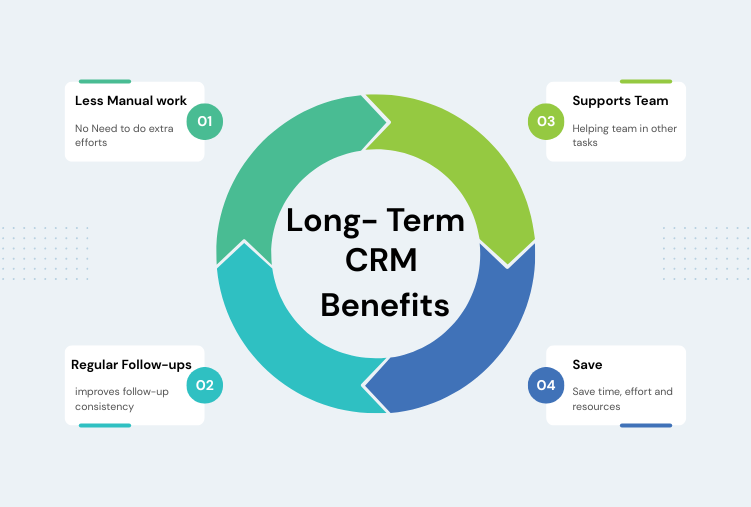
A purpose-built Education CRM in India offers better long-term value by reducing manual work, improving counselor efficiency, and simplifying admission management.
Why This Difference Matters in Practice
Choosing between a generic CRM and education CRM software isn’t just a technical decision. It directly affects how smoothly admissions teams operate, how effectively lead management is handled, how students experience the institution, and how leadership makes decisions. A system built for education reduces friction and supports sustainable growth.
Why AI-Powered Education CRM Software Is Becoming Popular in India
Educational institutions across India are increasingly adopting AI-powered CRM solutions to improve admission efficiency and student engagement.
Modern AI-enabled Education CRM Software helps institutions:
Automate repetitive admission tasks
Prioritize student inquiries
Personalize communication
Improve counselor productivity
Predict enrollment trends
Generate actionable admission insights
This allows admission teams to focus more on supporting students while reducing administrative work.
Choosing between a generic CRM and an Education CRM Software in India affects much more than technology.
It influences:
Student experience
Counselor productivity
Admission efficiency
Parent communication
Enrollment conversion
Institutional growth
A CRM built specifically for education creates smoother operations and better long-term outcomes.
Final Thought
Educational institutions across India need technology that supports how admissions actually work—not software designed primarily for sales teams.
A modern Education CRM Software in India helps schools, colleges, universities, coaching institutes, and EdTech organizations centralize student inquiries, automate communication, improve counselor productivity, and simplify the complete admission journey.
By combining structured admission workflows, secure student data management, real-time reporting, and AI-powered automation, educational institutions can improve enrollment outcomes while providing a better experience for students and parents.
Solutions like Sensation CRM are designed specifically for education, helping institutions manage admissions more efficiently, reduce manual work, and scale with confidence as student demand continues to grow. Contact us today to discover how Sensation CRM can streamline your admission process, improve student engagement, and help your institution achieve sustainable enrollment growth.
Frequently Asked Questions
Q: What is the difference between education CRM software and generic CRM?
Education CRM software is tailored around student lifecycles and admissions processes, while generic CRMs focus on sales pipelines and deal closures.
Q: Can a generic CRM be used in education?
They can be adapted, but they usually require heavy customization and may not fit natural education workflows.
Q: What features does education CRM software include?
Education CRMs include inquiry management, counselor assignments, admissions stage tracking, parent-student relationship mapping, and academic reporting.
Q: Why is reporting different in education CRMs?
Education-focused reporting highlights admissions funnels, follow-ups, conversions, and counselor performance rather than sales revenue.
Q: Is education CRM more expensive than generic CRM?
Not necessarily. While education CRMs can be priced similarly, they save money long-term by reducing customization and increasing adoption.
Q: Does education CRM improve student engagement?
Yes. By tracking interactions and follow-ups consistently, CRMs help institutions engage students more effectively throughout the admissions process.
Educational institutions across India are managing more student inquiries, admission applications, and communication channels than ever before. Schools, colleges, universities, coaching institutes, and EdTech organizations receive inquiries through websites, Google Ads, WhatsApp, social media, education portals, phone calls, and walk-in visits every day.
Managing these interactions through spreadsheets, notebooks, emails, or disconnected software often results in delayed follow-ups, duplicate records, inconsistent communication, and missed enrollment opportunities.
A modernEducation CRM Software in India is designed specifically to solve these challenges. It centralizes student inquiries, automates admission workflows, streamlines counselor communication, and helps institutions manage every stage of the student journey from the first inquiry to enrollment and beyond.
Unlike traditional CRM platforms built for business sales, an Education CRM reflects how educational institutions in India actually manage admissions, student relationships, and long-term engagement.
Why Educational Institutions in India Need a Specialized Education CRM
The admission process in India’s education sector is fundamentally different from traditional sales.
Students and parents often compare multiple institutions, entrance examinations, scholarships, placement opportunities, fee structures, and academic programs before making a final decision.
A modern Education CRM in India supports these longer decision journeys by helping institutions maintain organized communication and structured follow-ups.
Generic CRM platforms are not designed for this reality. They assume quick conversions, uniform pipelines, and simple buyer behavior. As a result, institutions using traditional CRMs for CRM lead management often end up forcing education workflows into systems that were never built to support them. This leads to workarounds, manual tracking, and eventually, system abandonment.
Education CRM software is different because it reflects how institutions actually function. It accounts for counseling cycles, eligibility verification, document collection, multiple follow-ups, and long enrollment timelines. Instead of treating students as sales leads, it treats them as individuals moving through an academic lifecycle.
How Education CRM Software Supports Daily Admission Operations
Educational institutions across India often use multiple systems simultaneously including websites, WhatsApp Business, Google Forms, Excel spreadsheets, phone calls, emails, and education portals.
An Education CRM connects all these touchpoints into one centralized platform, eliminating fragmented data and creating a single source of truth for every student inquiry.
Understanding The Student Lifecycle Inside an Education CRM
An education CRM is designed to follow a student through every meaningful stage of interaction with the institution. It begins at the moment of inquiry, whether that inquiry comes from a website form, a phone call, a walk-in visit, or a marketing campaign.
From there, the system tracks counseling conversations, program discussions, eligibility checks, document submissions, and fee-related communication. Each step is clearly recorded, time-stamped, and visible. If a student pauses or delays, the reason is documented. If follow-ups are required, reminders are generated.
Once enrollment is confirmed, the CRM continues to serve as a communication and coordination tool, supporting post-enrollment interactions and ongoing relationship management. This end-to-end visibility ensures that no student becomes “inactive” simply because someone forgot to follow up.
Student Inquiry Management and Lead Capture
Inquiry management is one of the most critical functions of an education CRM. Institutions receive inquiries from multiple channels, and without structure, these inquiries often overlap, duplicate, or disappear entirely.
Education CRM software captures each inquiry with its source, time, and associated details. Whether a student fills out a website form, calls the admissions office, or visits in person, the inquiry becomes a structured record. Duplicate entries are avoided, and the system ensures that each inquiry is acknowledged and assigned.
Over time, this data helps institutions understand which channels perform best and where prospective students are coming from. Instead of guessing what works, decisions can be made based on real inquiry patterns.
Counselor Management and Admission Follow-Ups
Admission counselors are central to every successful enrollment process.
A modern Education CRM in India helps institutions:
Automatically assign student inquiries
Balance counselor workloads
Schedule follow-ups
Track response times
Measure counselor productivity
This improves accountability while ensuring that every prospective student receives timely attention.
Centralized Student and Parent Communication
Admission decisions in India often involve students, parents, guardians, and sometimes sponsors.
An Education CRM stores every interaction including WhatsApp conversations, emails, phone calls, counseling notes, and meeting history within a single student profile.
This enables consistent communication throughout the admission journey.
Admissions Pipeline Visibility and Management Insights
Admissions leaders need more than anecdotal updates. They need real-time visibility into how the admissions process is functioning.
Education CRM software provides dashboards and pipeline views that show how many inquiries are active, how many are in counseling, how many have submitted documents, and how many have enrolled. Bottlenecks become visible, and delays can be addressed proactively.
Instead of reacting to missed targets after the fact, institutions can monitor performance continuously and adjust strategies in real time.
Reporting and Analytics for Data-Driven Decision Making
One of the long-term benefits of education CRM software is structured reporting. Institutions can generate reports on inquiry sources, conversion rates, enrollment timelines, counselor productivity, and program demand.
These insights replace assumptions with evidence. For example, an institution may discover that a particular program attracts many inquiries but has low conversion due to eligibility confusion. With this knowledge, messaging and counseling can be improved.
Over time, CRM data supports strategic planning, budgeting, and growth decisions.
Education CRM vs Traditional CRM: Why The Difference Matters
This distinction is best understood through CRM Software vs Generic CRM – Key Differences Explained. Traditional CRM systems are optimized for sales pipelines, not academic journeys. They focus on closing deals quickly, often with minimal emphasis on long-term relationships or compliance requirements.
Education CRM software, by contrast, is built around student lifecycles, parent communication, and institutional reporting needs. Admissions workflows, academic documentation, and regulatory considerations are part of the system’s core design, not add-ons.
This distinction affects daily usability. Staff members can work within familiar academic processes rather than adapting to sales-oriented frameworks.
Who Uses Education CRM Software and Why
Schools use education CRM systems to manage admission seasons, parent inquiries, and yearly enrollment cycles with consistency. The system ensures that each inquiry receives attention and that admission processes remain standardized year after year.
Colleges and universities face greater complexity due to multiple programs, longer decision timelines, and higher inquiry volumes. Education CRM software helps manage this scale without overwhelming staff.
Coaching institutes benefit from CRM systems by enforcing discipline in follow-ups and reducing inquiry leakage. Speed and consistency are essential in competitive environments, and CRM education platforms support both.
Skill training centers use CRM software to manage batch enrollments, coordinate counseling, and track student engagement across different programs.
See How an Education CRM Can Transform Your Institution
Benefits of Education CRM Software for Educational Institutions
Institutions that adopt education CRM software experience operational clarity. Admissions processes become organized, communication improves, and staff coordination strengthens.
Students and parents benefit from timely responses and consistent information. Counselors benefit from structured workflows and reduced manual tracking. Management benefits from visibility and reporting.
As institutions grow, CRM systems allow scaling without operational breakdowns. Processes remain stable even as inquiry volumes increase.
Data Security, Privacy, and Compliance Considerations
Education institutions handle sensitive personal and academic data. Modern education CRM software includes role-based access controls, secure hosting, audit logs, and backup systems to protect this information.
These safeguards are essential not only for compliance but also for trust. Parents and students need confidence that their data is handled responsibly.
Common Challenges Institutions Face Without an Education CRM
Without a centralized CRM system, institutions often rely on fragmented tracking methods. This leads to duplicate inquiries, missed follow-ups, manual reporting errors, and limited visibility into admissions performance.
Over time, these operational inefficiencies directly impact enrollment outcomes. What begins as a process issue becomes a growth constraint.
Selecting The Right Education CRM Software
Choosing an education CRM requires evaluating usability, customization options, integration capabilities, reporting depth, and support quality. The system should adapt to institutional workflows rather than forcing unnecessary changes.
Successful implementations focus on long-term adoption rather than quick fixes.
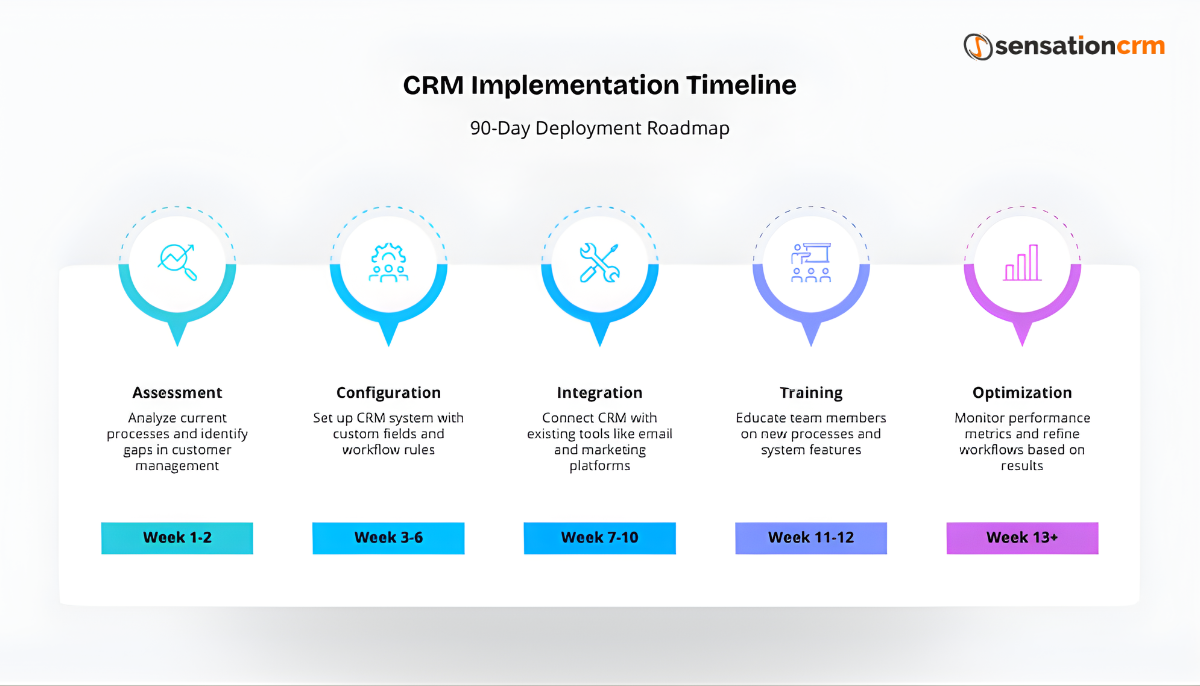
Implementation, Training, and Adoption Realities
Technology alone does not solve problems. Effective CRM adoption requires onboarding, training, and gradual optimization. Institutions that invest in change management see stronger long-term results.
CRM systems are most effective when treated as core infrastructure rather than optional tools.
The Future of CRM in Education
Education is becoming increasingly data-driven. CRM systems will continue to evolve, supporting predictive enrollment insights, tracking student engagement, and managing long-term relationships beyond enrollment.
The focus will remain on clarity, structure, and informed decision-making rather than complexity.
To learn how your institution can benefit, contact ustoday.
Why AI-Powered Education CRM Software Is the Future of Admissions in India
Educational institutions are increasingly adopting AI-powered CRM platforms to improve efficiency and deliver better admission experiences.
Modern AI-enabled Education CRM Software helps institutions:
Automate repetitive admission tasks
Prioritize high-quality inquiries
Personalize student communication
Improve counselor productivity
Predict enrollment trends
Generate admission insights
AI allows institutions to focus more on student success while reducing administrative work.
Final Perspective
Educational institutions across India need more than disconnected admission tools—they need a centralized system that supports every stage of the student journey.
A modern Education CRM Software in India helps schools, colleges, universities, coaching institutes, and EdTech organizations manage admissions more efficiently through automated workflows, centralized student data, personalized communication, and real-time reporting.
By improving operational efficiency, strengthening counselor collaboration, and delivering better experiences for students and parents, an Education CRM becomes a long-term investment in institutional growth.
Solutions like Sensation CRM are purpose-built for educational institutions, helping admission teams simplify inquiry management, improve follow-ups, and increase enrollment conversions while remaining scalable for future growth.
Frequently Asked Questions
Q: What exactly is an education CRM?
An education CRM is a software that organizes student inquiries, tracks admissions workflows, and manages communication in schools, colleges, or coaching institutes.
Q: How does an education CRM differ from a generic CRM?
Education CRMs are built around student lifecycles and academic processes, while generic CRMs are mainly designed for sales cycles and revenue tracking.
Q: Who uses education CRM software?
Schools, colleges, universities, coaching classes, and training centers use education CRMs to manage inquiries and admissions.
Q: What stages of the student journey can a CRM handle?
CRMs can handle inquiry capture, follow-ups, document tracking, enrollment and sometimes post-enrollment communication.
Q: Does an education CRM replace counselors?
No. It helps counselors stay organized and consistent, but the human role in counseling and engagement remains essential.
Q: Can education CRMs integrate with admission forms and email?
Yes. Most modern education CRMs integrate with email, web forms, and communication tools for seamless data flow.